

Blog
Waterproof Tact Switches: Working Principle, IP Ratings, Specifications and Applications

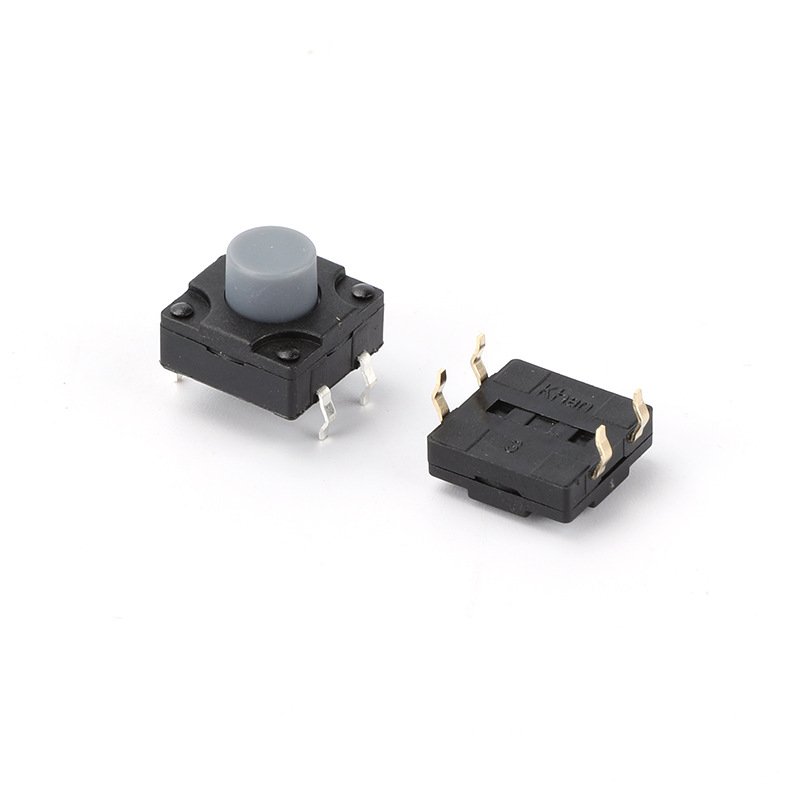
Modern electronic devices often face moisture, splashing water, and accidental immersion. Ordinary tact switches are vulnerable to short circuits, oxidation, and functional failure. In contrast, waterproof tact switches adopt professional sealing structures to resist water and dust. Therefore, they greatly improve equipment stability and service life. Moreover, they are widely used in home appliances, medical devices, and outdoor systems, becoming essential components. This article systematically explains their working principle, IP classification, specifications, and practical functions.
What Are Waterproof Tact Switches?
Generally, a waterproof tact switch is a sealed momentary switch built for wet environments. Basically, it combines a standard tactile switch with a protective gasket and housing. Consequently, water and dust cannot reach the internal contacts. However, unlike ordinary open switches, it keeps the circuit isolated under harsh conditions. Therefore, designers rely on it for high-reliability products. In short, it delivers the familiar tactile click while surviving moisture and dirt.
How Do Waterproof Tact Switches Work?
Essentially, the working principle relies on integrated sealing technology. First, manufacturers wrap the internal conductive structure with a silicone gasket. Next, they enclose the contact system inside a sealed housing. As a result, external moisture and dust are completely isolated. Following the IEC 60529 standard, mainstream models are fully dust-tight. Moreover, the common IP67 rating supports temporary immersion in 1-meter water for 30 minutes. For more extreme needs, IP68 models resist continuous submersion. However, exact depth and duration depend on the manufacturer’s specification. In conclusion, sealing—not exposed contacts—ensures stable signal conduction.
IP67 vs IP68: Understanding the Protection Ratings
Overall, IP67 and IP68 are the two dominant protection grades. Initially, both offer complete dust protection. However, they differ in water resistance. Specifically, IP67 handles temporary immersion up to 1 meter for 30 minutes. In contrast, IP68 supports long-term submersion under a defined depth. Consequently, IP67 suits splash and rain exposure. Meanwhile, IP68 fits persistent underwater operation. Therefore, choose the grade that matches your real environment.
Standard Sizes and Package Specifications
Typically, waterproof tact switches cover diverse standardized package sizes. First, the 6×6mm and 8×8mm models serve portable and precision devices. Because they save space, they fit compact consumer electronics. Next, the 10×10mm and 12×12mm versions offer stronger stability. Since they dissipate heat better, they suit appliances and control panels. Overall, this size range lets engineers balance installation flexibility and structural durability.
Material Selection and Structural Design
Clearly, material selection determines long-term reliability. High-quality products use corrosion-resistant silicone gaskets as core seals. Consequently, the waterproof film avoids embrittlement and oxidation. Even after years, it maintains stable sealing performance. In terms of structure, high-end switches integrate mechanical optimization. Thus, they save space and reduce material cost. Additionally, they ensure sensitive and consistent pressing feedback. Ultimately, precise structure prevents loose sealing and dust accumulation.
Operating Feel and Maintenance Convenience
Notably, operating feel is a key advantage of qualified switches. Premium products deliver ultra-sensitive response with short triggering latency. Therefore, users perceive accurate operation feedback. For sophisticated equipment, this touch reflects superior manufacturing precision. Meanwhile, the sealed structure avoids dust blockage and moisture erosion. As a result, daily maintenance becomes much easier. Indeed, good dust and water resistance reduces cleaning and component replacement.
Applications Across Industries
Thanks to reliable environmental adaptability, waterproof tact switches serve many industries. In home appliances, they appear in kitchen scales, televisions, and microwave ovens. In the digital field, they support cameras and precision imaging equipment. For medical scenarios, they are installed in blood pressure monitors and thermometers. Additionally, they work steadily in electronic toys, remote controls, and vehicle systems. Therefore, they fully adapt to diverse and complex environmental demands.
How to Choose the Right Waterproof Tact Switch
Ultimately, choosing the correct model starts with your operating environment. First, confirm the required IP rating based on expected water exposure. Next, select a package size that fits your internal layout and usage frequency. Because material quality drives lifespan, prefer anti-aging silicone seals. Furthermore, verify actuation force and travel for the desired hand feel. Ultimately, matching specification to application prevents premature failure and lowers after-sales cost.
Conclusion
In summary, waterproof tact switches improve electronic product durability from the component level. Therefore, with IP67 and IP68 grades, standardized sizes, anti-aging materials, and optimized structure, they solve equipment failures caused by water and dust. Hence, choosing high-quality models reduces maintenance cost and upgrades user experience. Finally, browse our complete waterproof tact switches collection to find the right sealed switch for your next design.