

Blog
Rocker Switch Copper Plating Comparison: Silver vs Gold vs Nickel Plating Pros, Cons & Applications

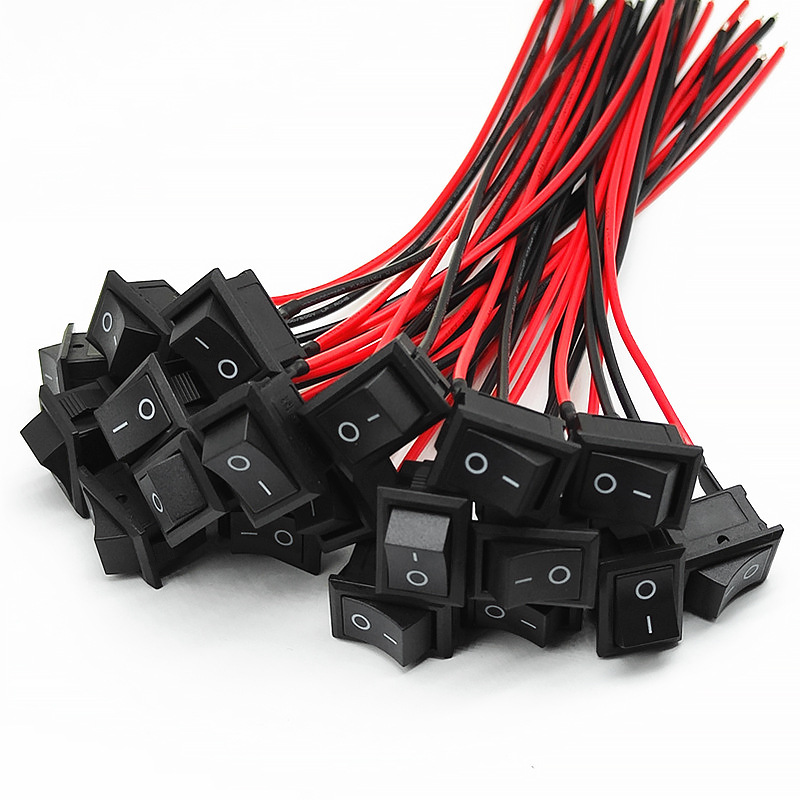
Rocker switches rely on internal copper contacts and surface plating to deliver stable performance. The plating finish directly affects conductivity, corrosion resistance, and total service life. For B2B manufacturers and equipment engineers, choosing the right plating is a critical sourcing decision. Different plating types also change contact resistance, mechanical wear, and total production cost.
Copper offers high conductivity, so it is the base material for most switch contacts. However, bare copper oxidizes and blackens easily over time. As a result, this gradual oxidation increases contact resistance and weakens circuit conduction. Therefore, surface treatments such as silver, gold, and nickel plating solve this problem. This article compares the three mainstream plating finishes to help buyers select the right one.
1. Silver Plating: High Conductivity with Excellent Cost Performance
Silver delivers the highest conductivity among common industrial metals. It also provides strong arc-extinguishing ability. Therefore, silver plating is the most popular choice for medium and high-current rocker switch models. However, in polluted environments, a silver surface may form black silver sulfide. Still, this sulfide layer barely affects overall conductivity.
Pros of Silver-Plated Rocker Switch Contacts
- First, superior conductivity: It keeps contact resistance very low for stable high-current conduction.
- Also, high cost performance: The moderate plating cost balances performance with mass-production budgets.
- Moreover, mature process: Established electroplating technology supports consistent large-scale quality.
Cons of Silver-Plated Rocker Switch Contacts
- However, sulfidation risk: The surface blackens in sulfur-containing and heavily polluted environments.
- Also, average corrosion resistance: It performs worse than gold under harsh chemical and salt spray tests.
- Finally, weak micro-signal stability: The sulfide film may disturb ultra-low current signal transmission.
Silver Plating Application Scenarios
Silver-plated contacts suit medium to high-current equipment from 10A to 20A. For instance, typical uses include industrial power panels for welding machines and air compressors. In addition, they fit sealed marine power switches, electric heaters, and high-power kitchen appliances.
2. Gold Plating: Ultimate Corrosion Resistance and Signal Stability
Gold shows extremely high chemical stability and almost never oxidizes in normal conditions. Unlike silver and nickel, gold keeps a smooth surface for precise contact feedback. Therefore, it is the premium solution for high-reliability electronic equipment. However, this premium performance comes with a much higher cost.
Pros of Gold-Plated Rocker Switch Contacts
- First, exceptional corrosion resistance: It resists rust, sulfidation, and salt spray erosion permanently.
- Also, stable weak-signal transmission: It triggers ultra-low current circuits accurately without signal loss.
- Moreover, low wear rate: The smooth surface reduces friction and extends cyclic operation life.
Cons of Gold-Plated Rocker Switch Contacts
- However, high production cost: Premium material and processing costs limit it to high-end equipment.
- Also, strict thickness control: Thin layers wear out fast, while thick layers raise costs further.
- Finally, not for high current: Gold layers ablate and fail under high arc and large current loads.
Gold Plating Application Scenarios
Gold-plated contacts serve high-precision and high-reliability fields. For instance, common uses include medical device panels and high-end automotive modification switches. In addition, they appear in aviation cabin consoles, communication weak-current switches, and premium marine electronics requiring salt spray resistance.
3. Nickel Plating: Economical Anti-Rust Plating for Mass Production
Nickel plating provides high surface hardness and reliable anti-rust performance. Its conductivity is lower than silver and gold. However, its very low cost makes it ideal for cost-sensitive civilian products. It also solves the oxidation problem of bare copper in low-load scenarios.
Pros of Nickel-Plated Rocker Switch Contacts
- First, good anti-rust ability: It prevents copper oxidation effectively in ordinary environments.
- Also, high mechanical hardness: It resists wear and scratches during frequent switching operations.
- Moreover, strong adhesion: A mature process ensures stable and durable surface layers.
- Finally, ultra-low cost: It fits large-batch and budget-sensitive home appliance projects.
Cons of Nickel-Plated Rocker Switch Contacts
- However, limited conductivity: It cannot serve high-current or high-precision signal circuits.
- Also, poor arc resistance: It burns out easily under high-power and high-arc conditions.
- Therefore, wear fatigue risk: Long-term high-frequency switching may cause gradual plating wear.
Nickel Plating Application Scenarios
Nickel-plated contacts mainly serve low-load and general-purpose electrical equipment. For instance, typical products include household fans, desk lamps, and ordinary lighting panels. In addition, they fit cost-sensitive mass-produced home appliance supporting switches.
4. Comprehensive Plating Performance Comparison and Selection Guide
The three mainstream finishes rank differently across core metrics. So this section simplifies B2B selection with clear rankings and practical rules.
Core Performance Rankings
- First, conductivity: Silver > Gold > Nickel.
- Second, corrosion resistance: Gold > Nickel > Silver.
- Finally, maintenance: Gold (maintenance-free) > Nickel (low) > Silver (anti-sulfidation care needed).
Professional Selection Rules
First, choose silver plating for all medium and high-current power switches to balance conductivity and cost. Second, choose gold plating for weak-current signal control, precision medical, aviation, and marine equipment that needs zero interference. Finally, choose nickel plating for low-load civilian appliances and large-batch cost-sensitive projects.
Composite Plating Solutions
High-end industrial designs often combine multiple plating layers. For instance, a nickel undercoating with a silver topcoat improves adhesion. Similarly, partial gold-plated key contacts paired with silver-plated auxiliary contacts maximize performance while controlling cost.
Conclusion
Silver, gold, and nickel plating each suit different working conditions. Instead, there is no universal best finish, only the most matching solution. Therefore, B2B purchasers and R&D engineers must choose plating based on current load, environment, signal accuracy, and budget. Thus, scientific selection stabilizes equipment operation, lowers failure rates, and improves cost-effectiveness.
We supply high-quality rocker switches with silver, gold, and nickel-plated copper contacts. So we also offer custom plating thickness and composite solutions for industrial, marine, medical, and appliance projects. Contact us for professional parameter matching and free quotations.


One thought on “Rocker Switch Copper Plating Comparison: Silver vs Gold vs Nickel Plating Pros, Cons & Applications”