Blog
Toggle Switch Surface Treatment: Plating & Coating

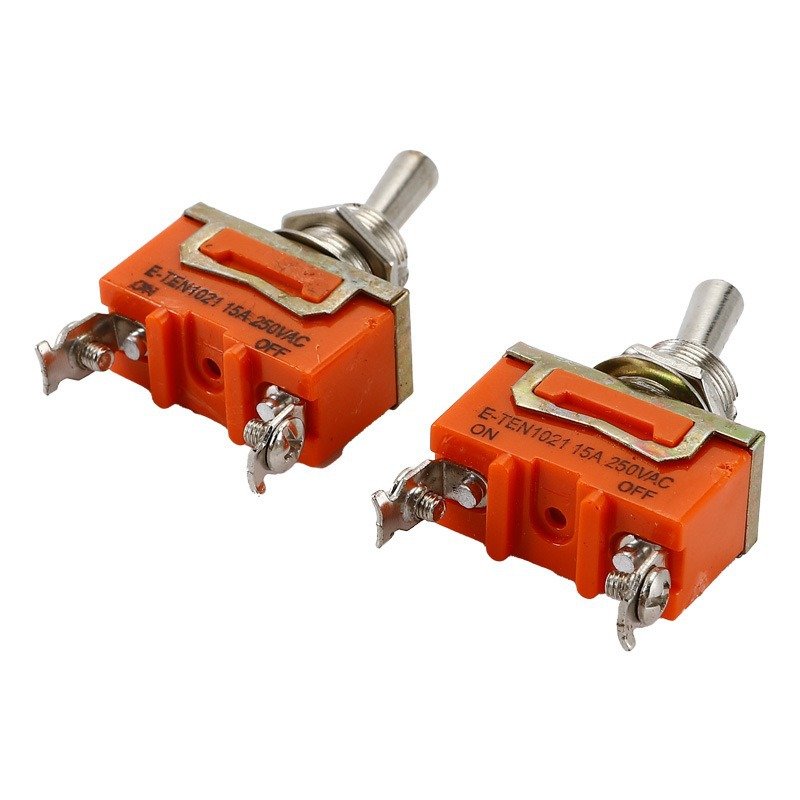
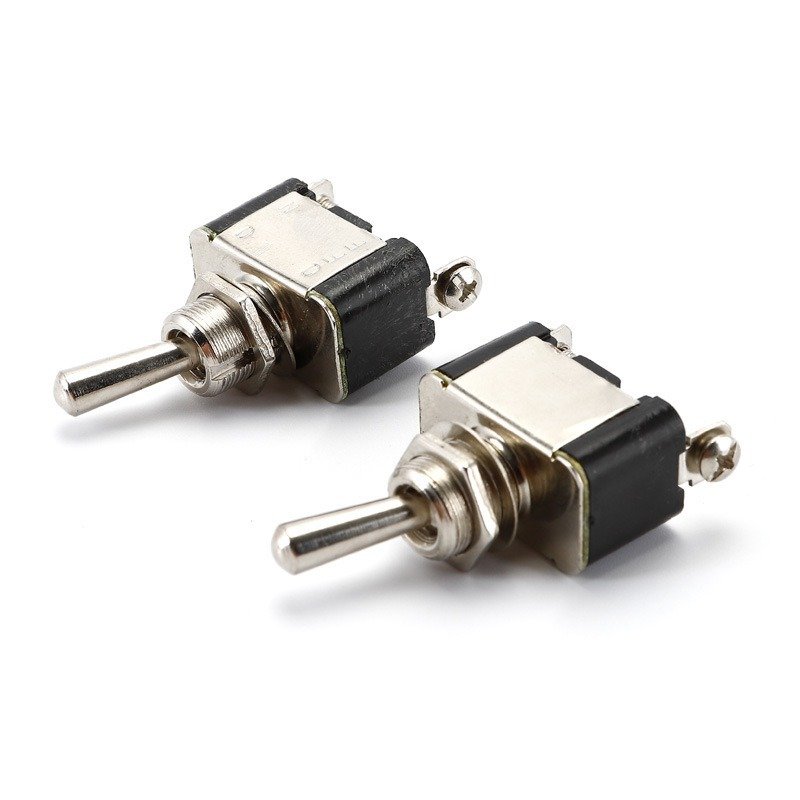
Toggle switch surface treatment is the decisive factor behind durability, environmental adaptability and long-term electrical performance. In harsh settings such as industry, automotive and medical equipment, oxidation and corrosion attack the contacts and housing. These failures cause contact loss, signal drift and even full system downtime. Anti-oxidation plating and anti-chemical corrosion coatings protect the switch from the micro-structure up to its macro performance. This article breaks the topic into three dimensions: plating types, coating technology and compatibility validation. Each dimension is paired with real cases from automotive, marine and chemical control, so B2B buyers can move from lab to mass production.
Anti-Oxidation Plating: The First Line of Defense for Toggle Switch Contacts
A Toggle switch relies on its metal contacts and structural parts to carry current reliably. The plating on those parts is the first barrier against the environment. Therefore, choosing the right alloy decides how long the switch survives in the field.
Plating Types and Technical Principles
Tin Plating
Tin plating is applied by electroplating or electroless plating. Usually, the thickness is 3 to 8 µm. It is low cost and easy to solder, so it suits low-load scenarios below 5 A. However, it can grow tin whiskers and oxidize until the surface turns black. As a result, contact resistance climbs over time. For example, a home microwave oven position switch uses a matte tin finish. It passes a 48-hour salt-spray test under ASTM B117.
Silver Plating
Silver plating uses cyanide or cyanide-free chemistry at 5 to 15 µm. It offers excellent conductivity at 1.59 µΩ·cm and strong arc resistance from a 961 °C melting point. However, it suffers sulfidation blackening where Ag₂S forms on the surface. Moreover, the material cost is higher. Therefore, engineers turn to a silver alloy such as AgPd10 or AgNi0.15. This suppresses sulfidation and lifts hardness from HV 120 to HV 180. For instance, TE Connectivity’s KCD series industrial switch uses silver contacts. They tolerate 100 A surge current.
Gold Plating
Gold plating comes as hard gold with cobalt or nickel, or soft pure gold, at 0.1 to 2 µm. It resists oxidation almost completely — 1000 hours of salt spray without corrosion. In addition, it keeps contact resistance stable below 2 mΩ. However, the cost is high, and wear resistance depends on the nickel underplating beneath it. Consequently, Omron medical equipment switches use a 0.5 µm hard gold layer. It is certified to ISO 13485.
Tin-Nickel Alloy
Tin-nickel alloy plating (Sn-Ni 65/35) is deposited at 5 to 10 µm. Its corrosion resistance approaches that of gold and survives 500 hours of neutral salt spray. Yet it costs only one fifth as much. However, solderability is poorer, so a copper pre-plate is needed first. For example, Bosch automotive wiper switches use the Sn-Ni finish. They meet IATF 16949 automotive requirements.
Plating Process Innovation Trends
Three trends are reshaping how a Toggle switch is plated. First, nanocomposite plating adds Al₂O₃ or SiC particles of 50 to 100 nm. This cuts friction by about 40%. Second, pulse plating drives a 1 kHz high-frequency current. It improves density and drops porosity below 0.1%. Finally, selective plating uses a laser mask to deposit gold only on the contact zone. C&K’s SelectaGold process uses this idea and cuts cost by roughly 30%.
Anti-Chemical Corrosion Coating: Molecular-Level Protection for Non-Metal Parts
Where plating guards the metal, coatings shield the plastic and composite housing. A good Toggle switch coating resists acids, solvents and cleaning agents. At the same time, it keeps the actuator free to move.
Coating Types and Film-Forming Mechanisms
Epoxy Coating
Epoxy is sprayed or dipped and cured at 120 to 150 °C into a 20 to 50 µm film. It resists acid and alkali across pH 3 to 11 and shows strong adhesion at the 5B level on a cross-cut test. However, it is brittle, with impact resistance below 50 kJ/m², and can crack in low temperatures. For instance, Honeywell chemical valve switches use an epoxy coating. It withstands 98% sulfuric acid spray for 48 hours.
Polyurethane Coating
Polyurethane is a two-component spray at 15 to 30 µm. It is elastic, with elongation above 200%, and resists UV aging through 1000 hours of QUV with no chalking. However, its solvent resistance is poor — acetone wipes can dissolve it. Therefore, Schneider outdoor cabinet switches use an aliphatic polyurethane. It is rated to IP66.
PVDF Fluorocarbon Coating
PVDF is applied by electrostatic powder at 30 to 100 µm. It delivers extreme chemical resistance against strong acid, alkali and organic solvent. In addition, it is self-cleaning with a contact angle above 110°. However, it costs about three times an epoxy and needs curing above 200 °C. For example, Toshiba semiconductor equipment switches use PVDF. They survive hydrofluoric acid cleaning.
Parylene Vapor Deposition
Parylene is deposited in vacuum as poly-p-xylylene (Parylene C/N/D) at 1 to 20 µm. The film is ultra-thin and pore-free with zero porosity, and it is biocompatible to ISO 10993. However, equipment cost is high and it cannot coat a local area only. As a result, Medtronic surgical instrument switches use Parylene C. They survive ethylene-oxide sterilization.
Coating Technology Breakthroughs
Graphene-enhanced coatings add 0.5% to 2% graphene flakes. This raises thermal conductivity fivefold and cuts water diffusion by 90%. Similarly, self-healing coatings trap a repair agent such as siloxane in microcapsules. The agent releases when the coating is scratched, as in AkzoNobel’s Ecoat system. In addition, photocurable coatings use UV-LED at 365 nm. They shrink cure time from hours to seconds, which suits automated lines.
Compatibility Challenges Between Plating and Coating
Material Interface Failure
Galvanic corrosion appears when different metal platings form a potential difference in an electrolyte. For example, a nickel base under a gold contact accelerates local attack. Therefore, the remedy is a transition layer such as palladium or a same-family metal like an all-nickel stack. Moreover, thermal expansion mismatch (CTE) cracks the coating against a substrate like aluminum under temperature cycling. Consequently, a gradient design such as epoxy-silicone-fluorocarbon layering buffers the stress.
Process Conflict and Optimization
Post-plating contamination is a common problem because residual electroplating fluid such as cyanide hurts coating adhesion. Thus, plasma cleaning removes surface organics and drops the contact angle below 5°. Another issue is the coating masking effect: an overly thick film can raise operating torque by about 20%. Therefore, laser ablation removes the coating precisely from moving parts. This keeps the feel consistent.
Industry Scenarios and Toggle Switch Selection Guide
Automotive Electronics
The need is fuel resistance, salt-spray protection and vibration endurance. Therefore, the usual answer is a tin-nickel alloy housing plus Parylene on the PCB area. It is validated to SAE J1455. For instance, a Continental vehicle air-conditioning switch survives temperature cycles from −40 to 125 °C.
Marine Engineering
Marine duty demands seawater corrosion resistance and anti-biofouling. Consequently, silver-palladium contacts (AgPd10) paired with a PVDF fluorocarbon coating meet DNV GL certification. For example, a Siemens thruster switch reaches a 15-year life. It covers 20,000 hours of salt-spray testing.
Food and Pharmaceutical
This sector must resist disinfectants such as sodium hypochlorite and hydrogen peroxide in a sterile environment. Therefore, hard gold at 0.3 µm plus an FDA-grade epoxy satisfies the 3-A sanitary standard. As a result, a GEA filling-machine switch tolerates high-temperature CIP steam shocks.
Selection Decision Matrix
| Environment | Key Stress | Recommended Plating | Recommended Coating |
| Automotive | Fuel, salt spray, vibration | Tin-nickel alloy | Parylene (PCB area) |
| Marine | Seawater, biofouling | Silver-palladium (AgPd10) | PVDF fluorocarbon |
| Food & pharma | Disinfectants, sterile | Hard gold 0.3 µm | FDA-grade epoxy |
| General industrial | Humidity, mild chemicals | Tin or silver | Epoxy or polyurethane |
Future Trends in Toggle Switch Surface Treatment
Green processes lead the next wave. For example, cyanide-free plating such as citric-acid gold is now common. Water-based coatings cut VOC emissions by 90%. Bio-based films like PLA suit degradable devices. In addition, smart surface monitoring embeds thin-film sensors. They report plating health by impedance, and AI predicts life from corrosion-rate data. Furthermore, metamaterial coatings borrow the lotus-leaf effect for self-cleaning and ice resistance. Photonic crystals add corrosion protection and visual indication at once.
Conclusion
Toggle switch surface treatment has moved far beyond simple rust prevention. It is now a cross-disciplinary engineering effort that blends materials science, electrochemistry and nanotechnology. Whether the plating stacks atom by atom or the coating designs its molecular chains, the goal is the same. Build an invisible armor at the micro scale through precise interface control. To compare lever types and internal structures before you specify a finish, read our guide on Toggle switch latching versus momentary behavior. For field-proven ways to stop oxidation and contact failure, see our Toggle switch maintenance and fault guide.