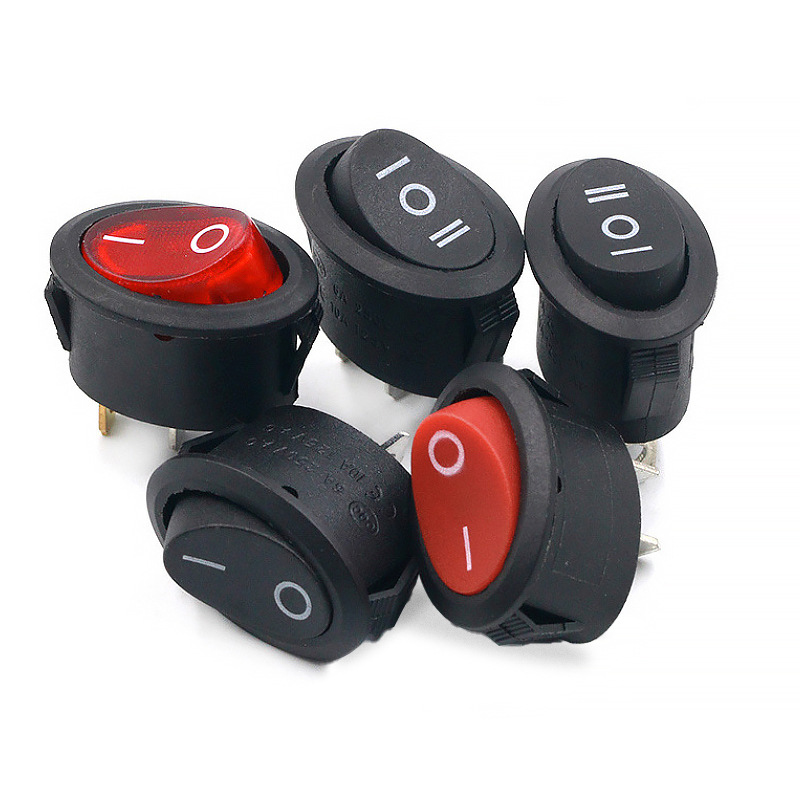
Rocker switch, also widely called boat‑type switch, gets its name from its boat‑shaped operating lever. It is a mechanical latching power switch, simple in structure yet highly reliable, used for power ON/OFF control across countless devices.
Internal Basic Structure
Main components: rocker operating lever, plastic housing, metal moving contacts, static contacts, compression spring, soldering pins.The spring is the core mechanical part. It provides rapid snap‑over action, so the switch toggles crisply between ON and OFF positions, instead of slow dragging contact.
Working Principle
When you press one side of the rocker lever, internal force pushes the spring mechanism. The spring flips rapidly and drives the moving metal contact to attach to static contact points. The circuit turns ON.Press the opposite side of the rocker; the spring reverses its state. Moving contacts separate from static contacts, the circuit cuts off to OFF state.
This snap‑spring design brings two obvious merits:
1. Fast contact switching, reduces electric arc damage when circuit connects or disconnects.
2. Stable latching state, the switch keeps ON or OFF position without external force.
Different Construction Variants
– Non‑sealed standard rocker switch: low‑cost, for dry indoor equipment.
– Waterproof IP rocker switch: add rubber sealing ring, suitable for outdoor and humid‑environment devices.
– Illuminated rocker switch: built‑in small indicator lamp, shows power status when turned on, very popular for household appliances.
Many engineers overlook the spring and contact material. High‑quality rocker switches use silver‑alloy contacts to resist arc erosion and extend mechanical life up to tens of thousands of operations. Inferior products adopt thin copper contacts and fail quickly under load.



One thought on “How Does a Rocker (Boat‑Type) Switch Work? Structure & Working Principle Explained”