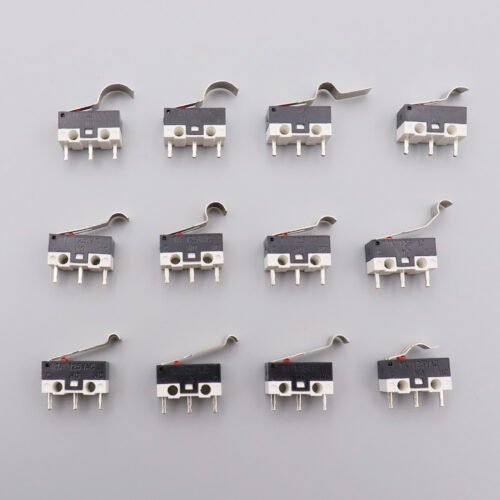
Classification of lever type, SMD type and self-reset micro limit switches
We classify mainstream snap-action switch types by structure and installation method. This guide helps users quickly distinguish lever, curved arm, roller and SMT models for different usage scenarios.
Snap-action switches have diverse styles to match different installation and detection needs. According to actuator design, they are divided into no-lever straight type, curved lever type and roller lever type. Straight switches suit flat press detection, while curved and roller types adapt to sliding and mechanical stroke triggering.
By mounting method, these limit switches include vertical through-hole plug-in type and SMT patch type. Vertical plug-in switches feature firm soldering and strong shock resistance, suitable for household appliances and hot water equipment. SMD versions support automatic tape mounting, ideal for compact automotive electronics and precision devices.
Most models adopt self-reset design. After triggering, they automatically return to standby state, realizing repeated cycle detection. Different variants ensure stable signal output in low-pressure, long-stroke and high-density installation environments.
Selecting the proper variant relies on your actuation way, PCB space and working load. Roller lever designs reduce wear for frequent motion, while SMD styles save board space for miniaturized electronics. All these variants deliver reliable signal triggering for industrial automation, home appliances and automotive control systems.