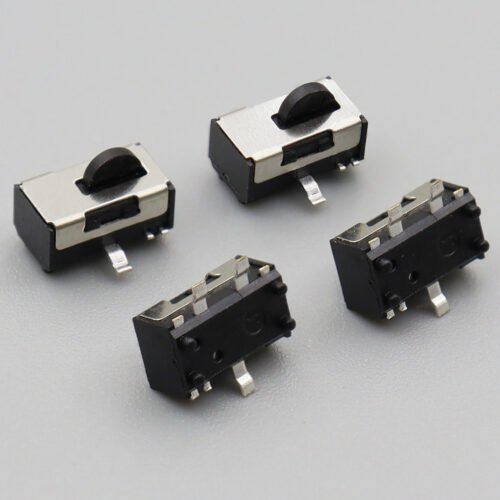
Core knowledge of miniature snap-action limit switches for beginners
This article explains the definition, internal structure and working principle of micro switches. It shows why miniature snap-action switches can achieve fast and stable circuit triggering in electronic equipment.
A micro switch, also known as a miniature snap-action switch, is a small electromechanical component that controls circuit on and off with tiny physical force. Unlike ordinary tact switches, it features a fast snap-action mechanism, which completes signal triggering instantly instead of slow contact conduction.
A standard micro switch consists of three core parts: actuator lever, internal spring mechanism and contact terminals. When external pressure touches the lever, the internal spring flips rapidly to switch the contact state. After the pressure disappears, the switch automatically resets to the original position.
Due to small contact gap, sensitive response and stable action, micro switches are widely used for position detection, limit control and door reset sensing. They become basic accessories for household appliances, consumer electronics and industrial equipment.