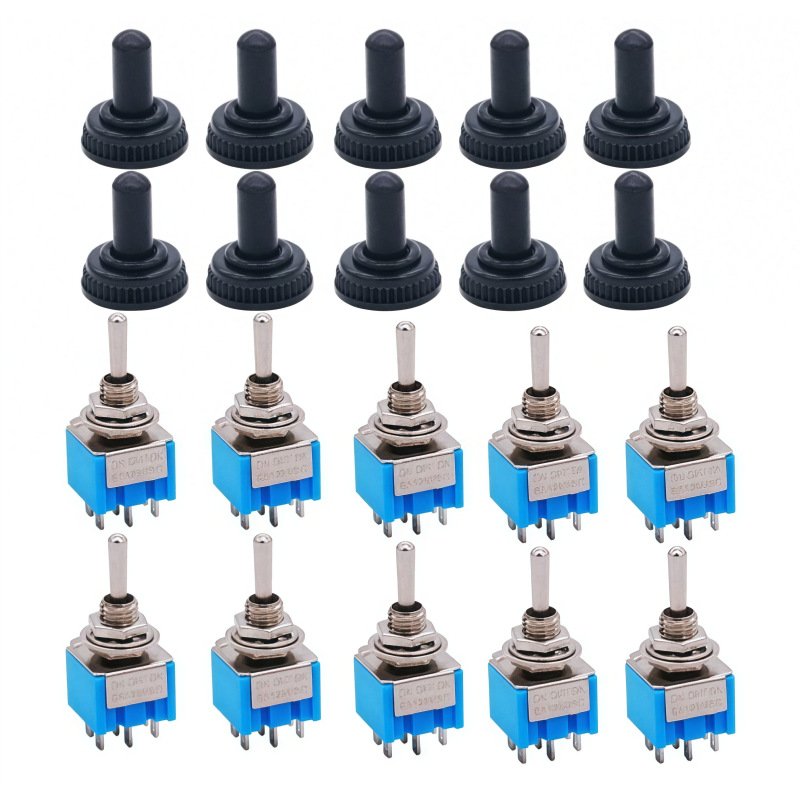
Key differences between rotary switch and toggle switch for electronic panel design
Many equipment designers confuse rotary switch and toggle switch, although they serve different control purposes. Toggle switch, also known as rocker or joystick switch, relies on lever flipping to achieve ON-OFF or simple 3-position control. Rotary switch uses rotational motion and can handle far more switching positions within one component.
Toggle switch is suitable for simple single or dual circuit on-off control. It has compact size and low cost for basic power triggering. But it cannot support multi-mode selection. Rotary switch is designed for multi-speed, multi-voltage or multi-function mode switching. One rotary switch can replace several toggle switches and save panel mounting space.
In terms of locking mechanism, most toggle switches use spring dead-point locking. Rotary switch adopts detent positioning with clear click feedback. For high vibration environments, both styles have sealed options, yet rotary switch performs better for complex circuit switching tasks. Toggle switch is ideal for car modification and simple alarm triggering.
For projects with only ON and OFF function, toggle switch is enough. When designs need more than three working modes, rotary switch becomes the better solution. Comparing these two switches helps reduce component count and improve the reliability of control panels.