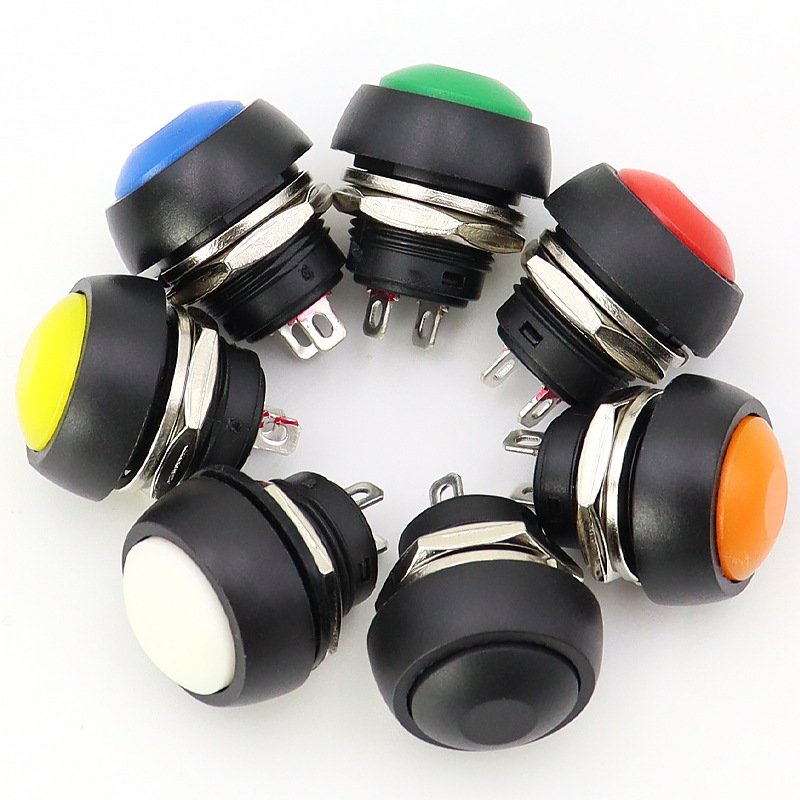
Learn how main command push buttons send control signals for industrial control circuits
Push button switch is a main command electrical component widely used in control cabinets, machine tools and assembly lines. It only carries small control current below 5A and cannot directly drive high-power loads such as motors or heating tubes. It sends manual control signals to operate contactors and realize remote control of heavy equipment.
The core structure includes button cap, reset spring, moving bridge contact, static contact and insulating housing. When users press the button cap, the spring compresses and moves the moving contact to switch the circuit status. For momentary switches, the spring rebounds and restores contact status once released. Latching emergency stop buttons will stay locked and require manual rotation for reset.
Push buttons cover 4 core functions. Start and stop control is the most common application for motor operation. Momentary buttons support jog debugging during equipment maintenance. Composite buttons achieve electrical interlock to prevent short circuit in forward-reverse motor circuits. Red mushroom emergency stop buttons cut off the control loop immediately in dangerous situations. This basic component forms the foundation of almost all automated equipment control systems.