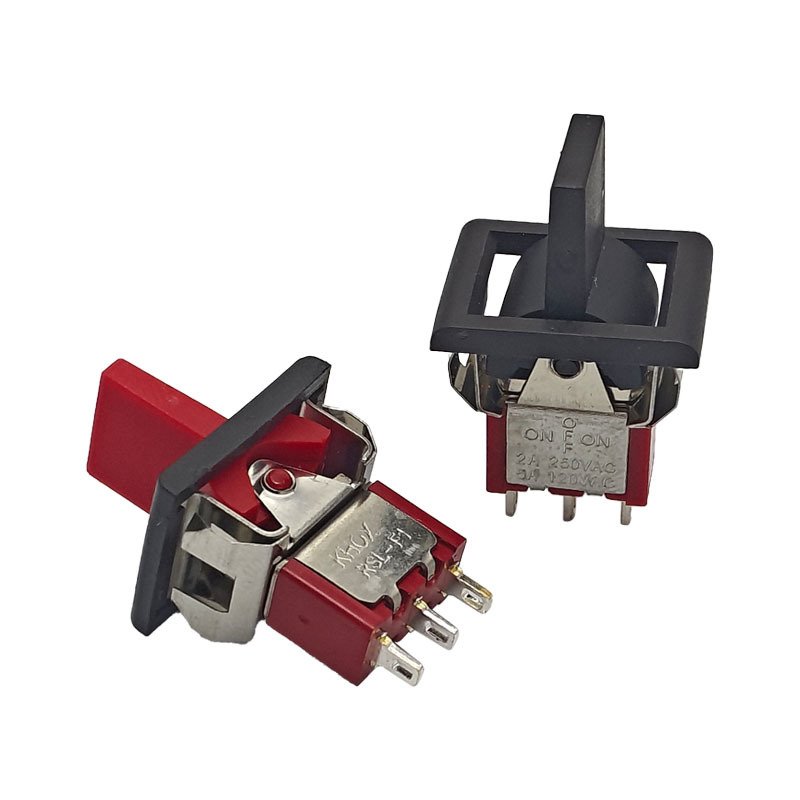
Practical selection guide of rotary switch based on circuit load and operating environment
Selecting the right rotary switch requires analysis of circuit load, working environment and operation frequency. Wrong selection may lead to contact burning, unstable signal or early failure, even if the rotary switch fits the panel hole size.
First confirm electrical load. For high-power AC circuits, pick rotary switch with high current rating and silver alloy contacts. For weak signal circuits like measuring instruments, gold-plated contacts are recommended to avoid contact resistance drift caused by oxidation. Check pole and position requirements to match wiring logic.
Evaluate working environment. Indoor dry control panels can use standard non-sealed rotary switch. Humid, dusty or vibration-intensive workshops need IP65 or IP67 sealed rotary switch. High-temperature environments require flame-retardant base material to prevent housing deformation. Also consider mechanical operation frequency. Equipment operated thousands of times per month needs rotary switch with extended mechanical life.
Panel mounting size and terminal type are also critical. Screw terminals suit heavy current wiring, while solder pins are for PCB installation. Following this selection process helps buyers source suitable rotary switch and cut maintenance cost in mass production.