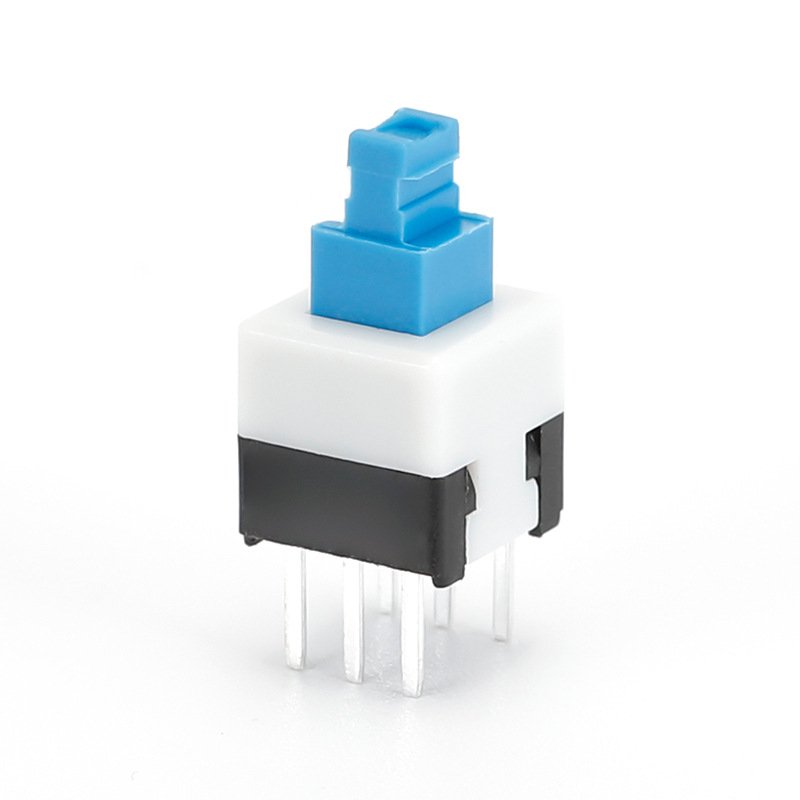
Classification and application of single self-locking and interlock push button switches
Self-locking switches include ordinary single self-locking type and multi-button interlock type. Single self-locking switches control one circuit, switching between on and off by repeated pressing. Interlock self-locking switches are assembled with multiple buttons, widely applied in tape recorders and old control panels.
The interlock mechanism ensures only one button can stay locked at any moment. When users press a new button, the existing locked button will pop up and reset. This prevents two circuits from being activated simultaneously and avoids equipment malfunction. Designers can choose different pin configurations with 2pin, 3pin or 6pin contacts for single or multi-channel control.
Self-locking switches also differ by mounting style, including through hole direct insertion and side mount types. Sizes range from 5.8*5.8mm, 7*7mm to 8.5*8.5mm, with flat head and tall head options. High temperature resistant plastic housing makes them suitable for toy, home appliance and industrial control assembly.
Different structural variants give self-locking switches flexible matching capability for various electronic projects.