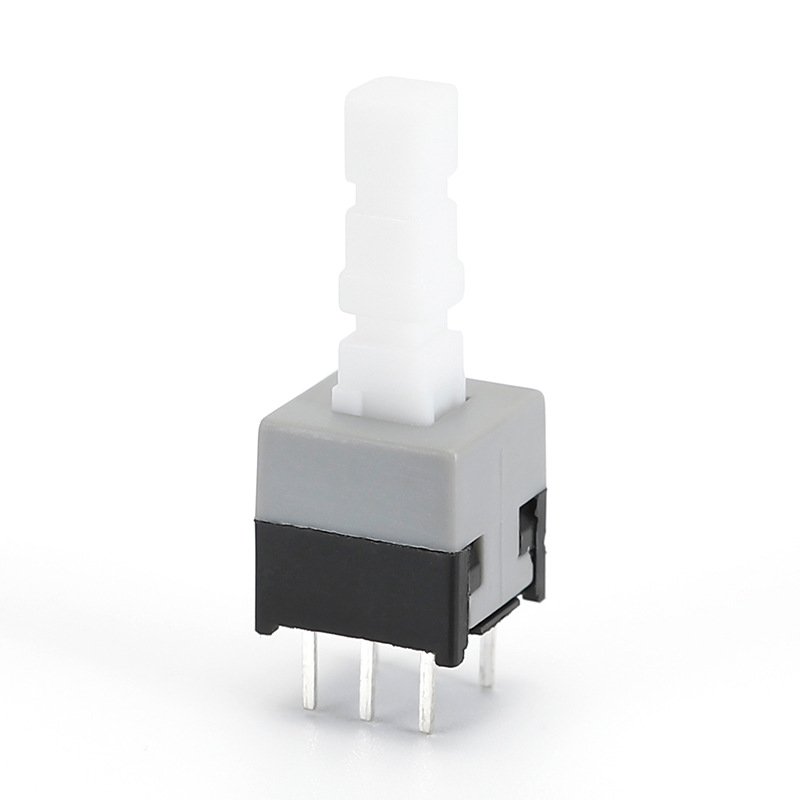
Clarify the functional difference between latching switches and momentary tactile switches
Many buyers confuse self-locking switches and tactile switches, because both belong to push button type components. However, they are defined from completely different performance dimensions. Self-locking describes the ability to maintain circuit status, while tactile describes low operating force for triggering.
A self-locking switch has an internal locking mechanism. After pressing, it maintains ON or OFF state automatically. It is used for continuous power supply control. A standard tactile switch is momentary. It only conducts the circuit while pressed. Once released, the button bounces back and returns to the original state. Tactile switches are commonly used for signal triggering rather than long time power control.
Tactile switches use thin metal domes or printed conductive film to realize quick contact. Their contact capacity is relatively small, and they have no locking structure. Self-locking switches use spring and cam latching parts to hold contact position. Some button sets adopt interlock structure: only one switch can stay locked at one time. Press another button and the previous locked switch resets automatically.
Distinguishing these two switches helps engineers select the correct button components and avoid circuit design mistakes.