Blog
Low Contact Resistance Design and Terminal Materials in Power Sockets

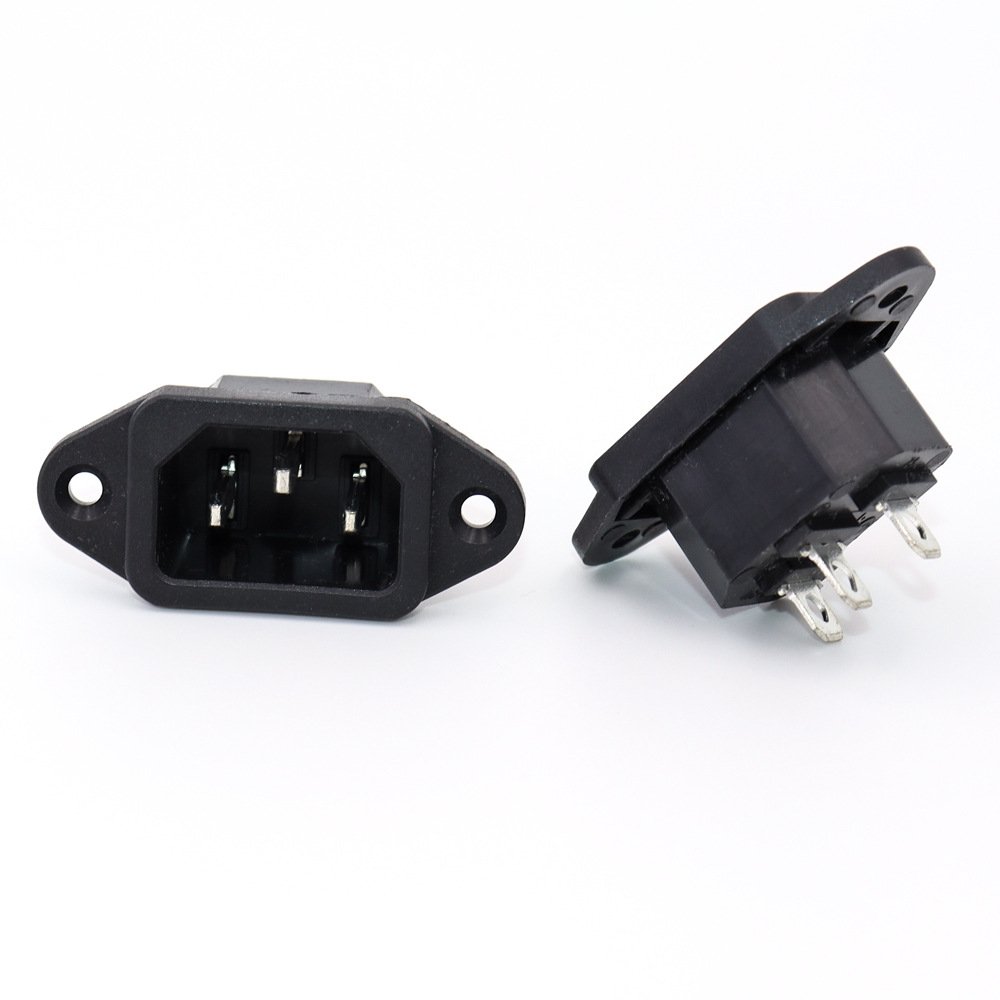
In modern electronics, industrial control systems, and data center power modules, power sockets serve far more than an on-off interface. They sit at the core of power transmission reliability. That role becomes critical in high-current, high-density applications, where a small change in contact resistance can trigger local heating, energy loss, or contact failure. This risk explains why contact resistance now drives most socket design decisions. To address it, engineers evaluate contact geometry, plating materials, and environmental exposure together rather than treating them as separate concerns.
This article explains how low contact resistance is achieved in power socket design. It analyzes the impact of terminal plating materials such as silver and gold, and connects those choices to real applications and engineering practice. Whether you specify sockets for an EV charging port, a PDU, or a rail vehicle, the same principles apply. The sections below cover what contact resistance actually is, how copper, tin, silver, and gold compare, how structural design changes the outcome, and how to verify results under recognized standards.
What Is Contact Resistance and Why It Matters in Power Sockets
Contact resistance describes the resistive behavior of the conductive interface between two metal surfaces. Several factors determine its magnitude. Real contact area, material conductivity, surface roughness, and oxide films all contribute. In power sockets, resistance appears mainly at the interface between the plug pin and the receptacle contact after mating.
High contact resistance causes four practical problems:
- Localized heating. Sustained current raises the temperature of the contact point, which reduces system stability.
- Voltage drop. Under heavy load, the added resistance creates unnecessary voltage loss and disrupts connected equipment.
- Higher energy consumption. Power loss increases, which is especially visible in data centers and industrial automation.
- Intermittent contact and failure. Oxidation and thermal expansion produce unstable connections, and eventual arcing follows.
Lowering contact resistance therefore sits at the center of both conductivity and long-term reliability for these products.
How Terminal Material Choice Affects Contact Resistance in Sockets
Copper and Copper Alloys: The Base Conductor
Copper and its alloys, including brass and phosphor bronze, provide good conductivity and mechanical strength. They therefore serve as standard terminal materials. Pure copper reaches roughly 58 MS/m, offers high ductility, and remains cost-effective. The drawback is oxidation. Copper forms CuO and Cu₂O surface films that raise resistance significantly. As a result, bare copper terminals are rarely used in production. Surface plating is required to stabilize contact performance.
Tin Plating: A Cost-Effective but Limited Option
Tin coatings appear in cost-sensitive sockets such as household receptacles and low-end industrial plugs. The advantages are straightforward. Tin is inexpensive, offers basic oxidation resistance, and has good lubricity that eases mating. Several drawbacks limit its use. Contact resistance runs moderately high, the layer wears during long service, and tin whiskers can form over time. High-frequency applications also see greater resistive loss. Common use cases include non-continuous power circuits, low-cost appliances, and board-level power sockets.
Silver Plating: Balanced Performance and Cost
Silver has the highest conductivity of any metal at roughly 62 MS/m, which makes it widely used in high-current socket designs. Its benefits are strong. Contact resistance stays extremely low, thermal conductivity slows local heating, and cost stays below gold plating. Two limitations deserve attention. Silver oxidizes to Ag₂O, although that oxide remains reasonably conductive. The layer is also mechanically soft, so scratches and wear appear easily.
Typical applications include industrial equipment power interfaces, high-current modules in telecom base stations, and rail vehicle distribution sockets. As an example, one brand of 16 A rail vehicle socket uses silver-plated terminals. Across 10,000 insertion cycles, its contact resistance stayed below 20 µΩ, far better than the 80 µΩ measured on tin-plated products.
Gold Plating: The Choice for Maximum Reliability
Gold resists oxidation and maintains a stable contact surface, which suits environments that demand high reliability and low maintenance. Contact resistance is extremely low and stays consistent over time. The surface is chemically inert, corrosion resistance is excellent, and insertion life is long because friction wear stays low. The trade-offs are cost and electrochemical compatibility. Gold is expensive, and direct contact with aluminum or silver can create galvanic corrosion problems.
Typical applications include data center PDU socket systems, aerospace power interfaces, and high-end medical equipment such as MRI power modules. One medical replaceable power module uses gold-plated sockets and still held contact resistance under 10 µΩ after 10,000 insertions. That stability keeps sensitive instruments running without power fluctuation.
For a wider view of plating trade-offs, our comparison of gold-plated and silver-plated Sockets covers conductivity, durability, and cost in detail.
Structural Design Decisions That Shape Contact Resistance
Material choice alone does not determine the result. Structural design is equally decisive.
Contact Pressure Design
Contact resistance falls as pressure rises, yet excessive pressure deforms terminals and shortens fatigue life. Spring structures such as phosphor bronze leaves maintain balanced pressure throughout repeated mating. Dual-point contact and V-shaped clip designs increase the real contact area.
Multi-Point Contact Design
Splitting current across several contact points lowers total resistance. A three-claw elastic terminal design provides three simultaneous contact paths, which noticeably improves stability. Multi-layer spring clamping structures also hold reliable contact in high-vibration environments. If you need application guidance, our overview of integrated Sockets explains how these structures are packaged in practice.
Environmental Factors and Contact Resistance Change
Long-term contact resistance depends on the operating environment.
High temperature and humidity. Oxidation accelerates and resistance rises. Gold or silver plating combined with sealing design handles these conditions.
High insertion frequency. Contact surfaces wear heavily, which generates particle contamination and unstable connections. Choose hard gold plating and wear-resistant elastic structures.
Corrosive gases such as hydrogen sulfide. Silver surfaces blacken and form a high-resistance film. Passivation treatments or gold plating provide the solution.
Contact Resistance Testing and Standards
Three methods cover most verification work. Four-wire measurement removes lead resistance and isolates true interface resistance. Constant current and constant voltage methods track resistance change under varying load. Thermal imaging identifies hot regions produced by resistance.
Relevant standards include IEC 60512-2-1 for low-voltage connector contact resistance testing, UL 498 for temperature rise and resistance limits in receptacle safety, and MIL-STD-202-6, which details military test methodology.
Summary: Low Contact Resistance Is a System Design Decision
Achieving low contact resistance in power sockets demands more than picking a plating. It requires coordinated decisions on materials, structure, environment, load, and service life. For B2B buyers, stable low contact resistance translates directly into higher system reliability, lower maintenance cost, and longer equipment life. Our selection and maintenance guide for integrated socket products walks through the parameters that matter most in practice.
Looking ahead, rising power density and stricter reliability expectations will push socket technology toward advanced materials, nano-scale plating, and self-cleaning contact structures. Those capabilities will become the main differentiators in the next generation of socket products.