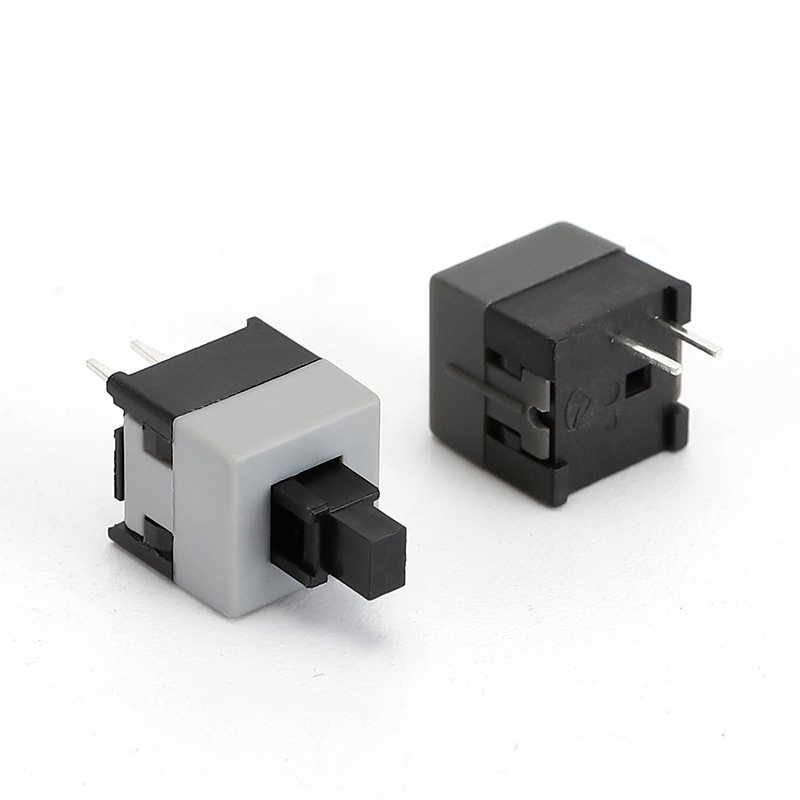
Understand the mechanical latching structure of self-locking push button switches
A self-locking switch, also known as a latching push button switch, is a common electromechanical component widely used in consumer electronics and household appliances. Its core feature is the built-in mechanical locking structure. When pressed for the first time, the button stays locked and keeps the circuit on. Press it a second time, and the mechanism unlocks to cut off the circuit.
The internal locking system usually adopts a spring hook sliding along a heart-shaped cam groove. The two peak points of the cam groove correspond to locked and unlocked positions. This purely mechanical design maintains the circuit state without continuous manual pressure. Early CRT televisions, water heaters and electric rice cookers all adopted this type of self-locking switch as the main power control.
There is also a variant called illuminated self-locking switch. It reserves space inside the button for LED or small indicator bulbs. When the switch is closed, the indicator lights up to show working status. Illuminated self-locking switches can be divided into diagonal, parallel and cross linked types according to internal linkage design.
Thanks to stable mechanical locking and simple operation, self-locking switches remain a preferred power control solution for many electronic product designers.