Blog
Tact Switch vs Micro Switch: Principles, Structures and Selection Guide

Tact switch vs micro switch is one of the most confused component pairings in electronics design and procurement. Both are small mechanical switches, yet they work in completely different ways. Misselection causes poor tactile feedback, unstable signals and even circuit overload. Therefore, this guide compares them from internal mechanism to practical selection, so engineers and purchasers can choose with confidence.
1. What Is a Tact Switch? Human-Centered Signal Trigger Switch
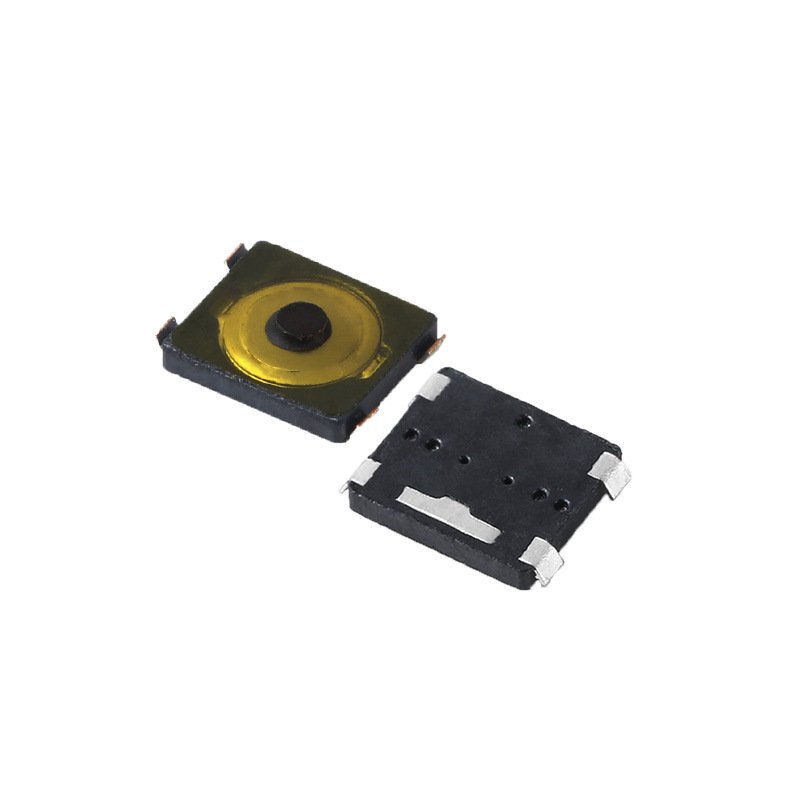
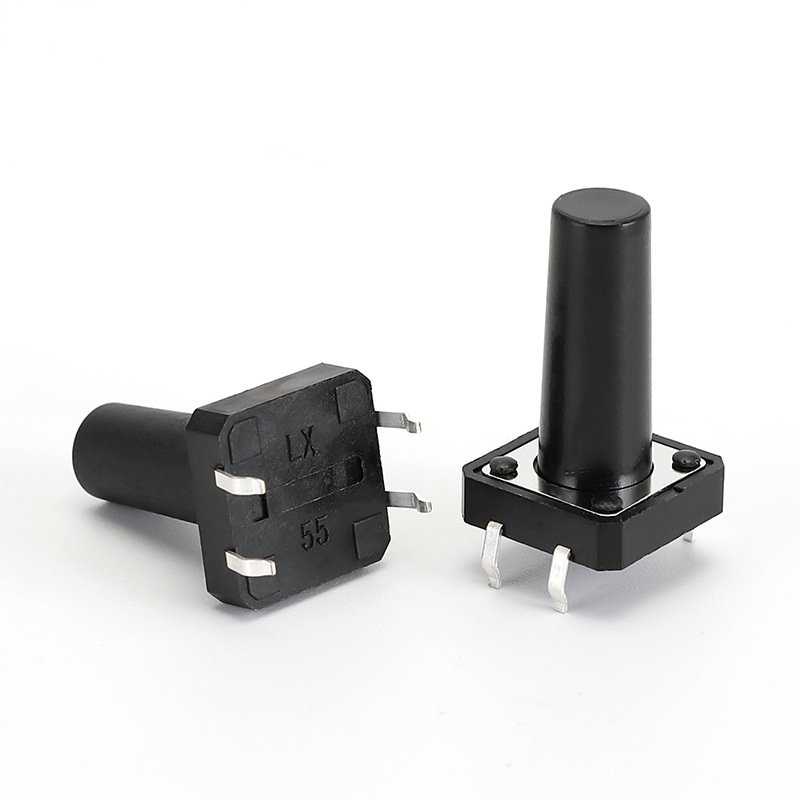
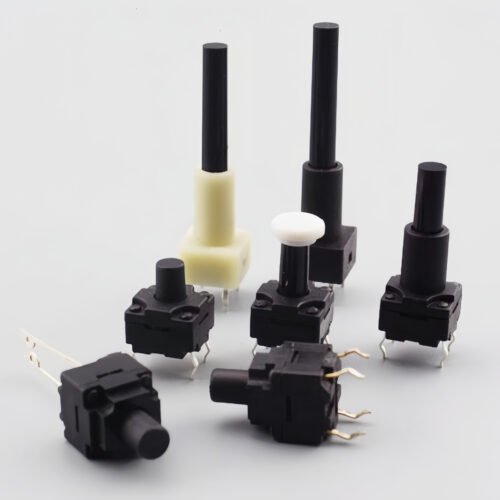
The tact switch is also called a tactile switch or a momentary push switch. In fact, it originated in Japan as a low-power component for manual interaction. Its structure is simple. Specifically, it has a plastic base, a button cap, a metal dome shrapnel and fixed contact points.
The working principle relies on instantaneous mechanical contact. When you press the cap, the metal shrapnel deforms downward and connects the moving and fixed contacts. This turns the circuit on. When you release the force, the shrapnel springs back by its own elasticity, so the circuit turns off. Thus, this “press-on, release-off” action needs no energy storage and gives an immediate response.
Note that rubber-button and membrane switches with conductive rubber belong to different categories. Instead, standard tact switches refer only to PCB-soldered metal dome types with clear tactile feedback.
Core Characteristics of Tact Switches
Tact switches are defined by ultra-small size and low actuation force. In addition, they give a crisp click feel and conduct signal-level low current. Their typical rating is 50mA / 12V DC. Therefore, they are built for logic signals, not for driving loads. Moreover, consumer-grade tact switches last 10,000 to 100,000 cycles, while high-quality industrial versions reach 500,000 to 1,000,000 cycles.
Typical Application Scenarios
Tact switches are widely used for human-machine interaction. For instance, they appear in Bluetooth earphone keys, smart watch side buttons and power bank power buttons. They are also found in router reset keys, camera shutter keys and calculator buttons. As a result, any finger-triggered momentary input relies on a tact switch.
2. What Is a Micro Switch? Snap-Action Mechanical Detection Switch
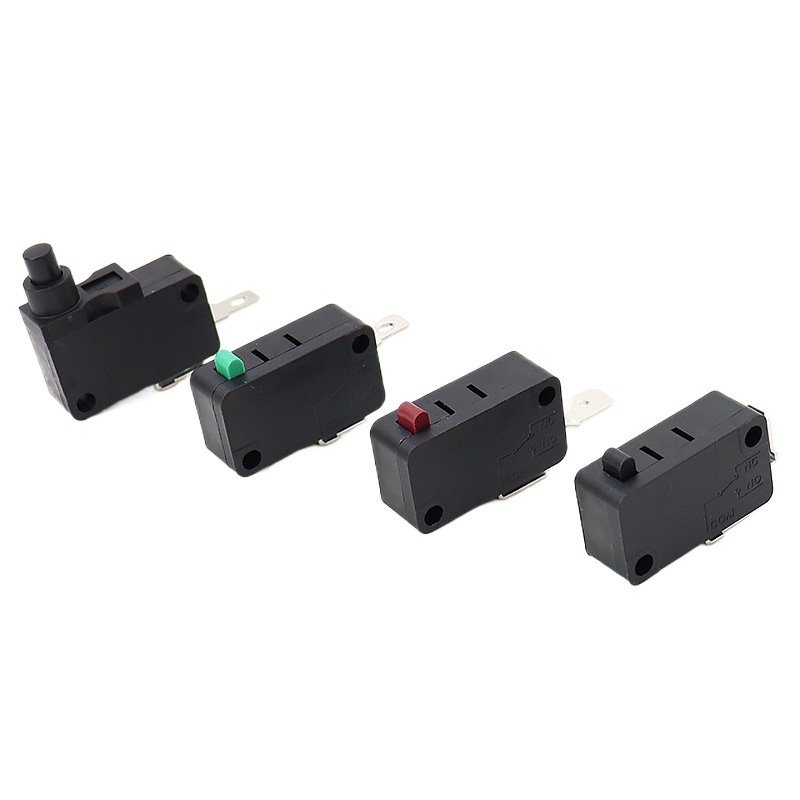
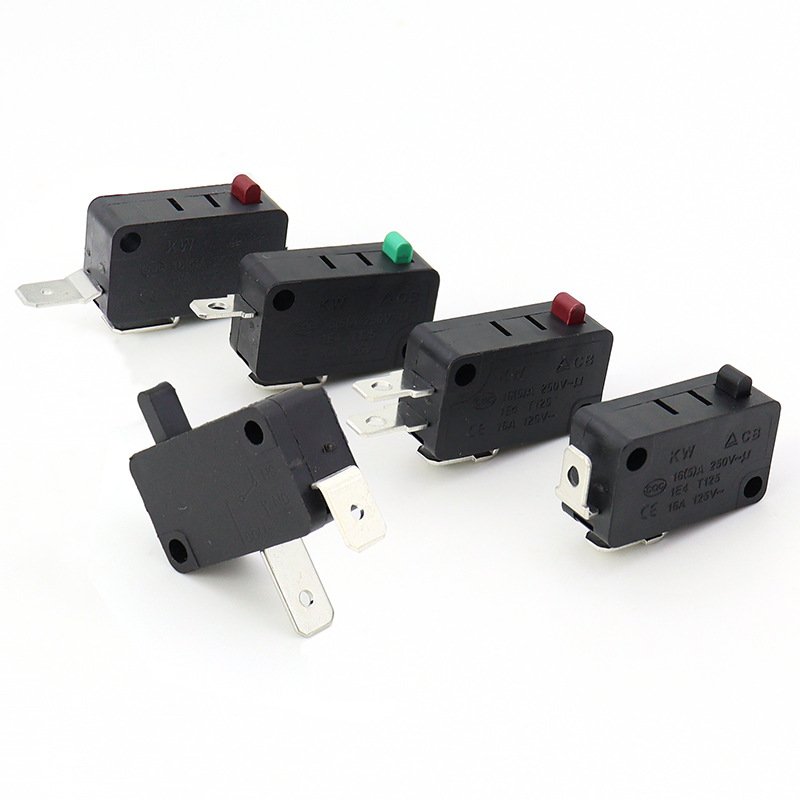
A micro switch is formally a miniature snap-action switch. Its built-in snap-action energy storage mechanism is the key difference from a tact switch. Micro Switch designs use this structure for fast and reliable switching.
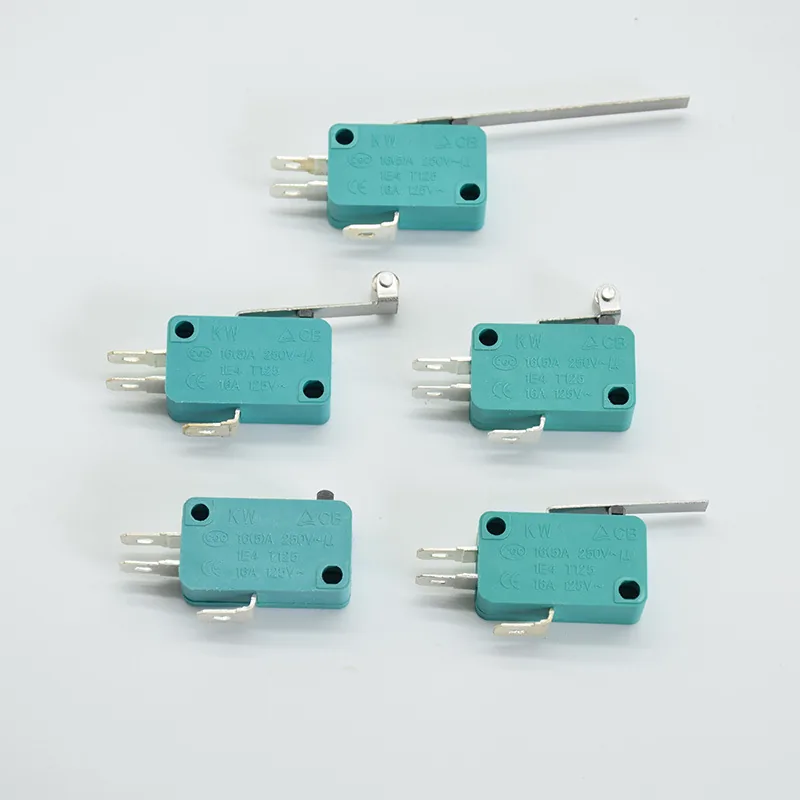
The internal structure uses a pre-stored shrapnel. External force pushes the lever, roller or actuator and gradually deforms the shrapnel. When the stroke reaches a critical threshold, the contact flips within 5 milliseconds. Consequently, the circuit switches from Normally Closed (NC) to Normally Open (NO). Then, the structure resets quickly when the force disappears.
Core Characteristics of Micro Switches
This energy-storage mechanism brings two advantages. First, the ultra-fast switching shortens arcing time and gives excellent arc suppression. Second, micro switches support much higher current than tact switches. For example, common ratings run from hundreds of milliamps to over 10 amps, so they can directly control small-power loads.
Unlike the 2-pin or 4-pin design of tact switches, a standard micro switch uses three terminals: Common (COM), Normally Open (NO) and Normally Closed (NC). This supports flexible circuit logic. Furthermore, their service life generally exceeds 1,000,000 cycles, and industrial-grade models can reach 10,000,000 cycles.
Typical Application Scenarios
Micro switches are triggered by mechanical structures, not by fingers. Typical uses include refrigerator and microwave door detection, computer mouse keys and automotive door state detection. They also cover brake light control, industrial limit switches and safety interlocks. Thus, they are ideal for position detection, stroke judgment and direct load switching.
3. Tact Switch vs Micro Switch: Core Differences
This Tact Switch vs Micro Switch comparison summarizes the core differences across mechanism, trigger, electrical performance and lifespan.
| Comparison Item | Tact Switch | Micro Switch |
|---|---|---|
| Working Mechanism | Simple metal dome instantaneous contact, no energy storage structure | Snap-action energy storage mechanism with fast bouncing flipping |
| Trigger Mode | Manual finger pressing | Mechanical structure extrusion and stroke triggering |
| Electrical Performance | Low current (50mA/12V), signal-level conduction only | High current (0.5A-10A), supports direct load driving |
| Pin Definition | 2-pin / 4-pin single normally open channel | 3-pin (COM/NO/NC) dual-circuit switching |
| Service Life | 10K – 100K cycles (consumer grade) | 1M – 10M cycles (industrial grade) |
| Core Positioning | Human-machine interaction signal input | Mechanical position detection and power switching |
| Arc Suppression | Poor, not applicable for current load | Excellent, effectively avoids contact ablation |
In short, the tact switch is a signal input device, while the micro switch is a detection and power-switching device.
4. Practical Selection Guide: Avoid Misselection
Engineers can choose the right switch through two core dimensions of the Tact Switch vs Micro Switch selection.
4.1 Judge the Trigger Subject: Human Operation or Mechanical Detection
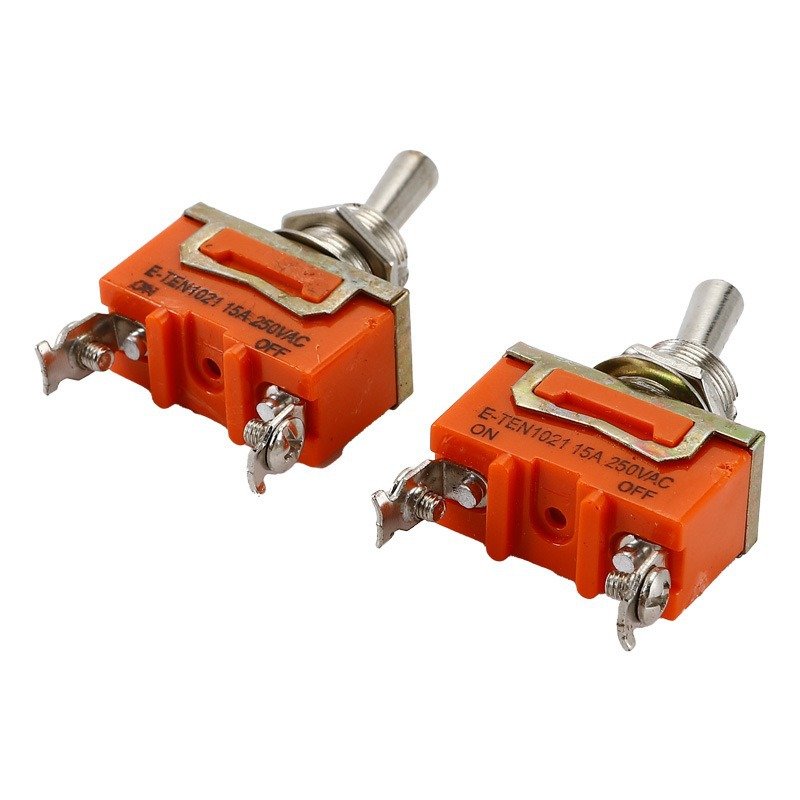
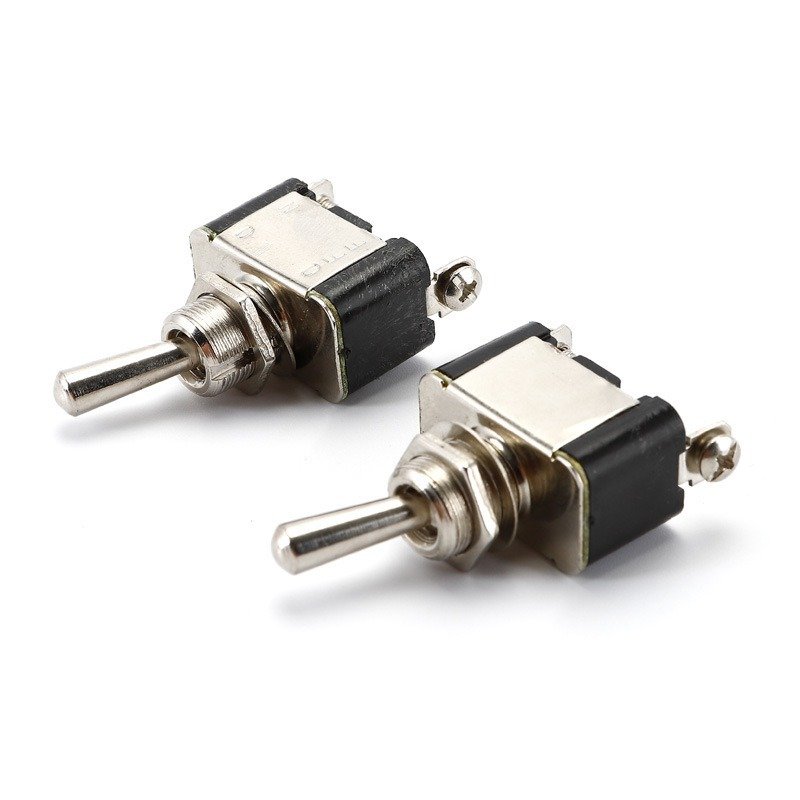
If the switch is a product panel key that users tap by hand, choose a tact switch for light operation and good click feedback. However, if the switch sits inside equipment to detect closing, stroke limit or position, choose a micro switch for reliable mechanical triggering. For panel-mounted manual power control, a Toggle Switch or rocker switch is often the better fit than a tact switch.
4.2 Judge the Circuit Property: Signal Transmission or Load Driving
If you only send high and low level signals to the MCU, a tact switch is enough, because it is smaller and lower cost. On the other hand, if the switch must drive loads such as small motors, bulbs or relay coils, a Micro Switch is mandatory. Otherwise, tact switches cannot take large currents and will suffer contact burnout.
Common Selection Pitfall
Many people think mouse keys use tact switches. In fact, standard office and gaming mouse buttons use micro switches. They are triggered by internal mechanical column compression, not by direct finger pressing. Therefore, they need the fast snap-action and long life of a micro switch.
5. Conclusion
Tact switch vs micro switch share a similar look but serve different roles. Specifically, the tact switch is a human-oriented signal input part for manual interaction and low-power signaling. Meanwhile, the micro switch is a mechanical detection and power control part with snap-action, high current resistance and high reliability.
For lightweight consumer products with frequent manual use, tact switches are the best choice. In contrast, for industrial equipment, automotive systems and home appliances that need position detection, safety interlock and load switching, micro switches are more reliable. Therefore, knowing their true working principles prevents design flaws caused by misselection.
We supply high-quality tact switches and micro switches with complete specifications and long service life. Custom structural and waterproof models are available. Explore our Toggle Switch range for panel control, and our Micro Switch catalog for detection and load switching. Contact us for datasheets and bulk quotations.