Blog
Micro Switch Working Principle: Snap-Action Explained


Micro Switch Working Principle: Snap-Action Explained
A micro switch is a snap-action device built for tiny travel and instant contact change. A small push on the plunger trips an internal spring. The contacts flip in a fraction of a millisecond. No steady force is needed to hold the circuit on or off. This article explains how the mechanism works and why it matters.
You meet these switches everywhere. They sit inside microwaves, washing machines, vending machines, and car door locks. Their small size and long life suit tight spaces with frequent use. The same mechanism also protects power tools and lifts through precise limit detection.
Why a Plain Metal Blade Falls Short
Imagine a switch built from one flexible metal strip. Pressing it moves the contacts together slowly and pulls them apart slowly. The contact resistance keeps drifting while the surfaces creep. The arc at break lasts longer, so the points burn and weld. The contact force also equals whatever you push, so release is lazy and uneven.
A snap-action micro switch removes every one of those problems with a single clever part.
What Is the Snap-Action Mechanism?
The core is a bowed spring strip, often shaped like an inverted U. It carries the moving contact on a small carrier. Engineers call it the snap spring, the quick-action leaf, or the jump mechanism. It is the soul of the device, and it defines every performance limit of the part.
The strip is a bistable elastic structure. It holds one of two steady states. State one keeps the normally closed (NC) contact pressed. State two keeps the normally open (NO) contact pressed. A tiny force at the right point flips it from one to the other.
Two travel points define the behavior. The operating point (OP) is where the spring crosses its mechanical inflection and snaps over. The release point (RP) is where it snaps back. The gap between them is the differential travel, and it prevents vibration from causing false trips.
The Physics Behind the Snap
The bowed spring stores potential energy. At rest it arches downward and pulls the moving contact firmly onto the NC terminal. That is the first steady state, and the NC circuit conducts.
When you press the plunger, you push the middle of the bow. The spring bends and stores more energy. At the critical point the external force overcomes the spring’s holding force. The bow’s elastic direction reverses in an instant. It no longer pulls down; it kicks upward with high speed. The moving contact slams onto the NO terminal. NC opens and NO closes within a few tenths of a millisecond.
Release the plunger and the small return spring pushes it back out. The bow loads reverse energy again. When the plunger reaches the release point, the spring flips a second time. The contact snaps back to NC. The device returns to its original state.
Three Reasons the Mechanism Is Essential
1. Switching Speed Is Independent of Press Speed
Press slowly or press hard; the contact change is always a fast jump. A plain blade follows your finger and moves as slowly as you do. The snap spring ignores that and delivers a consistent “click” every time.
2. Contact Force Self-Maintains
After the spring crosses its inflection, its own elastic energy clamps the contact. The plunger only needs to supply the small force to cross the threshold. It does not need to keep pushing to hold the circuit. This is why a micro switch needs low operating force yet stays reliably conductive.
3. Fast Break Suppresses the Arc
The contacts separate at high speed, so the arc exists for a much shorter time. Less arc means less blackening, less welding, and a far longer electrical life. That is the main reason industrial controls and safety switches favor this design.
The Full Operating Cycle, Step by Step
Free state: no force on the plunger, the bow sits in its lower steady arch, NC conducts, NO stays open.
Press: the plunger moves in and loads the spring. The contact state does not change yet; NC still conducts.
Reach OP: the spring crosses its inflection and snaps. The contact jumps to NO, NC breaks, the circuit switches.
Release: the return spring pushes the plunger out and the bow reloads reverse energy.
Reach RP: the spring snaps back and the contact returns to NC. The original state is restored.
How the Mechanism Shapes Key Parameters
Operating force is the push needed to cross the inflection; thicker spring steel means higher force. Operating and release travel are set by where that inflection sits. Differential travel is a natural feature of the snap structure and guards against chatter. Electrical life grows with spring force, because stronger clamping resists arc and wear.
One Sentence to Remember
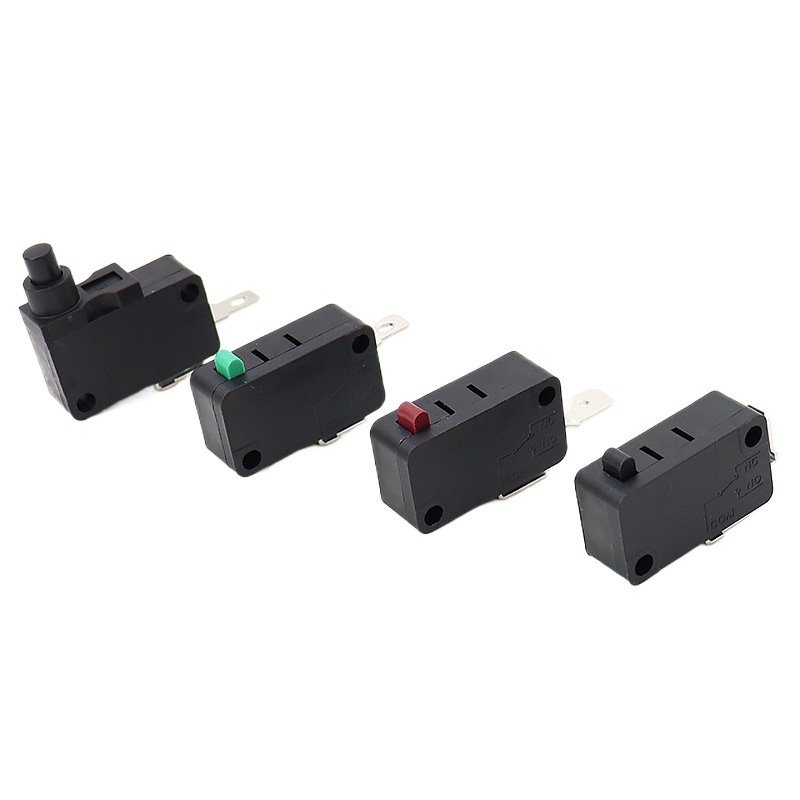
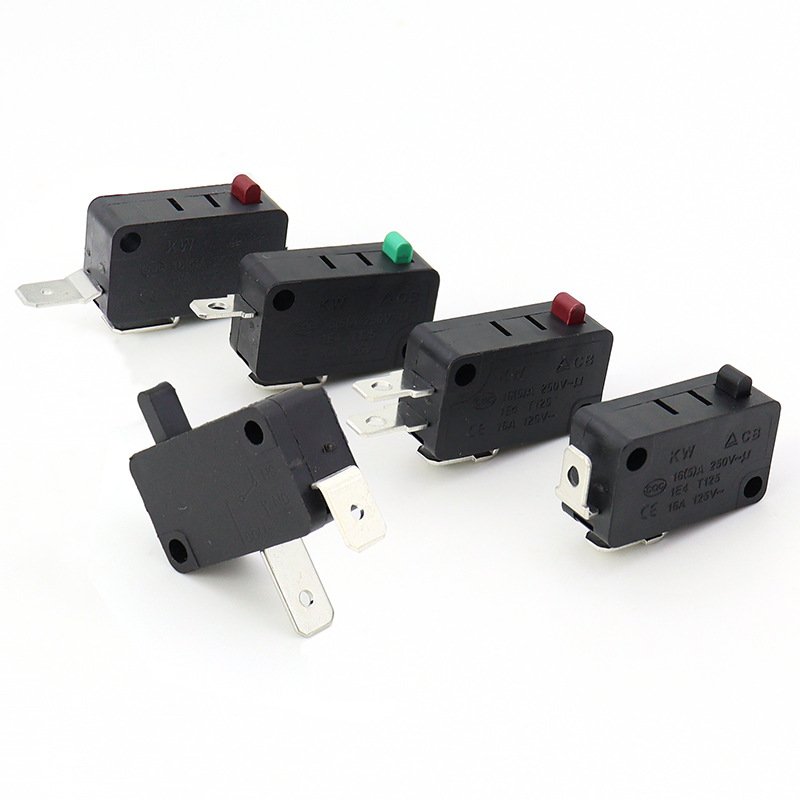
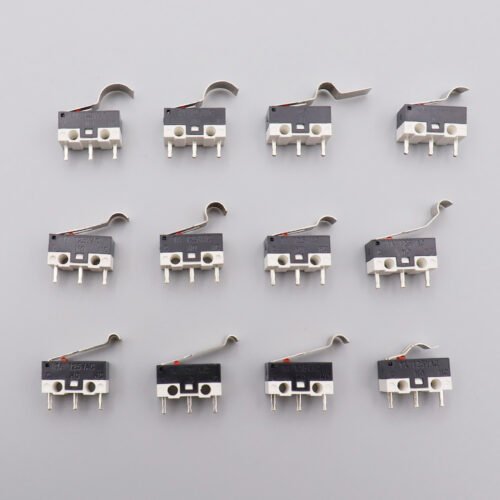
The snap-action mechanism is a bistable bowed spring that uses an inflection flip to switch contacts instantly, regardless of press speed, while keeping firm contact pressure and fast arc suppression. Browse our micro switch range to see the mechanism in real products, or review every snap-action micro switch model we stock for your next design.