Blog
Micro Switch in Automotive: Working Principle & Use Cases

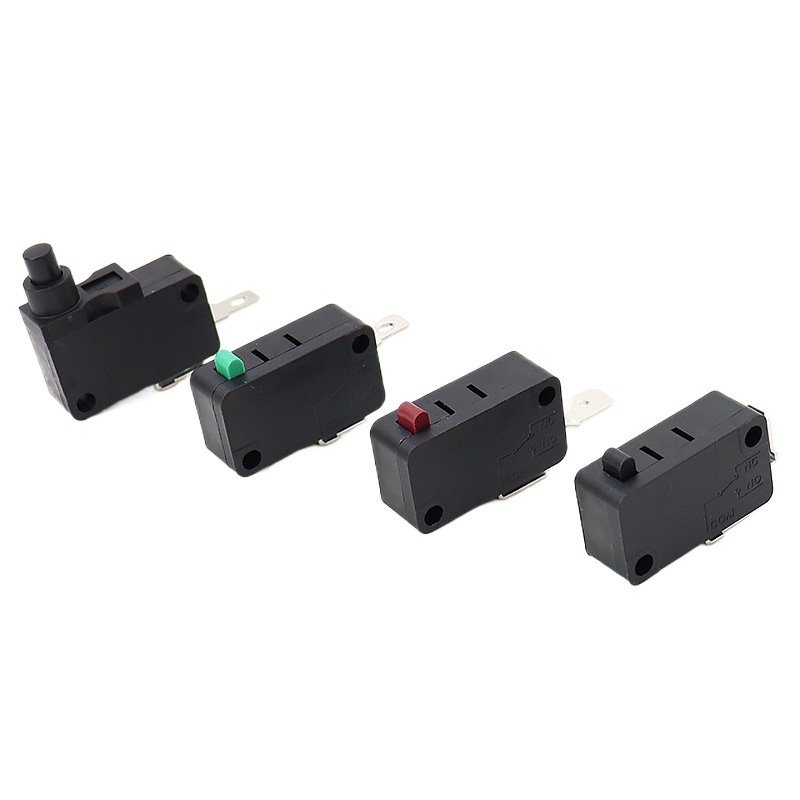
Modern cars hide countless tiny electronic parts. Among them, the micro switch plays a quiet but key role. It turns mechanical motion into clear electrical signals.
This guide explains how a micro switch works in vehicles. Moreover, it lists where cars use them and what engineers must check. Therefore, buyers can choose the right part with confidence.
What Is a Micro Switch?
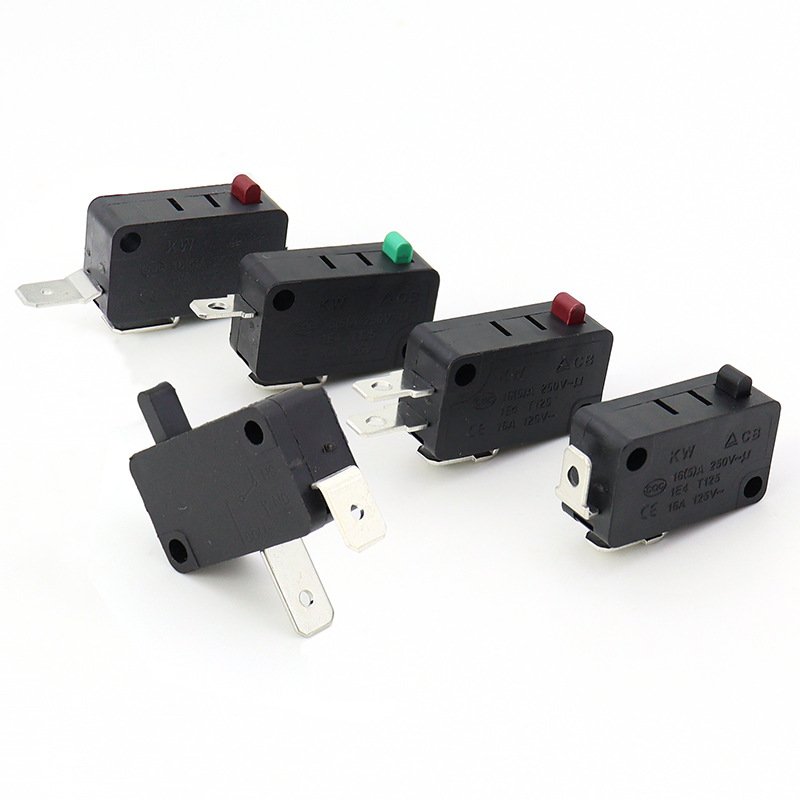
A micro switch is a small electromechanical component. It opens or closes a circuit on demand. Its build includes an actuator lever, a trigger spring, a bracket and a snap-action contact.
The working principle is simple. External force moves the actuator lever. Then the spring drives the snap-action mechanism. As a result, the contacts flip between open and closed. Once the force leaves, the spring resets the contacts. Thus, physical pressure becomes an instant electrical signal.
Main Automotive Applications of Micro Switches
Thanks to their simple build and long life, micro switches sit in many car systems. Typical spots include engine start buttons, tailgate locks, electronic shifters, brake sensing, suction doors and power windows.
Engine Start and Ignition Control
The push-button start is the most visible use. Old cars used a metal key. However, new cars use a micro switch behind the start button. It sends the ignition signal at once. Therefore, driving becomes easier and safer.
Lighting and Power Windows
Drivers control headlights and fog lamps through micro switch triggers. Reliable switching keeps lights fast and safe at night. In addition, power window modules use the same part. Thus, raising or lowering a window takes only a light touch.
Central Control and Comfort Systems
Micro switches also feed signals to air conditioning and audio systems. Moreover, they handle position detection across many subsystems. As a result, the whole cabin feels smarter and more convenient.
To see the full range, visit our Micro Switch catalog covering automotive-grade models.
Key Considerations for Micro Switches in Automotive Projects
A micro switch costs little, yet it deeply affects vehicle reliability. Poor choice may cause failure or safety risk. Therefore, engineers should weigh four core points.
IP67 Waterproof for Exposed Areas
Switches on outer or semi-exposed parts face rain, moisture and dust. Therefore, an IP67 sealed structure is strongly advised. As a result, water ingress and contact corrosion drop away.
Clear and Stable Signal Output
OEMs need precise actuation points. They also need clean electrical output. Consequently, intermittent faults are avoided and the system stays trustworthy.
Built-In Fault Detection
Door locks and handles benefit from double-throw switches. This type lets the ECU find loose wiring or odd circuit states. Alternatively, switches with differential impedance can support diagnosis.
Mechanical Strength and Safety
All car parts must meet tough strength rules. Circuit aging can trigger faults over time. Thus, engineers must study switch behavior early to prevent failures before mass production.
Our Automotive Micro Switch Supply and Custom Service
We are a professional micro switch manufacturer. Our portfolio covers nearly every model cars require. Moreover, our parts deliver long life and steady quality.
We welcome OEM and buyer inquiries. Free samples are available for testing. In addition, custom development matches your unique packaging and electrical needs. Browse our Micro Switch range for detailed specs.
Conclusion
A micro switch is the unsung hero of modern cars. It powers start buttons, lights, windows and door locks with quiet precision. Therefore, choosing the right IP67, signal and diagnostic features matters. As a result, vehicles stay safe, reliable and pleasant to drive.
FAQ
Q1: What is the core working principle of automotive micro switches?
A micro switch uses an actuator lever and an internal spring-driven snap-action mechanism. External force flips the contacts. Thus, movement becomes a clean on/off electrical signal.
Q2: Where are micro switches commonly installed in cars?
They appear in engine start buttons, tailgate locks, electronic shifters, brake sensing, suction doors, power windows, lighting and central control modules.
Q3: Why do some automotive micro switches require IP67 waterproof rating?
Exterior parts face rain splash, humidity and dust. IP67 sealing blocks water and prevents contact oxidation. Therefore, unexpected circuit faults are avoided.
Q4: What is the advantage of double-throw micro switches for door locks?
Double-throw switches support circuit monitoring. The ECU can detect loose wiring or abnormal states. Consequently, on-board fault diagnosis becomes possible.
Q5: Can automotive micro switches be customized?
Yes. We offer custom development for mounting, actuator style and electrical parameters. In addition, free samples are provided for customer testing.