Blog
Rocker Switch Contact Selection Guide: Bad Contact Choices Can Halve Your Equipment Lifespan

Rocker Switch Contact Selection Guide: Bad Contact Choices Can Halve Your Equipment Lifespan
This rocker switch contact selection guide starts with a blind spot. When selecting rocker switches for machines, pumps and motors, most engineers check only the outer shape and printed rating. However, that habit is dangerous. Hidden contact details often get overlooked. As a result, the wrong contacts can cut your equipment life by 50% or more.
This rocker switch contact selection guide breaks down common contact pitfalls. In addition, it covers contact material differences, pole configurations and AC vs DC rating rules. Furthermore, you can apply the practical selection formulas directly to your projects.
#1 Critical Mistake: Judging A Rocker Switch Only By Its Printed Current Rating
Many buyers assume a rocker switch marked 10A can safely carry 10A in any scenario. This misunderstanding is the top cause of burnt contacts, contact welding and premature switch failure.
1. 10A 250VAC Rating ≠ 10A DC Rating
First, alternating current arcs self-extinguish as voltage crosses zero in each AC cycle. By contrast, DC arcs have no zero crossing point, so arcs persist much longer and erode contacts rapidly.
Therefore, a switch rated 10A @250VAC can only handle 3A to 5A DC. If you run full 10A DC through this switch, contacts will blacken, melt and stick together quickly.
2. Inrush Current Can Be 3–7 Times Higher Than Continuous Current
For example, motors, water pumps and heating elements draw massive startup inrush current. Always reserve sufficient current margin for these loads.
As a rule of thumb, if your device draws 5A continuous, select a rocker switch rated at least 10A. Without this safety margin, constant arc formation will wear contacts and halve service life.
3. Simple Memorization Rule
- AC loads: Use the printed rating directly
- DC loads: Derate current by 1/2
- Inductive loads: Double the required current rating
Contact Material: The Hidden Core That Decides Switch Lifespan
First, you cannot judge contact quality by visual inspection alone. Contact material determines arc resistance, oxidation resistance and anti-welding performance.
Low-cost option: Pure copper / thin copper plated contacts
However, low price is the only advantage. Copper contacts oxidize and turn black easily under arcing. They suffer contact welding and poor conductivity after a few months. Suitable only for trivial low-power household gadgets. Never use for industrial or high-power equipment.
Recommended: Silver-Nickel Alloy Contacts (AgNi)
In contrast, silver-nickel alloy contacts resist electric arcs, oxidation and contact welding. This is the standard contact material for industrial rocker switches. Always specify AgNi contacts for heavy-duty equipment.
Pro tip: Notably, cheap bulk rocker switches almost always use bare copper contacts. Industrial and high-power applications must use silver alloy contacts.
Rocker Switch Pole & Circuit Configurations: 90% of Users Select The Wrong Type
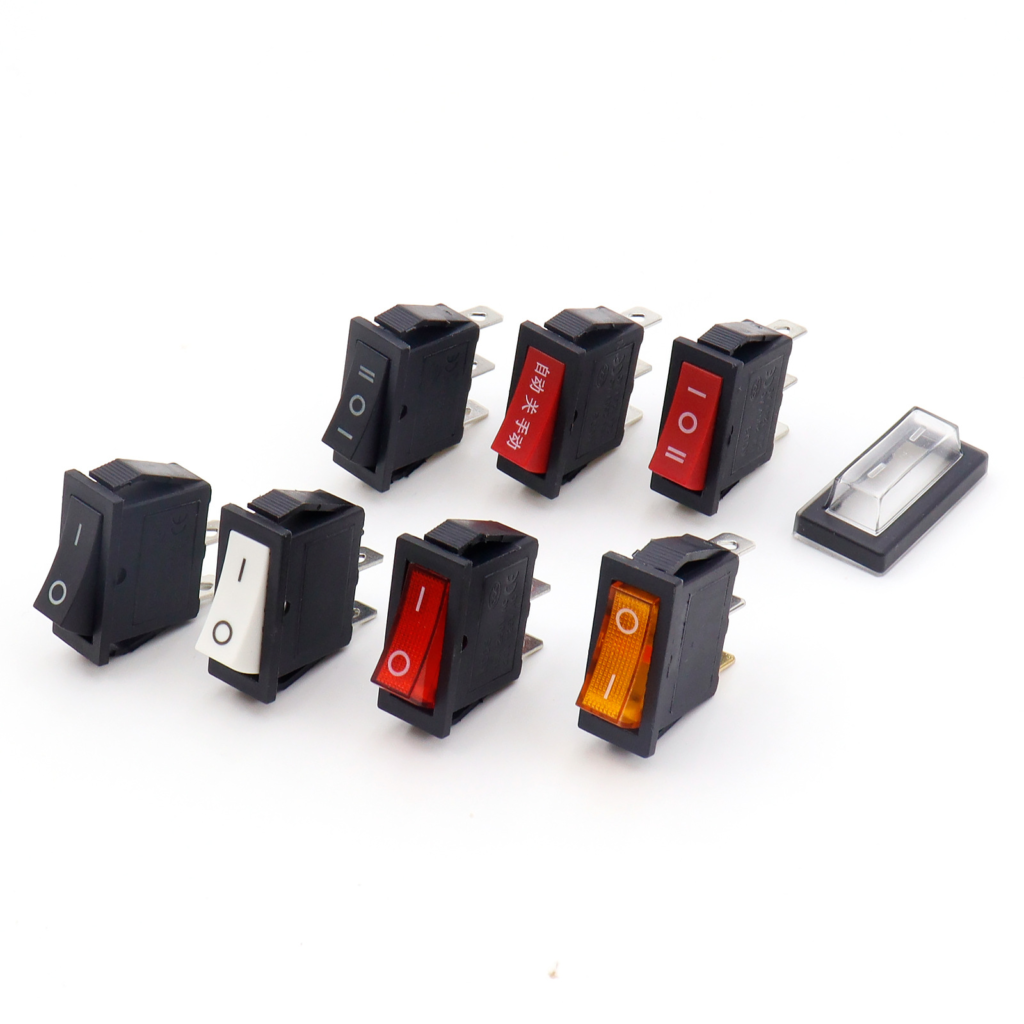
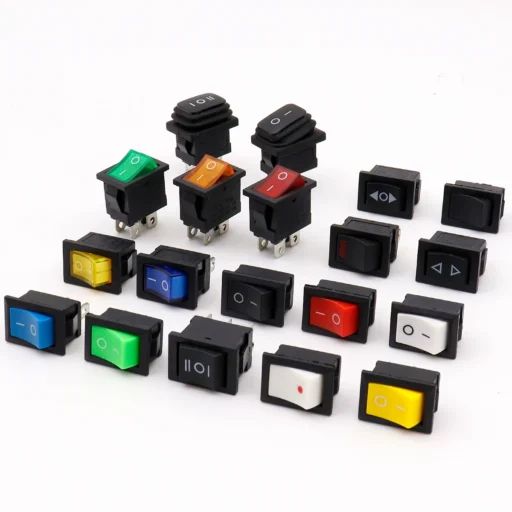
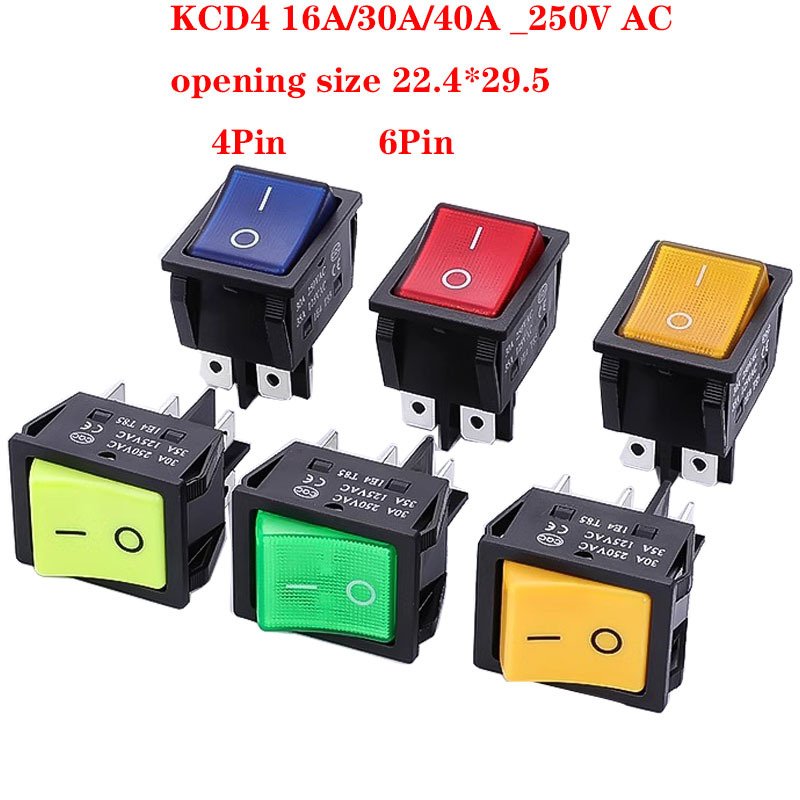
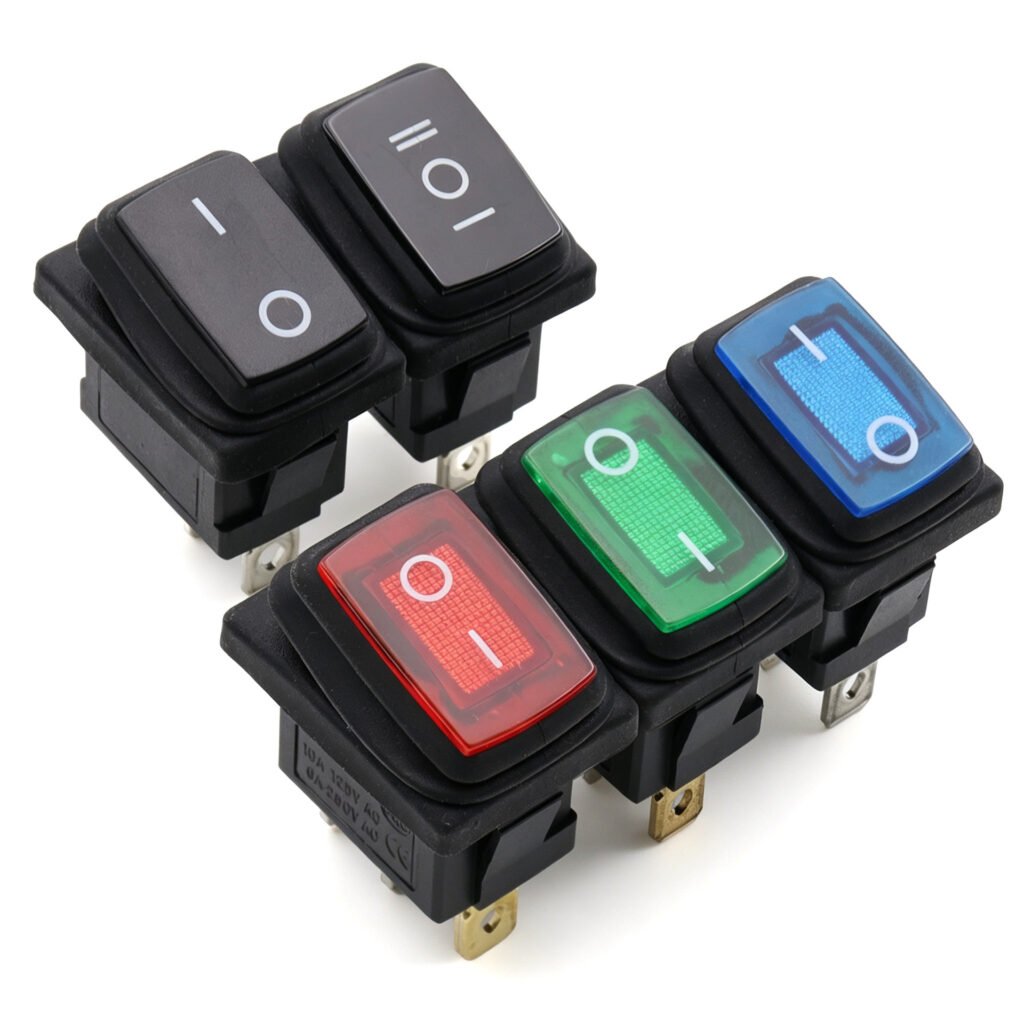
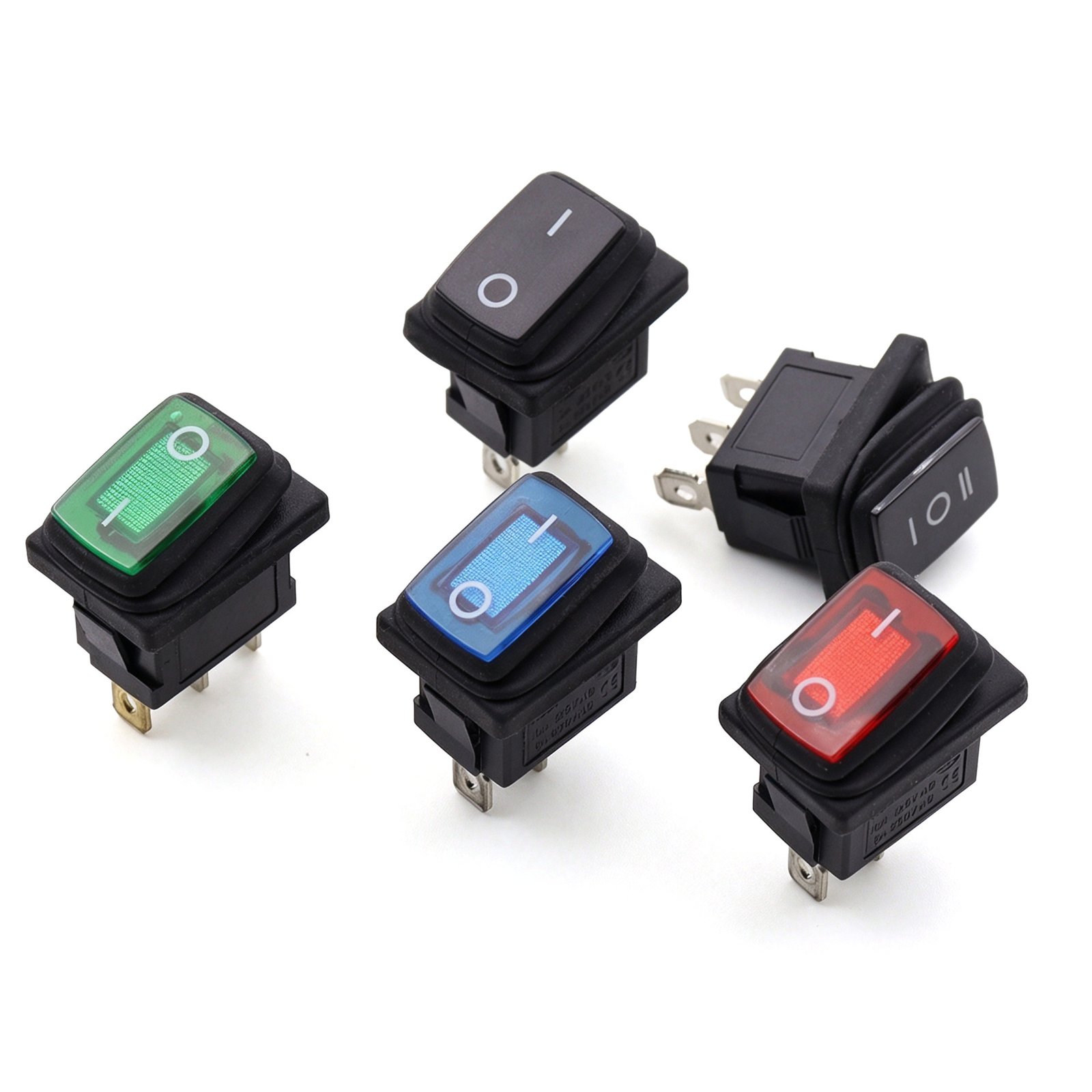
Generally, rocker switches come in 2-pin, 3-pin, 4-pin and 6-pin versions. Each configuration serves a different circuit purpose.
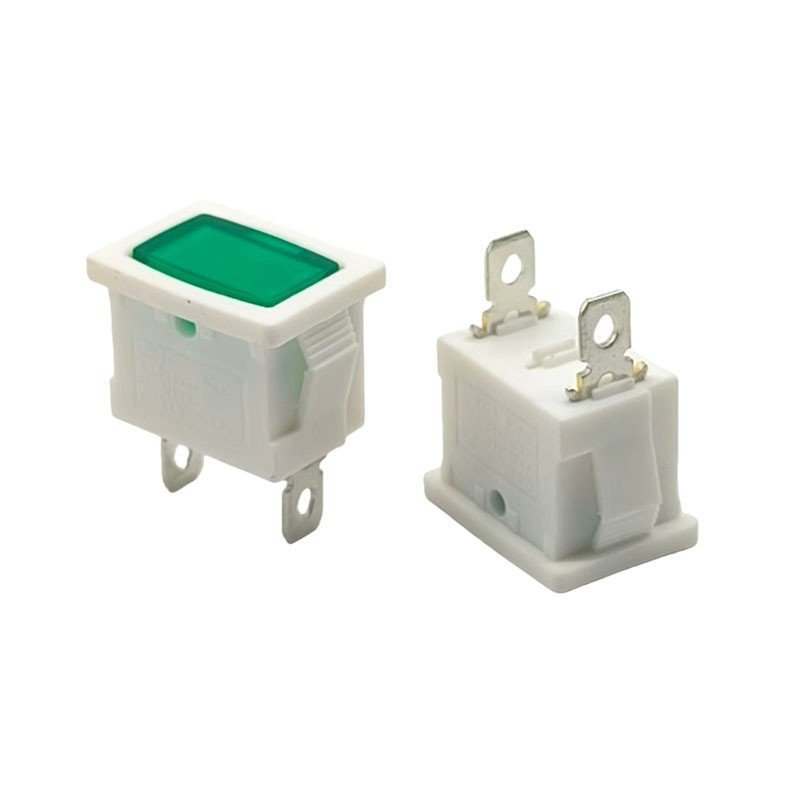
2-Pin (SPST, Single Pole Single Throw)
Basically, it provides basic on-off control for one live wire. Best for simple low-power power switching.
3-Pin (ON-OFF-ON, SPDT)
Typically, it is a three-position changeover switch with a middle OFF position. Commonly used for motor forward/reverse control.
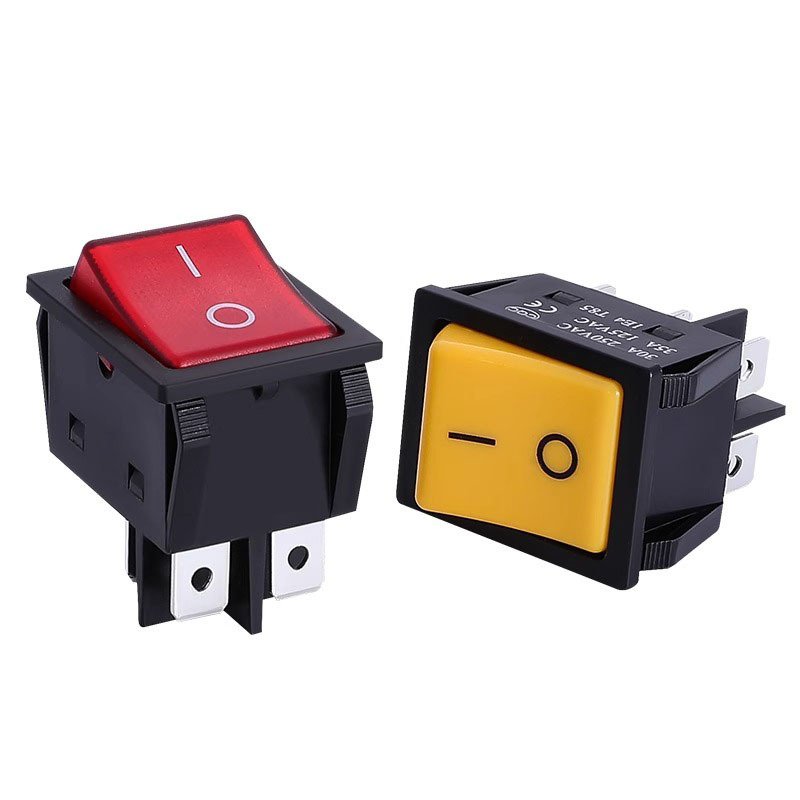
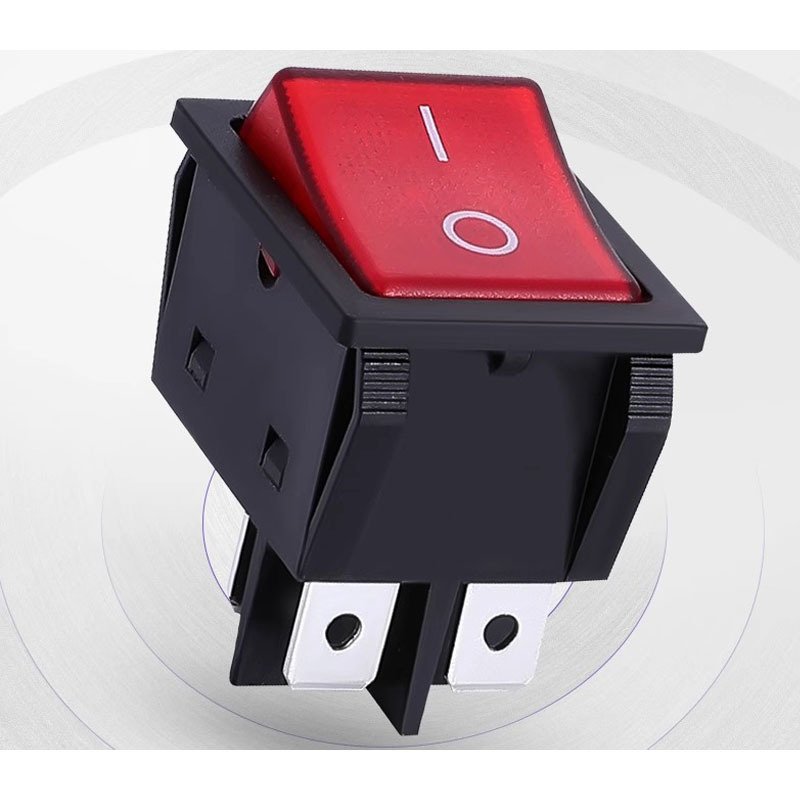
4-Pin (DPST, Double Pole Single Throw)
Specifically, it is a double pole switch that disconnects live and neutral wires at the same time.
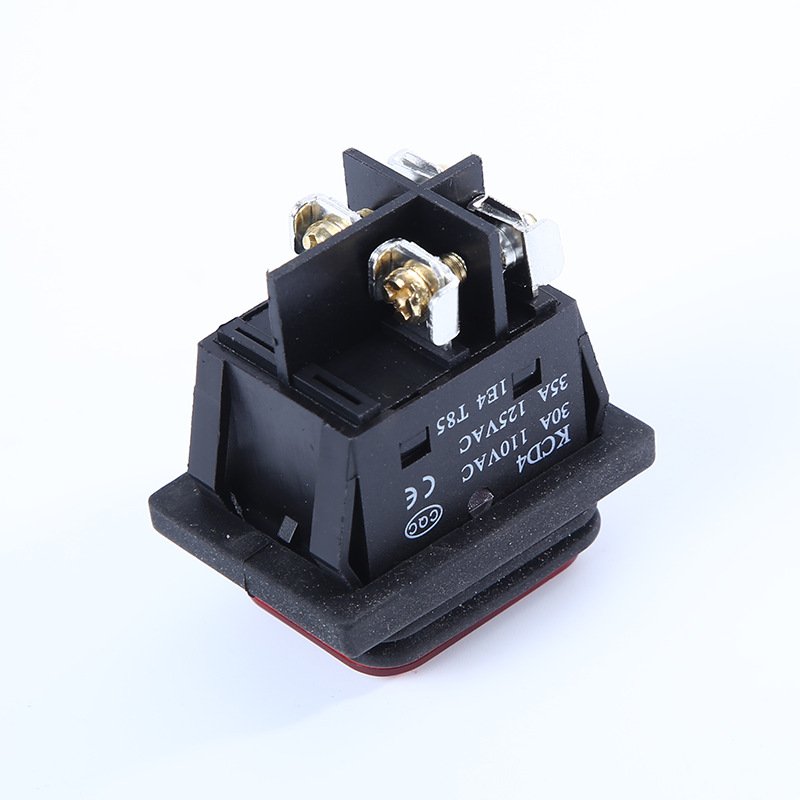
Critical note: Consequently, for 220V high-power equipment, always choose a 4-pin DPST rocker switch. A single-pole switch leaves one side of the circuit energized, creating leakage risk. Single-point contact pressure also accelerates heat buildup and contact wear.
6-Pin (DPDT, Double Pole Double Throw)
In short, it is a dual-pole three-way switch used for industrial bidirectional control circuits.
Common pitfall: Similarly, installing a 2-pin single pole rocker switch for high-power loads is risky. The single contact carries full current, generates continuous heat and shortens switch life drastically.
For SPST, DPST and DPDT options, browse the full switch product line matched to your circuit.
Internal Rocker Mechanism: Copper Tab vs Independent Spring, Up To 5X Lifespan Gap
Typically, budget rocker switches use thin copper sheets to maintain contact pressure. After repeated actuation, copper loses elasticity. You will see loose contact and intermittent connection after only 10,000–20,000 cycles.
By comparison, high-quality rocker switches use separate internal springs paired with silver contacts. Spring pressure remains stable through repeated switching. These switches typically deliver 50,000–100,000 mechanical cycles.
Quick manual quality check: Overall, a good rocker switch has crisp, firm tactile feedback. If the rocker feels soft and mushy, it uses cheap copper tabs and will fail early.
AC and DC Voltage Ratings Are Not Interchangeable
Specifically, AC250V rated switches are designed for 220V AC mains equipment.
Meanwhile, DC12V / DC24V switches are built for low-voltage DC systems.
Therefore, an AC-rated rocker switch cannot run continuously on DC circuits. The sustained DC arc eats away contacts and causes rapid failure. Always match switch voltage rating to your circuit type.
Safety Certifications & IP Rating Requirements For Industrial Equipment
Safety Approvals
First, look for CQC, UL or VDE certification. Otherwise, uncertified rocker switches use low-grade flame-retardant housing and carry fire hazards under overload.
IP Ingress Protection
Specifically, choose the IP grade by your environment:
- Dry indoor cabinet use: IP40 is sufficient
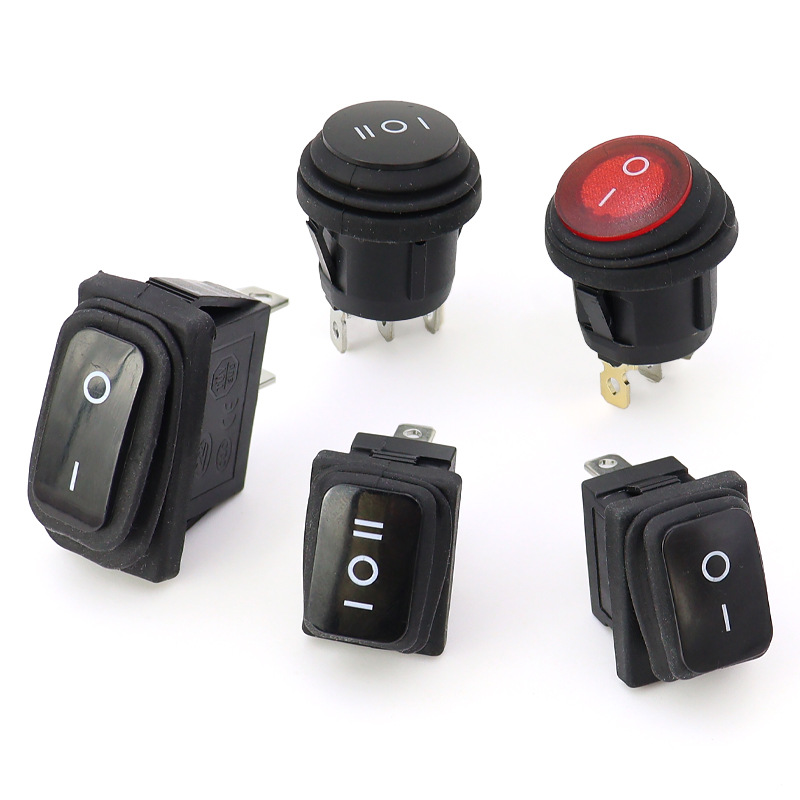
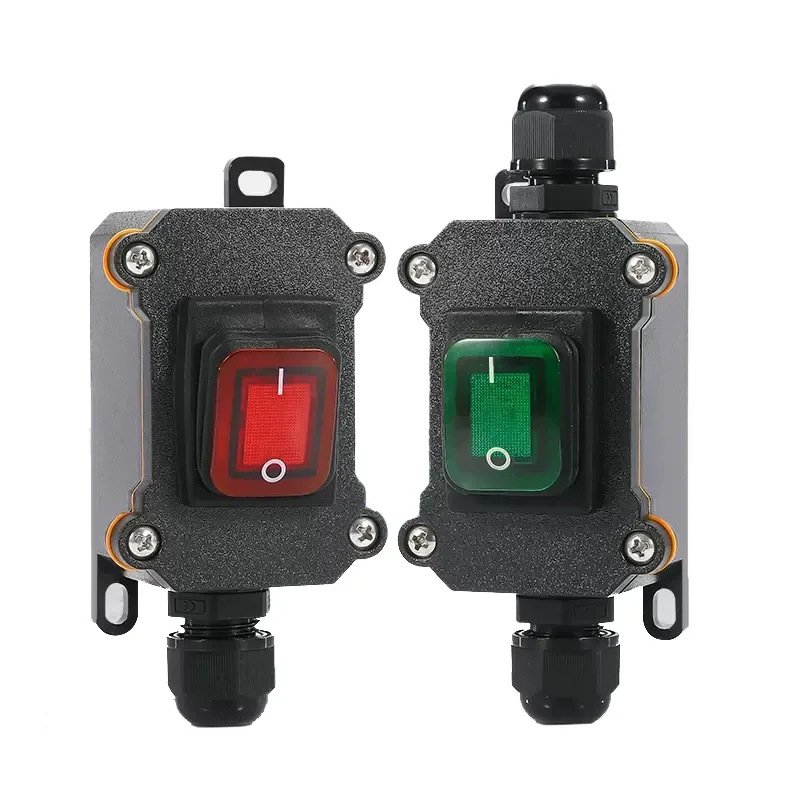
- Humid, outdoor or oily environments: Select IP54 or higher. Moisture and oil contamination oxidize contacts and disable the switch quickly.
Flame Retardant Grade
In fact, V0 is the highest flame retardant standard. Budget switches often use V2 plastic, which melts easily under high temperature.
Wiring Terminal Hidden Risks
First, never mix up common, input and output terminals. Otherwise, reversed terminals leave the normally closed side energized. The contact stays charged even when the rocker is switched OFF, accelerating contact aging.
Moreover, match wire gauge to your working current. Undersized wires overheat and can destroy the entire rocker switch assembly.
Ready-To-Use Rocker Switch Selection Formula
Simply copy these rules directly for your electrical design or sourcing:
| Application | Configuration | Contact Material | Rating Rule |
|---|---|---|---|
| Low-power 220V (<5A) | 2-pin SPST | Standard silver | Use printed rating directly |
| Standard 220V (5A–10A) | 4-pin DPST | AgNi silver-nickel | 16A rated |
| 12V / 24V DC | Match voltage type | Silver alloy | Derate marked current by half, choose one size higher |
| Motors, heaters, inductive | Double-pole high-current | Silver alloy | Operating current ×2 |
Rocker Switch Contact Selection Guide: Final Summary
In summary, a rocker switch is not just a simple on-off component. It acts as the first line of protection for your whole machine. Four factors decide reliability and equipment lifespan. They are contact material, sufficient current derating margin, double-pole structure and correct AC/DC rating matching. Get any one wrong, and your equipment life can be cut in half.
To source industrial-grade DPST and AgNi rocker switches built for heavy loads, visit our complete switch catalog.
Frequently Asked Questions (FAQ)
Can I use a 10A 250VAC rocker switch for 10A DC loads?
Specifically, AC and DC ratings differ fundamentally. The same 10A AC switch can only handle roughly 3–5A DC because DC arcs do not self-extinguish.
What rocker switch contact material is best for industrial use?
In short, silver-nickel alloy (AgNi) contacts are the industry standard for arc resistance and anti-welding performance. Avoid bare copper contacts for heavy-duty applications.
Is DPST 4-pin rocker switch mandatory for 220V high-power devices?
Yes. Specifically, DPST disconnects both live and neutral lines to eliminate residual voltage risk. Single-pole switches leave one line energized and create safety hazards plus faster contact degradation.
What IP rating should I choose for workshop humid environments?
Choose IP54 or higher. In contrast, IP40 only works for dry indoor electrical cabinets.