

Blog
Rocker Switch Housing Material Analysis: Environmental Adaptability & Selection Guide

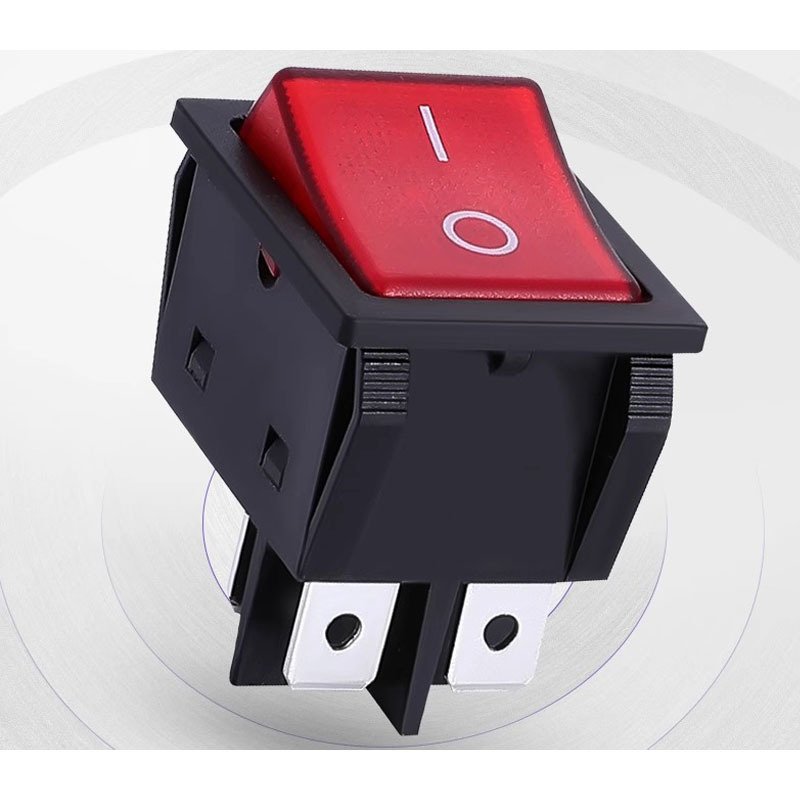
Rocker Switch Housing Material Analysis: Environmental Adaptability & Selection Guide
Generally, rocker switches serve household appliances, automotive systems, marine equipment, and industrial controls. Therefore, they earn trust through simple operation, compact structure, and long-term reliability. The housing shell protects the whole switch. Consequently, the rocker switch housing material decides durability and fire safety. In addition, it sets mechanical stability and environmental adaptability under extreme conditions.
First, standard rocker switches use three mainstream housing materials: Nylon (PA), Polycarbonate (PC), and Polyphenylene Oxide (PPO). However, each material performs very differently in heat resistance, low-temperature toughness, flame retardancy, chemical stability, and mechanical strength.
In short, this professional B2B guide delivers a full rocker switch housing material analysis. Specifically, it compares Nylon, PC, and PPO housings and lists their pros and cons. Therefore, it helps engineers choose a cost-effective, environment-matched material.
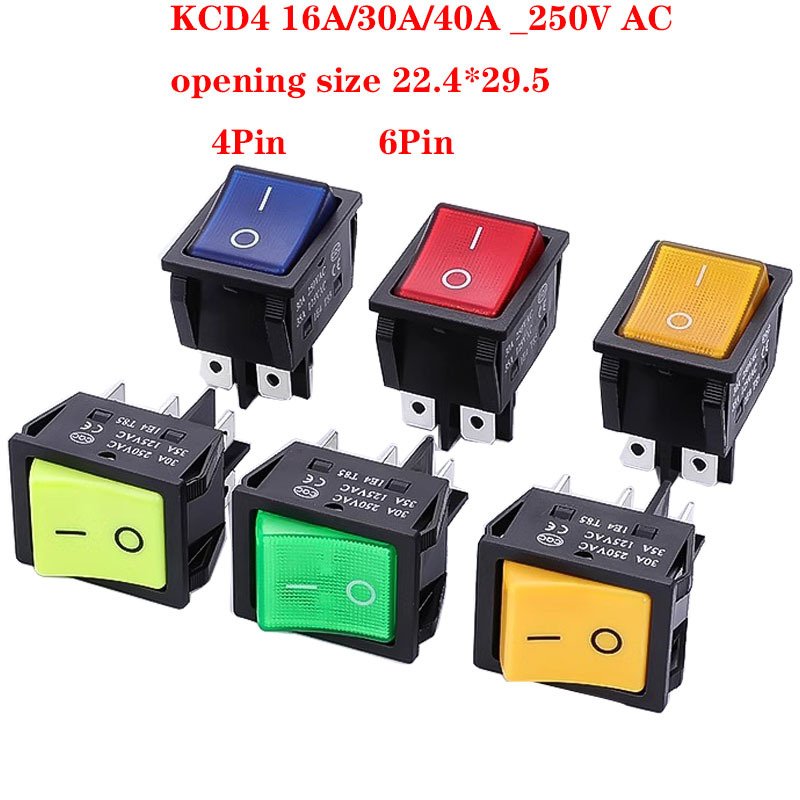
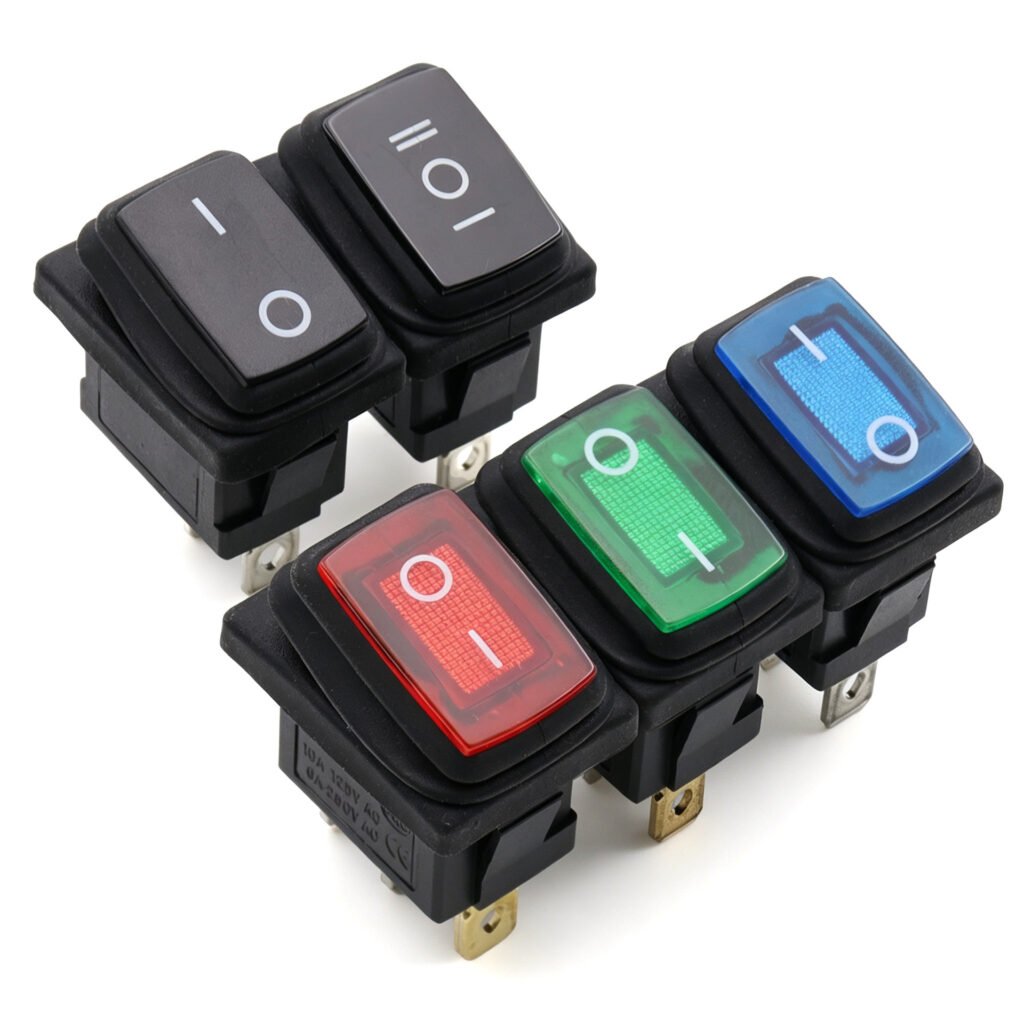
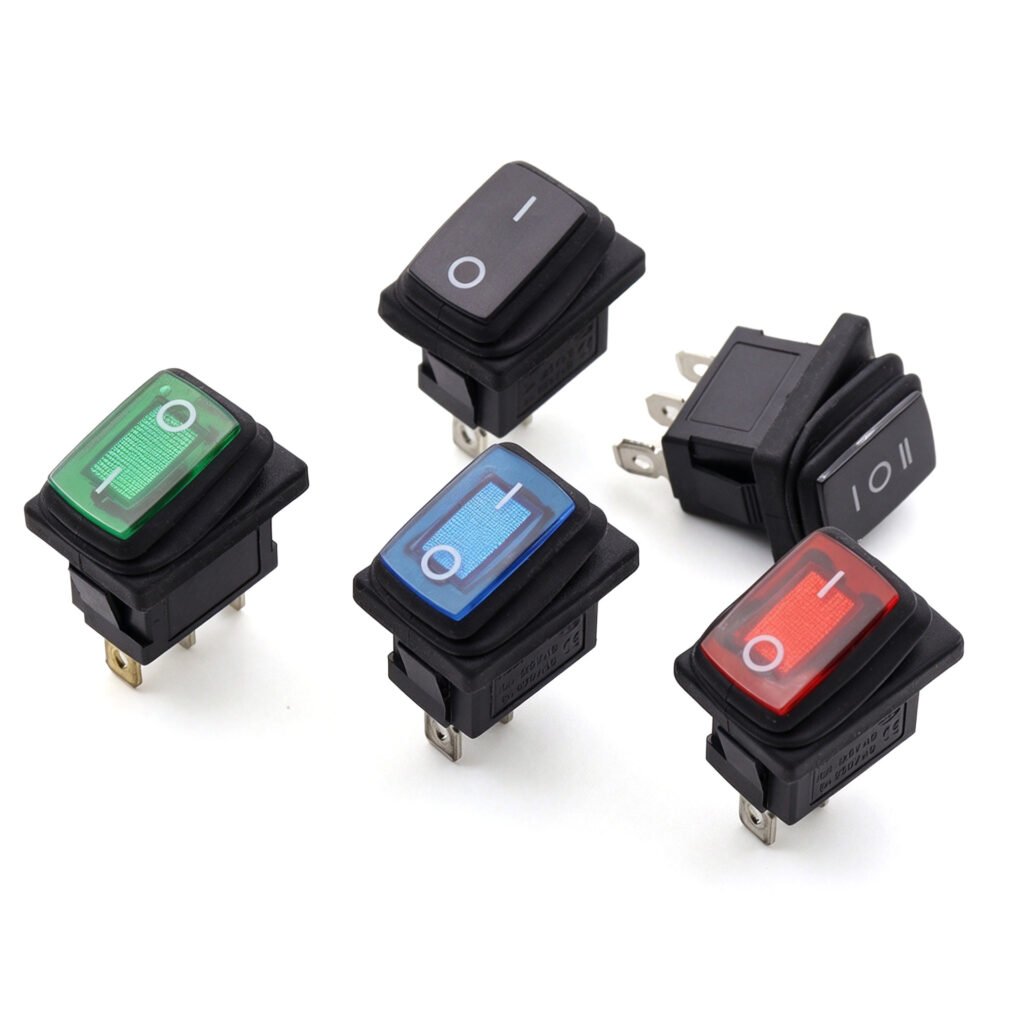
First, browse our rocker switch catalog to see Nylon, PC, and PPO models side by side.
Rocker Switch Housing Material Analysis: The Three Mainstream Materials
Below, we break down each material by four factors. First, we examine high-temperature resistance, low-temperature toughness, flame retardancy, and overall cost. Therefore, this structure helps buyers match a material to their real working environment.
1. Nylon (PA) Housing: Best for Medium-High Temperature Household Appliances
Generally, Nylon is the most cost-effective and widely used housing material for general-purpose rocker switches. Moreover, glass fiber reinforced Nylon (PA66+GF30) is the industrial upgrade. Therefore, it offers excellent structural stability and heat resistance.
1.1 High-Temperature Resistance
First, reinforced Nylon shows a high Heat Deflection Temperature (HDT). Specifically, PA66+GF30 keeps stable structure under short-term heat up to 200°C without softening or deformation. Thus, it resists conductive heat from heating parts inside appliances.
Typical application: For example, rocker switches for electric kettles, coffee machines, rice cookers, and electric heaters use this material.
1.2 Low-Temperature Resistance
However, standard Nylon has poor low-temperature toughness. Specifically, its brittleness temperature sits near -20°C. Therefore, in ultra-cold outdoor use, conventional Nylon housings crack under impact stress. As a result, cold-region equipment must use specially modified low-temperature Nylon.
1.3 Flame Retardant Performance
However, pure Nylon has limited natural flame resistance. Therefore, after adding halogen-free or red phosphorus retardants, it easily reaches UL94 V-0. Thus, this meets standard electrical safety rules and prevents fires caused by internal arc ignition.
1.4 Advantages & Limitations
Pros: Overall, its pros include high mechanical strength, excellent wear resistance, stable structure, and moderate cost with strong cost-performance.
Cons: However, its cons include poor low-temperature toughness and strong moisture absorption. Therefore, high humidity may cause slight dimensional instability.
2. Polycarbonate (PC) Housing: Best for Low-Temperature & Illuminated Switches
In contrast, Polycarbonate (PC) is a high-toughness transparent engineering plastic. Therefore, it is famous for outstanding impact resistance and extreme low-temperature stability. As a result, it is the preferred material for illuminated rocker switches and outdoor low-temperature equipment.
2.1 High-Temperature Resistance
First, PC has an HDT near 135°C, lower than reinforced Nylon and PPO. Therefore, it works well in medium-temperature spaces. However, long exposure above 120°C causes aging and discoloration.
Typical application: For example, medical devices, power strips, and illuminated rocker switches use it. They need transparent light transmission and basic heat resistance.
2.2 Low-Temperature Resistance
First, PC’s biggest advantage is extreme low-temperature adaptability. Specifically, it keeps excellent toughness and impact resistance at -40°C without brittleness or cracking. Therefore, this far exceeds Nylon’s low-temperature performance.
Typical scenario: For instance, automotive switches and outdoor equipment in cold regions rely on it. North America and Russia are common examples.
2.3 Flame Retardant Performance
Moreover, PC has inherent good flame retardancy. Therefore, most pure PC passes UL94 V-0 without complex modification. Thus, this meets strict fire safety standards for aerospace, rail transit, and medical equipment.
2.4 Advantages & Limitations
Pros: Overall, its pros include ultra-high low-temperature toughness, transparent light transmission, excellent impact resistance, and stable flame retardancy.
Cons: However, its cons include ordinary high-temperature resistance, because it is prone to yellowing and aging under long-term high-temperature operation.
3. PPO (Polyphenylene Oxide) Housing: Best for High-Temperature Industrial Environments
Meanwhile, PPO is a high-end engineering plastic with top-tier heat resistance and dimensional stability. Therefore, it targets extreme industrial high-temperature and high-flame-retardancy scenarios. As a result, it is widely used in high-power electrical equipment.
3.1 High-Temperature Resistance
First, PPO boasts an HDT up to 210°C, ranking first among the three. Therefore, it runs stably for long periods in continuous high-temperature environments without softening, deformation, or structural failure.
Typical application: For example, industrial heating equipment, engine compartment switches, and high-power distribution cabinets use it.
3.2 Low-Temperature Resistance
However, PPO shows medium low-temperature adaptability. Specifically, it stays tough at -30°C, performing better than Nylon but slightly below PC material.
3.3 Flame Retardant Performance
Moreover, PPO has natural excellent flame retardancy. Therefore, unmodified PPO reaches UL94 V-1, and modified PPO easily hits V-0 without excessive additives. Thus, this ensures safer, more stable fire resistance.
Typical scenario: For instance, rail transit, power equipment, and industrial control systems with strict fire protection standards rely on it.
3.4 Advantages & Limitations
Pros: Overall, its pros include industry-leading high-temperature resistance, ultra-stable dimensional accuracy, superior natural flame retardancy, and strong environmental aging resistance.
Cons: However, its cons include high material cost, difficult processing, and low cost-performance for ordinary low-power scenarios.
4. Nylon vs PC vs PPO: Full Performance Comparison Table
| Performance Index | Nylon (PA) | PC | PPO |
|---|---|---|---|
| High-Temperature Resistance | ★★★★☆ (Max 200°C) | ★★★ (Max 135°C) | ★★★★★ (Max 210°C) |
| Low-Temperature Resistance | ★★ (Brittle below -20°C) | ★★★★★ (Stable at -40°C) | ★★★★ (Stable at -30°C) |
| Flame Retardancy | ★★★ (Requires additives for V-0) | ★★★★ (Easy to reach V-0) | ★★★★★ (Natural flame retardant) |
| Mechanical Strength | ★★★★ (High wear resistance) | ★★★★ (High impact resistance) | ★★★★ (High structural stability) |
| Environmental Adaptability | Average (Hygroscopic) | Good (Low temp & impact proof) | Excellent (High temp & fire proof) |
| Cost Performance | Medium (Best cost-effective) | Medium-High | High (Premium grade) |
5. Industry-Specific Material Selection Guide
5.1 Household Appliance Industry
Recommended material: Modified Flame-Retardant Nylon. First, for electric kettles, coffee machines, and cooking appliances, Nylon balances medium-high heat resistance, flame retardancy, and cost. Therefore, it is the most practical choice for mass-produced household devices.
5.2 Automotive & Marine Equipment
Recommended material: PC. First, vehicles and marine devices face low-temperature, vibration, and impact. Therefore, PC’s ultra-low-temperature toughness and high impact resistance prevent shell cracking and ensure stable long-term operation.
5.3 Industrial & High-Power Equipment
Recommended material: PPO. First, industrial heating equipment, power cabinets, and engine peripherals need long-term heat resistance and ultra-high flame retardancy. Therefore, PPO avoids aging, deformation, and fire hazards in extreme high-heat scenarios.
5.4 Medical & Rail Transit Equipment
Recommended material: PC / PPO. First, these fields demand the highest safety standards. Specifically, PC gives stable flame retardancy and light transmission for medical devices. Meanwhile, PPO meets long-term high-temperature and fire-resistant needs for rail transit control switches.
6. Future Development Trends of Rocker Switch Housing Materials
Industrial safety standards are now stricter. In addition, working environments are more diverse. Therefore, housing materials evolve toward high performance, environmental protection, and customization.
- First, high-performance modified materials: Nano-filler and fiber reinforcement optimize the heat resistance, toughness, and dimensional stability of Nylon, PC, and PPO.
- Second, eco-friendly materials: Halogen-free flame retardants and bio-based plastics replace harmful additives to meet global environmental certifications.
- Third, intelligent composite materials: High-transparency, anti-aging PC composites serve illuminated smart rocker switches for better visual recognition and longer life.
- Finally, extreme environment customized materials: Salt-spray-resistant and UV-resistant modified Nylon and PPO target marine, photovoltaic, and outdoor extreme scenarios.
7. Conclusion
Selecting a rocker switch housing material weighs working temperature, environmental conditions, safety standards, and budget. In short, this rocker switch housing material analysis proves that the right material choice drives product reliability.
- First, Nylon: The best cost-effective option for cost-sensitive household appliances with medium heat resistance.
- Second, PC: The optimal choice for low-temperature, high-impact, and illuminated switch scenarios such as automotive and outdoor equipment.
- Third, PPO: The premium solution for high-temperature, high-flame-retardant industrial and professional equipment.
In the future, new material technologies will deliver higher performance, greener production, and stronger environmental adaptability. Therefore, they will give reliable component solutions to industrial and consumer electronics industries alike.
Finally, visit our rocker switch range to explore Nylon, PC, and PPO housing options for your project.
Frequently Asked Questions (FAQ)
1. Which rocker switch housing material is best for high-temperature environments?
First, PPO is the top choice for long-term high-temperature work, followed by glass fiber reinforced Nylon. However, we do not recommend PC for continuous high-temperature use because it ages and discolors.
2. What material is suitable for outdoor cold-region switches?
First, PC is the best option. Specifically, it stays tough at -40°C, while ordinary Nylon becomes brittle and cracks in ultra-low temperatures.
3. Which material has the best flame retardant performance?
First, PPO has the strongest natural flame retardancy. Meanwhile, PC easily reaches UL94 V-0, and Nylon needs professional flame retardant modification to meet fire safety standards.
4. Why use PC for illuminated rocker switches?
First, PC offers excellent light transmittance and impact resistance. Therefore, it ensures clear LED light display while protecting the internal switch structure from damage.
One thought on “Rocker Switch Housing Material Analysis: Environmental Adaptability & Selection Guide”