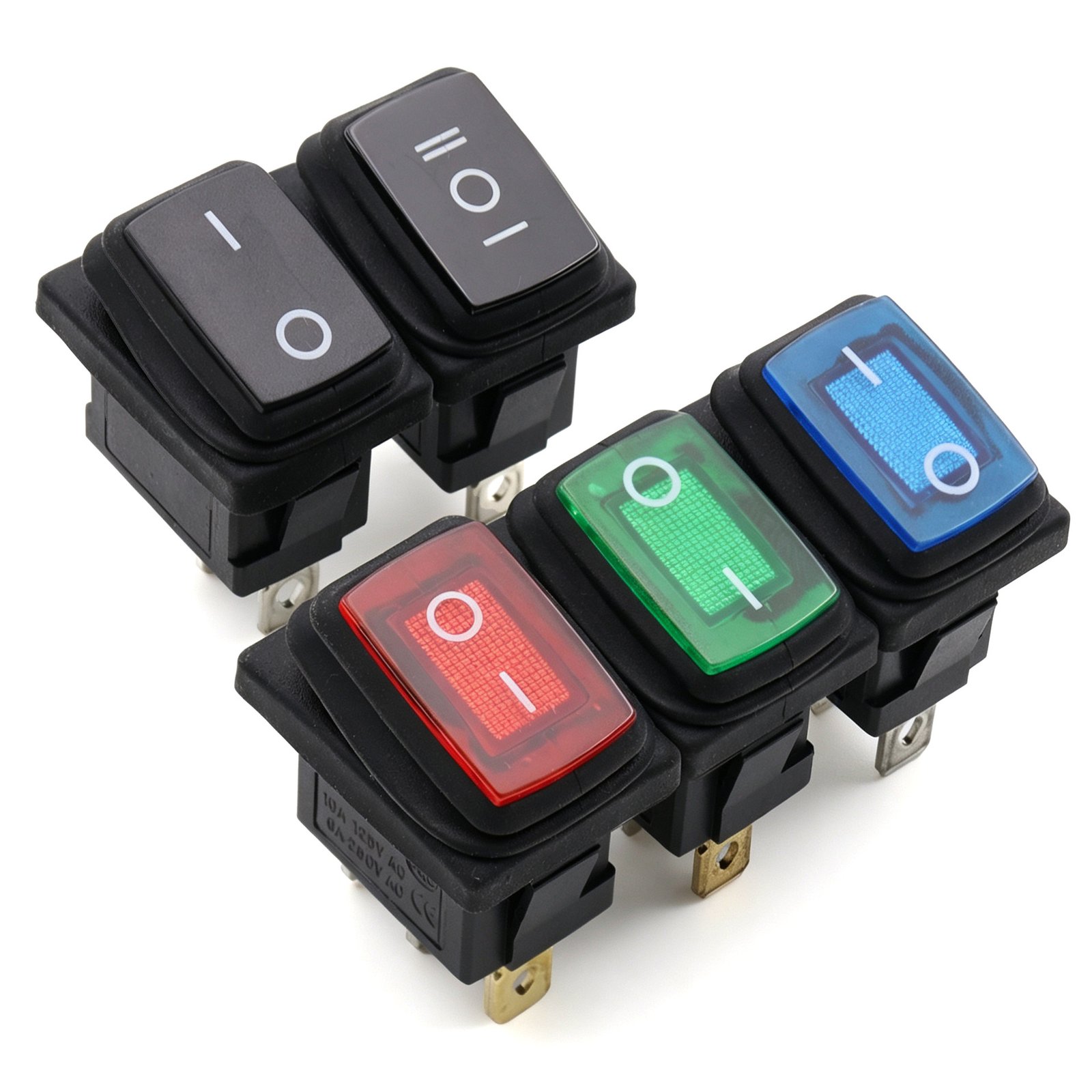
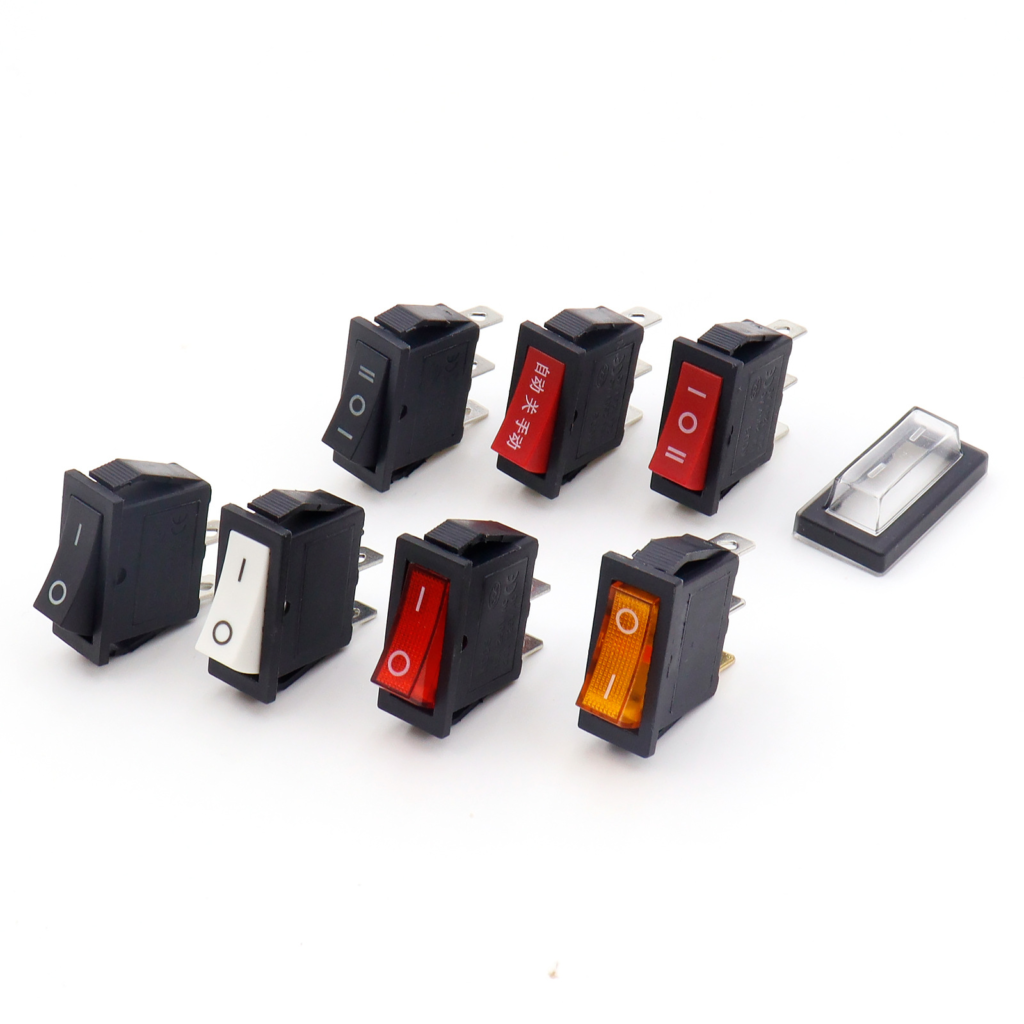
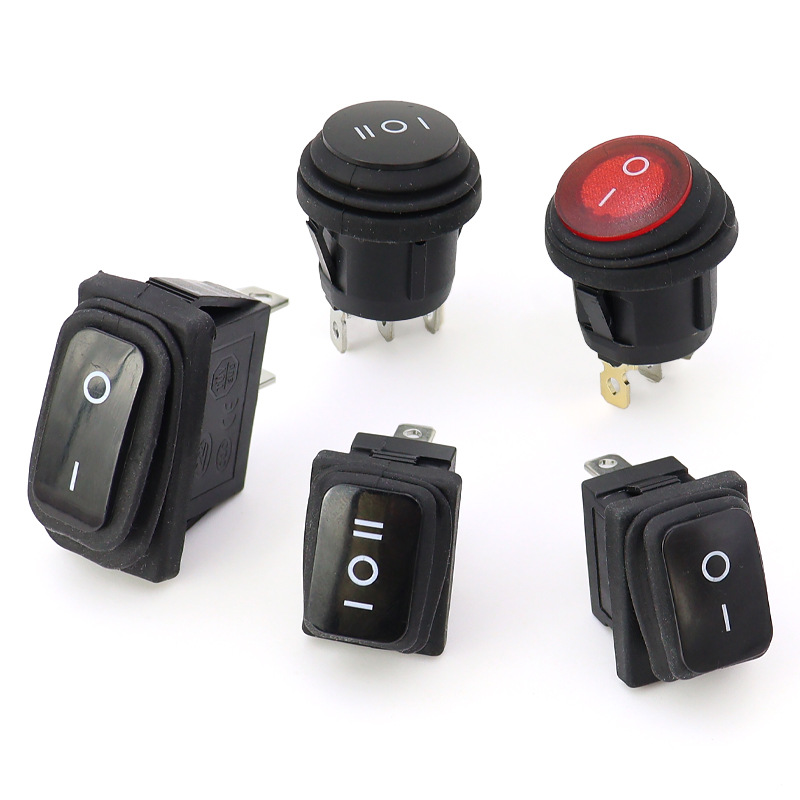
Choosing the right rocker switch for your electronics project can be confusing. Therefore, you must understand the 2 pin 3 pin 4 pin rocker switch difference before you buy. Many buyers mix up these three switch types. They look nearly identical from the outside. However, their internal structures, wiring methods and supported functions are completely different.
Read this guide to compare all three types and avoid costly wiring mistakes. Browse our full rocker switch product range before you start sourcing.
2 Pin 3 Pin 4 Pin Rocker Switch Difference: An Overview
Pin count decides circuit function, safety level and wiring complexity. Specifically, a 2 pin switch handles simple on/off control only. In contrast, a 3 pin switch adds changeover logic. Meanwhile, a 4 pin switch enables dual-pole safety or a built-in indicator light. Therefore, matching pin count to your circuit is the first step toward a reliable design.
2 Pin Rocker Switch: Basic On-Off Power Control
The 2 pin rocker switch is the simplest variant. It controls only one single circuit path. Press the rocker to close internal contacts and turn the circuit ON. Then press it again to open contacts and cut power OFF.
Structure
This switch has two terminals and one internal contact bridge. As a result, it supports only basic power switching without any logic function.
Working Principle
Each press toggles the internal bridge between open and closed states. Consequently, the connected load receives power or loses it with every actuation.
Wiring Guide
First, connect power positive to either pin. Then connect the second pin to the load, and the load to power negative. Finally, this simple loop completes the circuit.
Suitable Applications
Small household appliances such as desk fans, table lamps and low-power speakers use this switch. Moreover, it works well for simple DIY electronics as a basic power cut-off.
Critical Notes
Never connect both pins directly to positive and negative lines. This creates an immediate short circuit. In addition, 2 pin switches suit low-current circuits, typically rated up to 6A @250V.
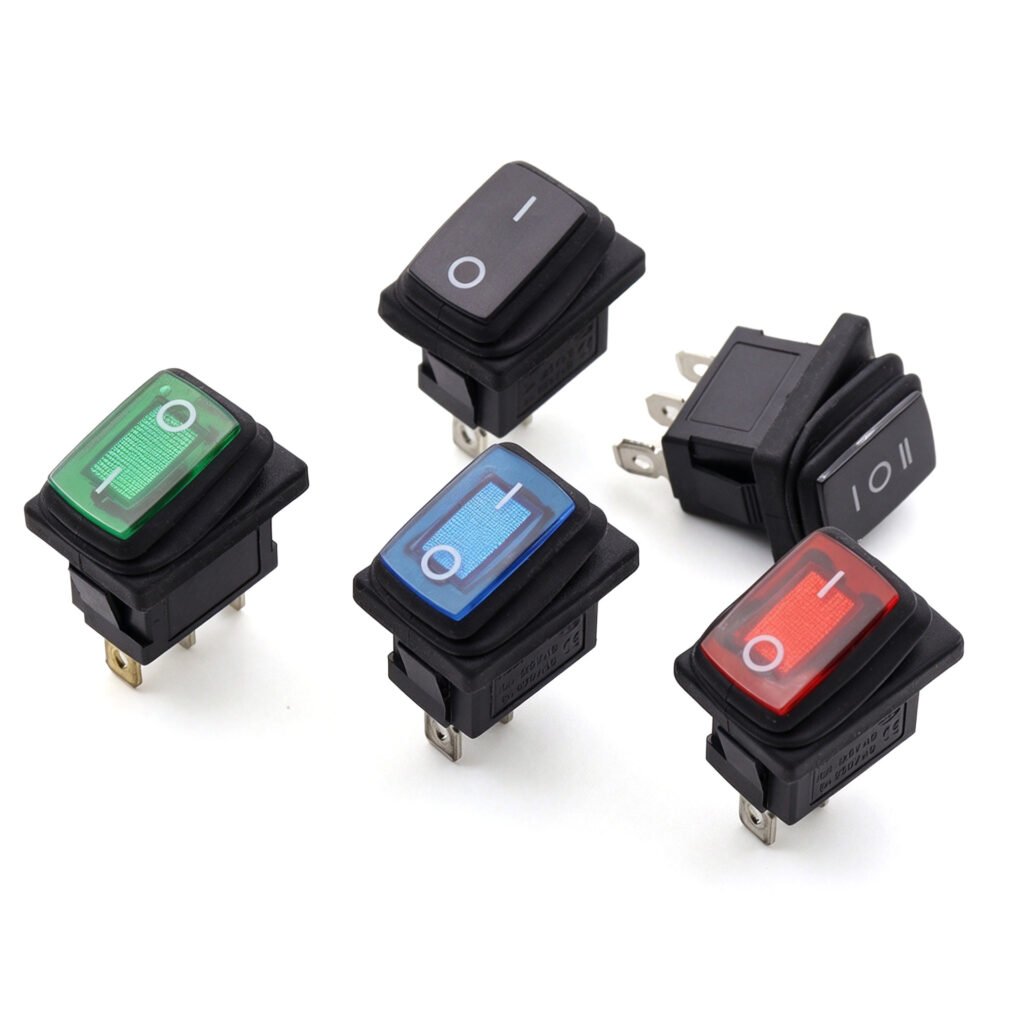
3 Pin Rocker Switch: Multi-Mode Changeover Control
The 3 pin rocker switch has three terminals. Specifically, the middle pin is the common terminal (COM). In contrast, the other two pins are Normally Open (NO) and Normally Closed (NC).
Structure
Three terminals share one moving contact that links COM to either NO or NC. Therefore, this switch can route a signal between two paths.
Working Principle
When toggled, the common terminal connects to the NO pin. When switched back, it connects to the NC pin or breaks the circuit. Thus, you gain flexible control logic.
Wiring Guide
For simple power on/off, wire only COM and NO. Alternatively, for signal changeover, COM connects to power input while NO and NC connect to two separate loads.
Suitable Applications
Equipment that needs start/stop logic or signal switching for industrial control circuits benefits from this type. For example, many controllers rely on it for mode selection.
Key Advantages
It supports latching and changeover functions for flexible circuit logic. Moreover, you can build interlock circuits to improve equipment safety.
4 Pin Rocker Switch: Dual-Pole or Illuminated Upgrade Option
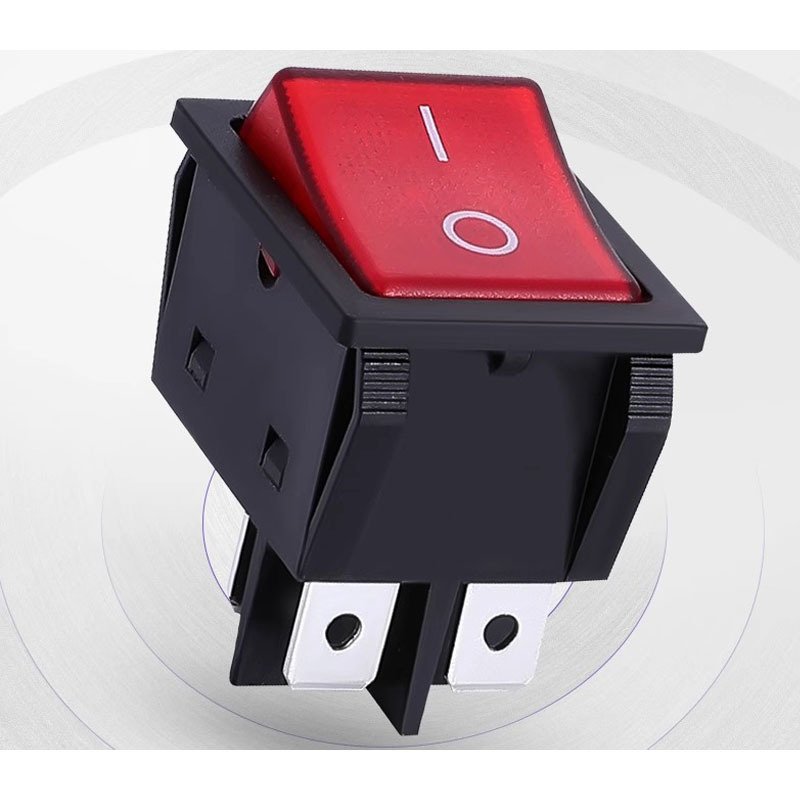
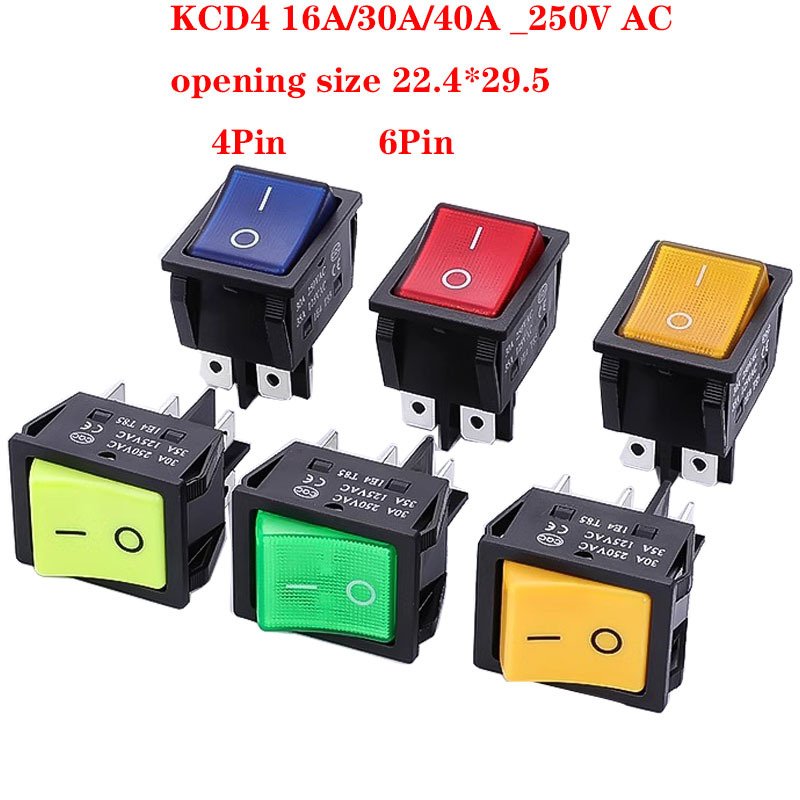
There are two widely used 4 pin rocker switches. They look the same but serve very different purposes. Therefore, you must tell them apart during component sourcing.
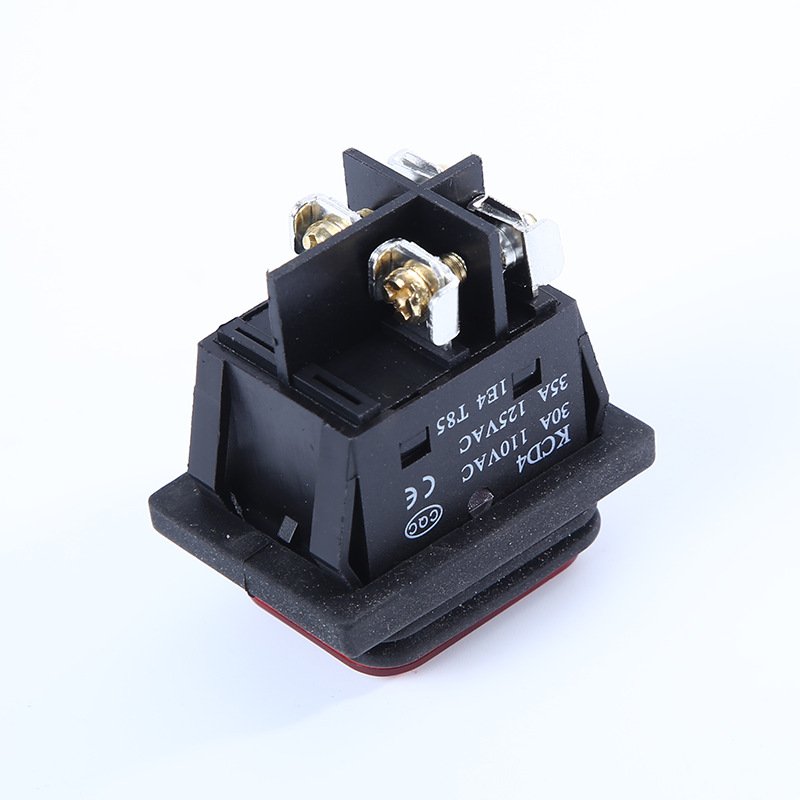
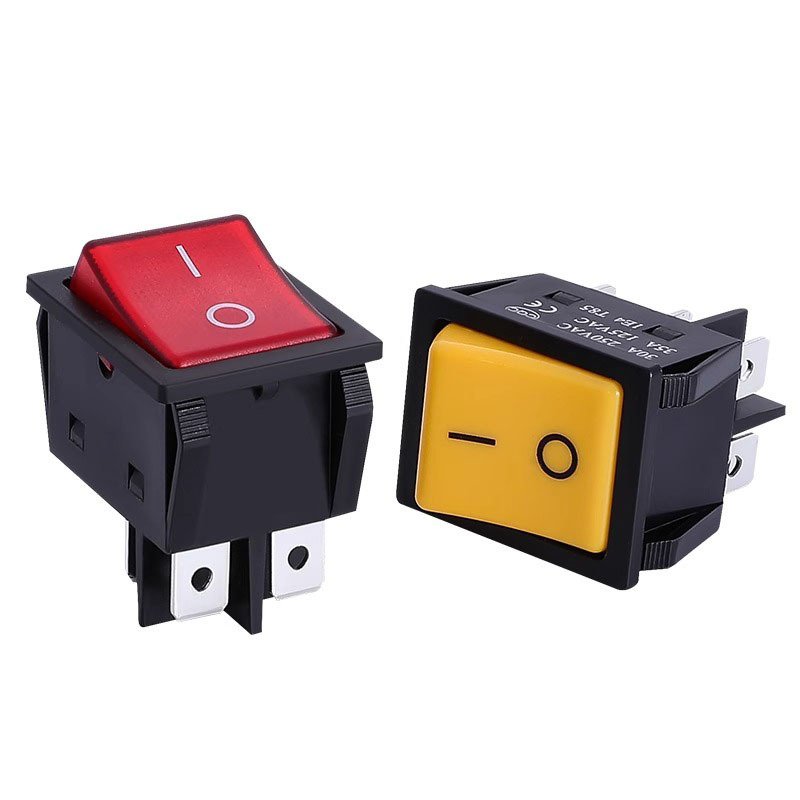
Type 1 – Dual Pole Rocker Switch (Example Model KCD4)
Structure
It contains two independent contact sets. As a result, it disconnects both live (L) and neutral (N) wires at the same time. Specifically, pins 1-2 form one circuit group, while pins 3-4 form the second group. Always verify continuity with a multimeter before wiring, because pin layouts vary by manufacturer.
Benefits
Cutting live and neutral lines together delivers higher electrical safety. Consequently, it suits industrial machines, audio power amplifiers and other high-demand equipment.
Typical Use Cases
For instance, motor control, power distribution units and high-power audio gear use this type.
Type 2 – Illuminated 4 Pin Rocker Switch
Structure
It combines a main power switching circuit with a separate indicator light circuit. Specifically, pins 1-3 handle the main power path, while pins 2-4 drive the indicator lamp connected to neutral.
Wiring Risk Warning
Reversed wiring may leave the indicator light permanently ON or trigger a short circuit. Therefore, always follow the pin map from the supplier.
Benefits
The built-in lamp shows power status at a glance, even in dim environments. As a result, illuminated rocker switches are widely used in power strips and massage devices.
Because pin definitions differ between manufacturers, always test pin continuity with a multimeter before final wiring.
Quick Reference Table for Rocker Switch Selection
| Application Scenario | Recommended Pin Count | Reason |
|---|
| Household small appliances (desk lamps, fans) | 2-pin | Low cost, simple wiring |
| Control circuits requiring state switching | 3-pin | Supports NO/NC switching, flexible logic |
| Industrial equipment & high-power appliances | 4-pin (Dual Pole) | Higher safety, dual circuit control |
| Projects needing visible power status indication | 4-pin (Illuminated) | Clear visual power feedback, easy operation |
Final Selection Tips
Pick a 2 pin rocker switch when you only need basic power on/off for low-current simple devices. Pick a 3 pin rocker switch if you need to switch between two signal or load paths. Pick a 4 pin rocker switch for high-power or industrial safety needs, or when you need a built-in power indicator. Remember: dual-pole and illuminated 4-pin switches are not interchangeable.
For certified components, visit our complete rocker switch category to compare models and request free samples.
Frequently Asked Questions (FAQ)
Can I replace a 2 pin rocker switch with a 4 pin rocker switch?
It depends. A dual-pole 4 pin switch can work, but you need to wire only one pole. In addition, illuminated 4 pin switches require extra wiring for the indicator light, so direct replacement is not always straightforward.
What is the difference between SPDT 3 pin and DPST 4 pin rocker switches?
SPDT (3 pin) switches one circuit between two outputs. In contrast, DPST (4 pin) switches two separate circuits ON/OFF at the same time.
How to confirm rocker switch pin definitions?
Use a multimeter continuity test. Test all pins while toggling the rocker to confirm which terminals connect or disconnect. Manufacturer datasheets are also reliable references.