Blog
2-Pin & 3-Pin Rocker Switch Differences, Plus Comparison Against Pushbutton Switches

2-Pin & 3-Pin Rocker Switch Differences, Plus Comparison Against Pushbutton Switches
Many buyers judge a 2-pin vs 3-pin rocker switch and push button switch comparison only by appearance. However, they think the only difference is the look. In reality, the two switch families have critical safety and mechanical gaps. This article breaks down the 2-pin and 3-pin rocker switch types. In addition, it compares them with small pushbutton switches.
First, we look at how rocker switches and pushbuttons differ. Then, we explain the 2-pin versus 3-pin rocker switch wiring. Finally, we share a quick comparison table and a short FAQ. You can also browse our rocker switch catalog to compare 2-pin and 3-pin models directly.
Rocker Switch vs Pushbutton Switch: 3 Key Differentiators
Small pushbuttons and large rocker switches may look simple. However, their internal mechanics are very different. Below are three key differences that matter for safety.
1. Contact Separation Distance
For the same travel distance, large rocker switches open a much wider contact gap. They use lever moment mechanics to move the internal parts. Therefore, they separate contacts more safely.
Small pushbuttons must use highly stressed internal springs instead. As a result, the spring torsion rises fast. This high stress accelerates fatigue failure over time.
Stuck pushbuttons are a very common failure mode. Most of these faults come from end-of-life spring fatigue. In contrast, rocker switches avoid this weak point.
2. Wiring Quantity & Cabinet Space Limits
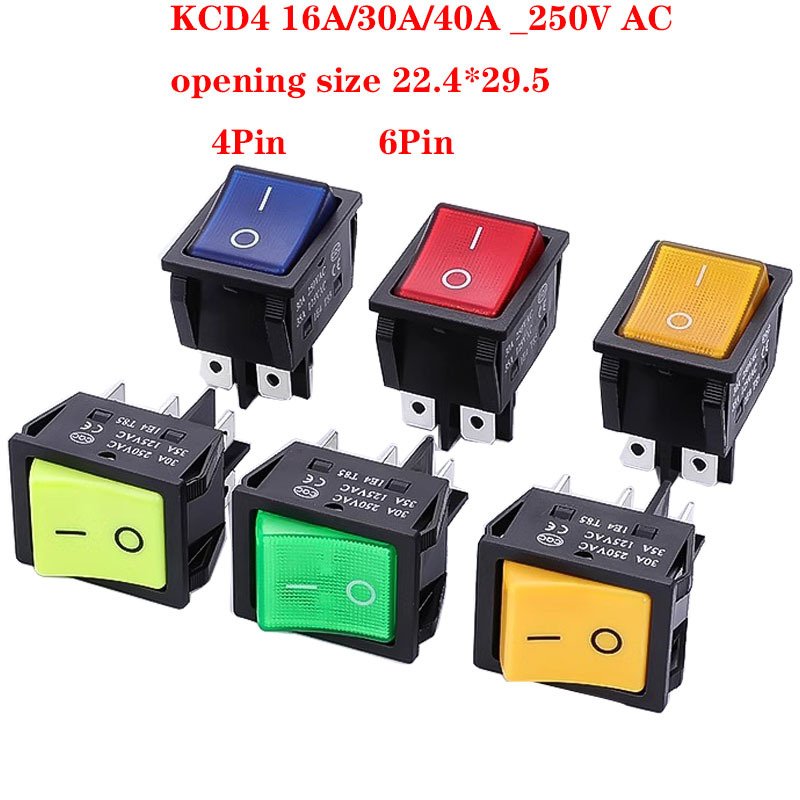
Small pushbuttons have limited rear panel space. However, many makers offer 4-pole or even 6-pole pushbutton variants. A 6-pole dual-control pushbutton may need up to 12 rear wires.
Dense wiring inside the enclosure creates two major hazards. First, heat dissipation becomes poor. Second, crowded wires risk loose connections and open circuits.
In addition, tight wiring can cause short circuits and electric leakage faults. Therefore, small pushbuttons need careful panel planning.
Large rocker switches are mostly limited to 4 poles or fewer. Reputable makers usually cap them at 3 poles maximum. As a result, rear wiring stays sparse and the housing stays safe.
3. Reduced Electric Leakage Risk
Small pushbuttons are roughly fingertip-sized. In humid places such as bathrooms, wet fingers touch the button and the panel gap. If the switch quality is poor, moisture reaches the conductors.
This leakage current creates a real shock hazard for users. On the other hand, large rocker switches have a bigger actuation area. Therefore, wet fingers rarely bridge the gap, which lowers leakage risk.
Difference Between 2-Pin and 3-Pin Rocker (Boat) Switches
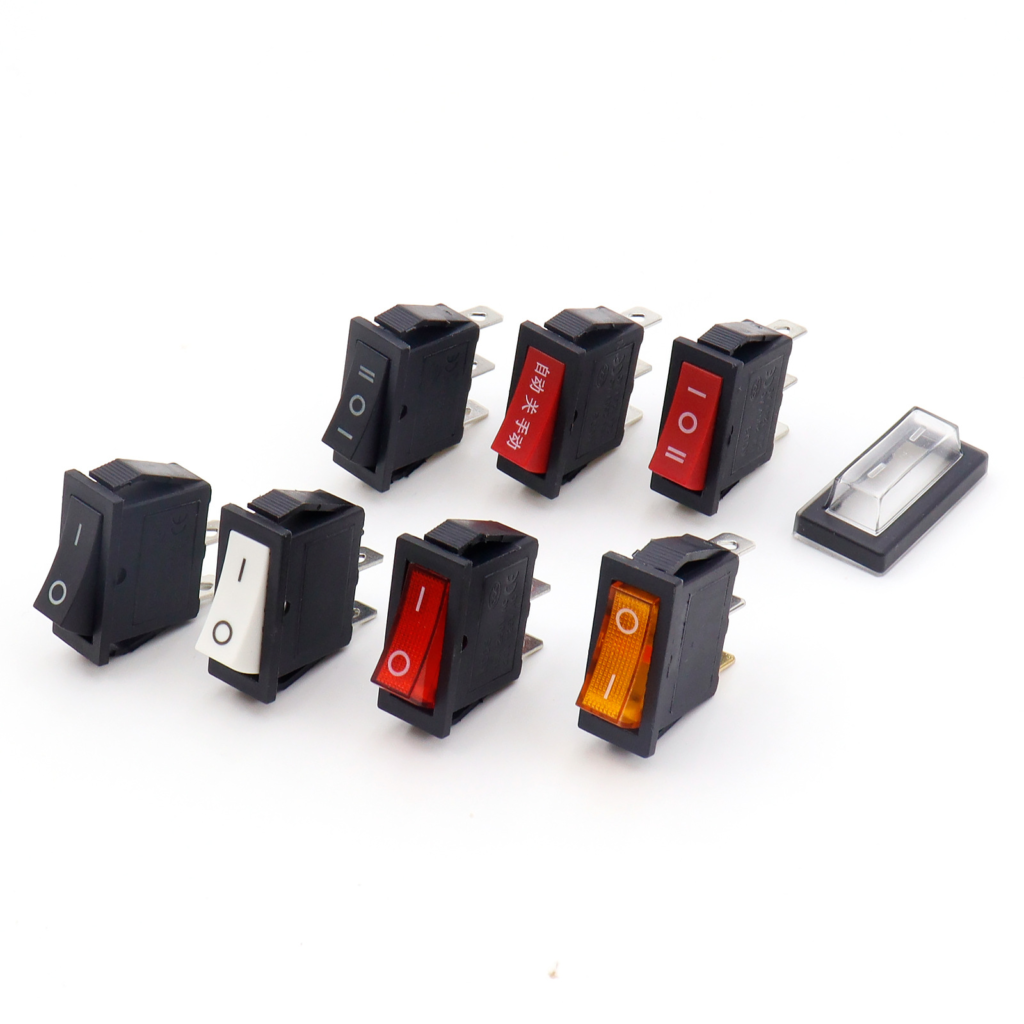
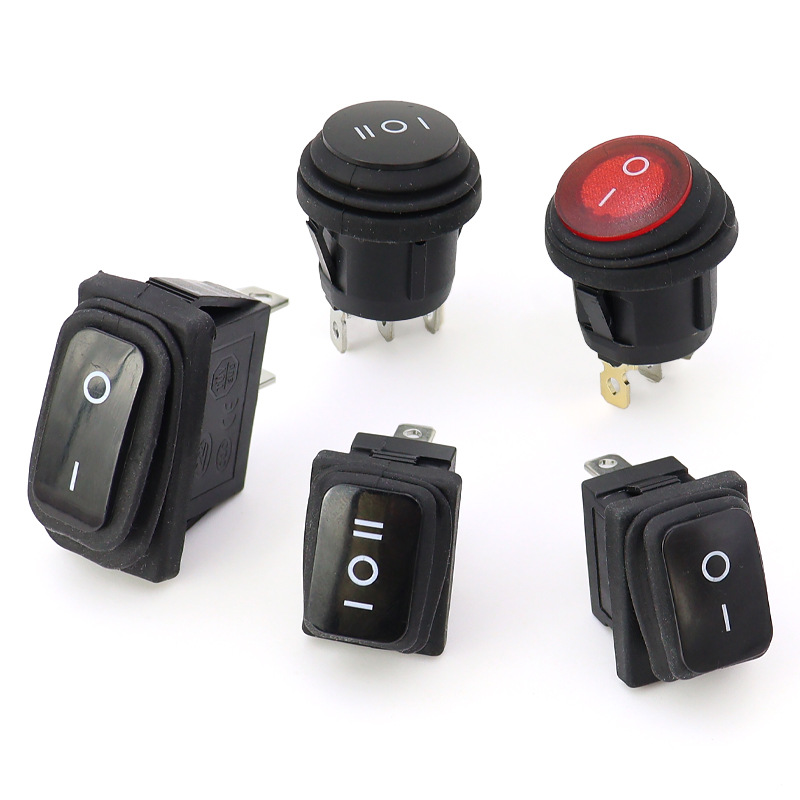
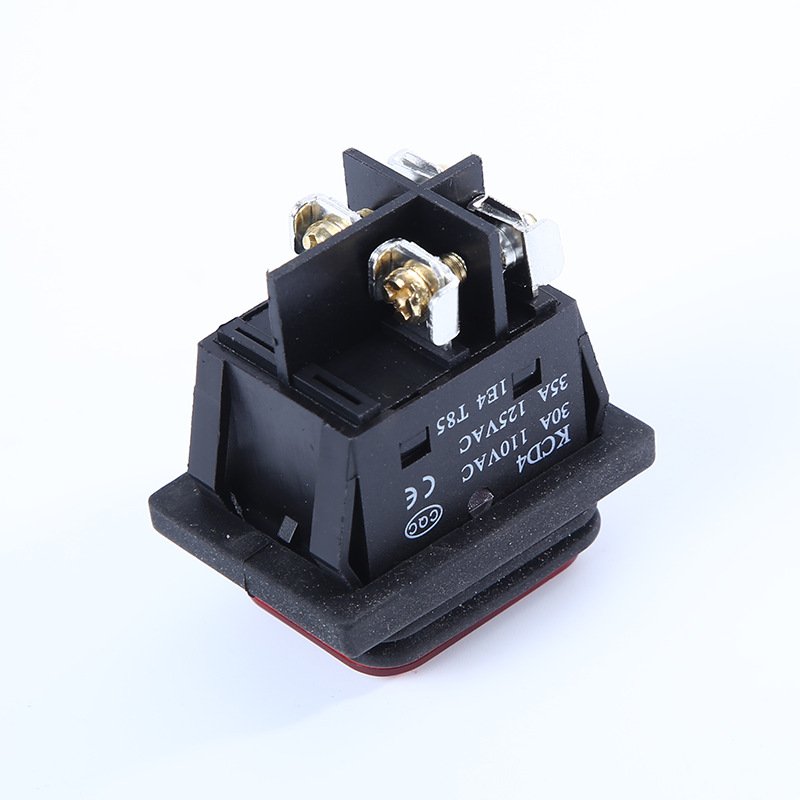
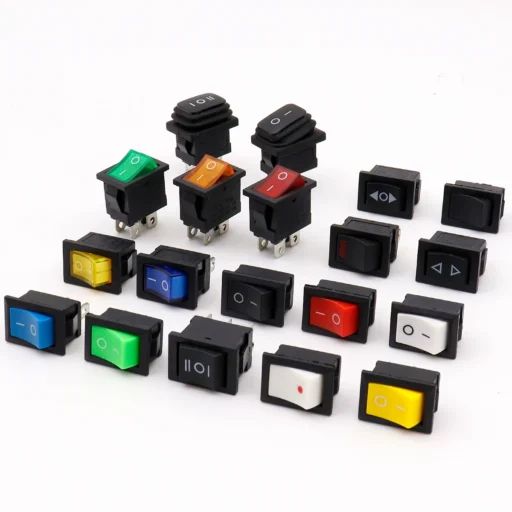
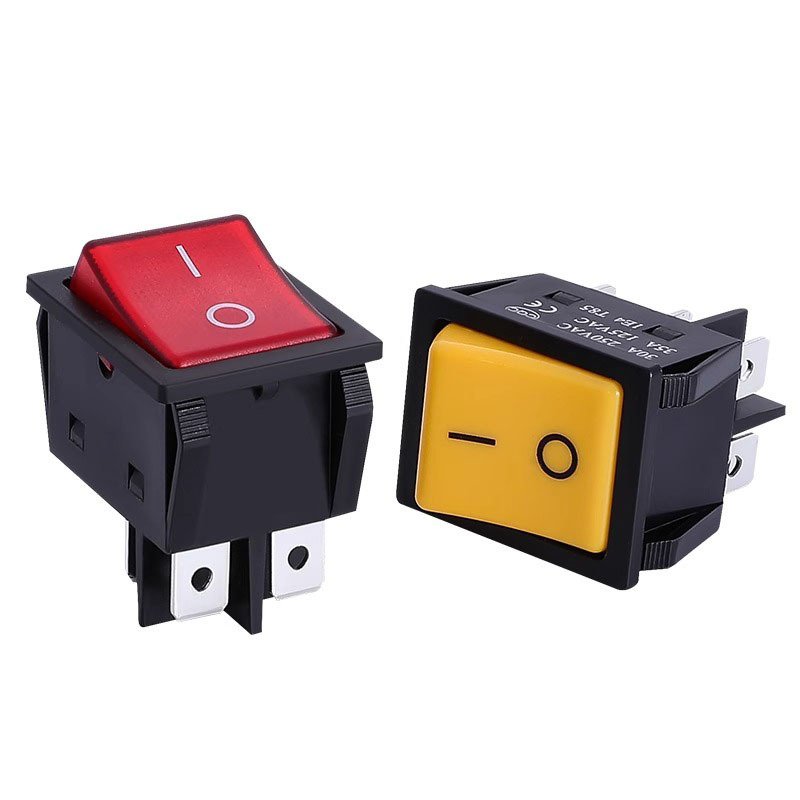
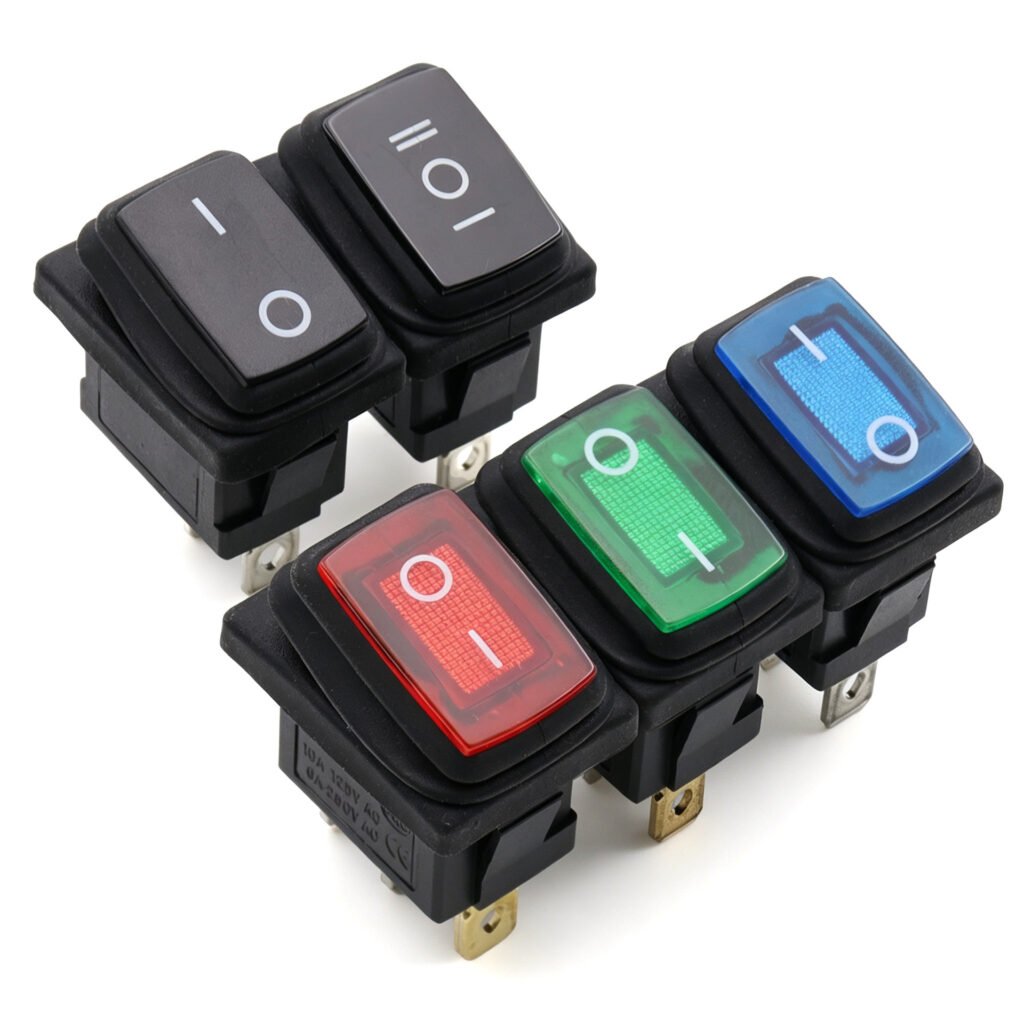
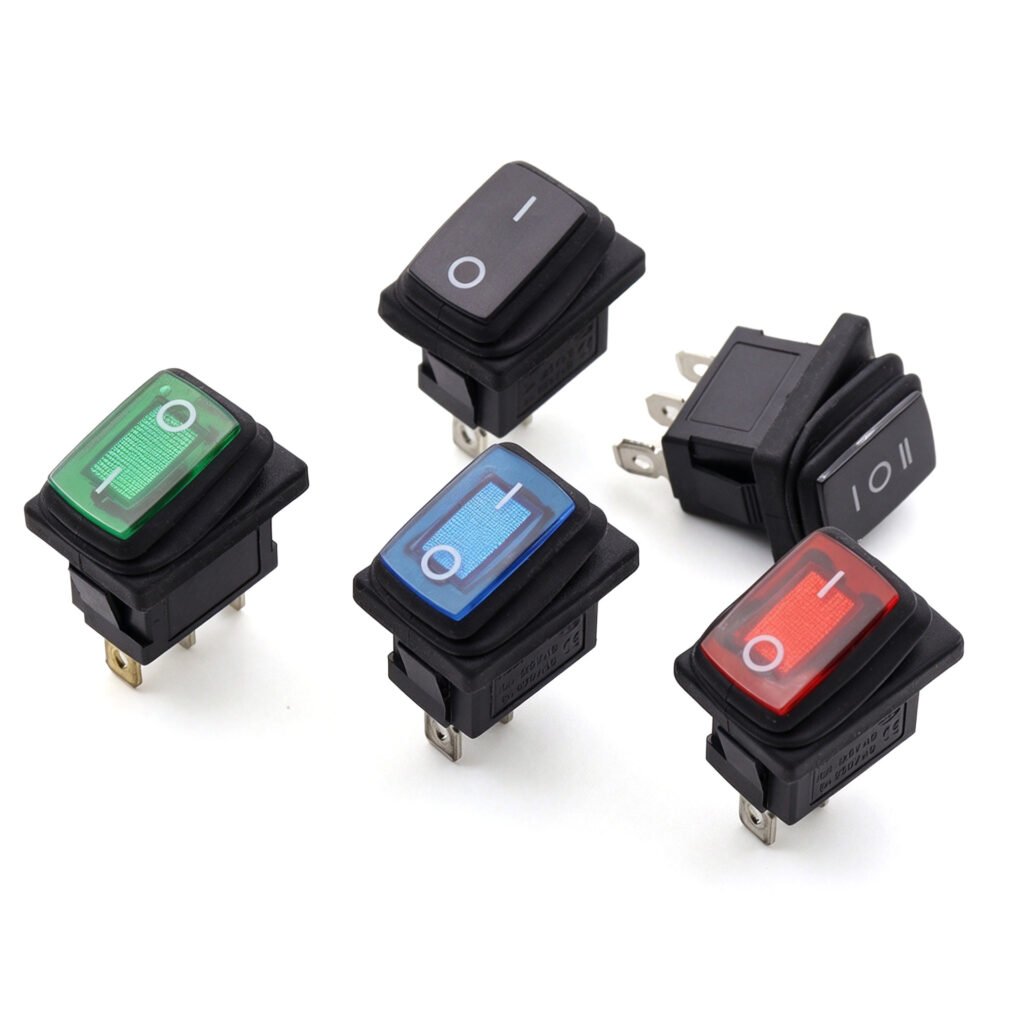
Rocker switches are also called boat switches. They come with 2 or 3 wiring terminals. Below is a detailed breakdown of each type.
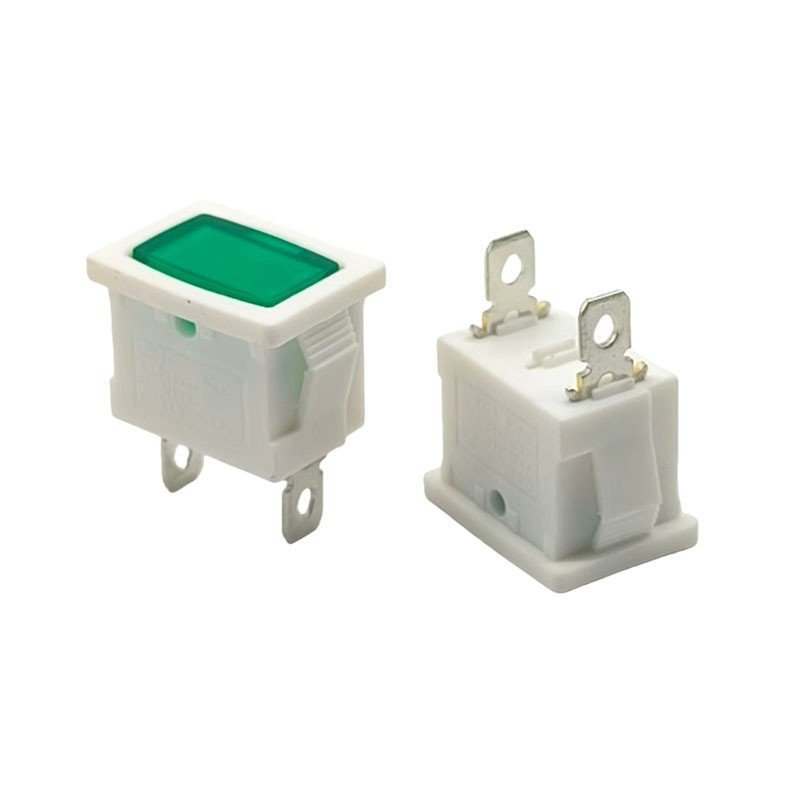
2-Pin Rocker Switch
The 2-pin rocker switch works like a basic on/off switch. It simply opens and closes a single circuit. Therefore, it suits simple low-current control.
Critical warning: Never connect the two pins directly to positive and negative power lines. This mistake creates an immediate short circuit.
Correct wiring method: Run the positive wire to either pin. Then connect the second pin to your load, and the load back to the negative terminal.
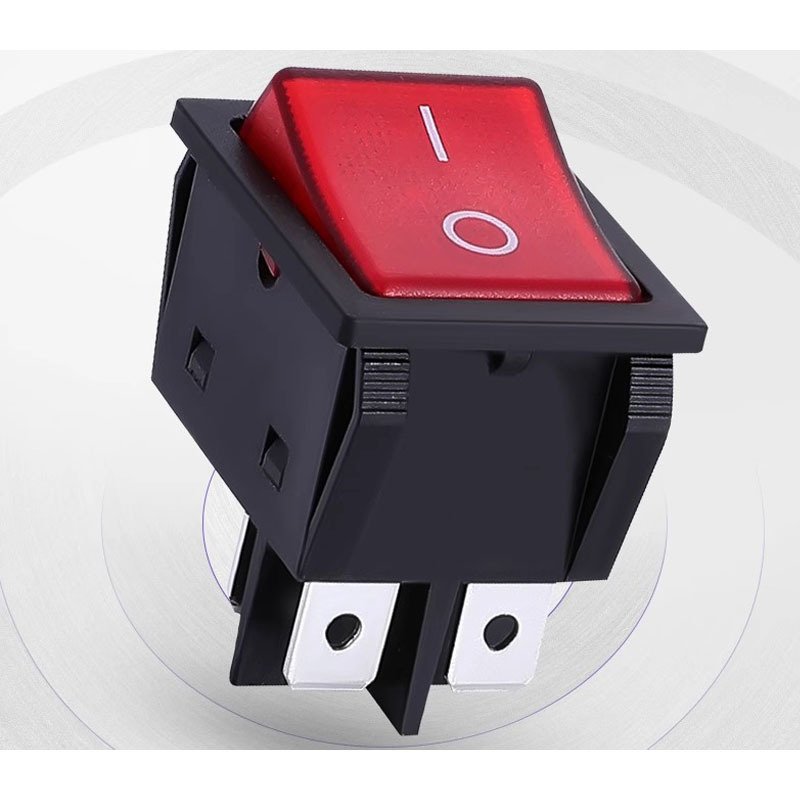
3-Pin Rocker Switch
A standard 3-pin rocker switch has no built-in indicator lamp. It features one Normally Open (NO) and one Normally Closed (NC) contact. The middle terminal is the common (COM) pin.
The two outer terminals are NO and NC. Therefore, this design supports bidirectional switching. When used as a changeover switch, the middle pin is the moving contact.
Meanwhile, the two outer pins act as fixed contacts. When used as a simple on/off switch, you only need the COM middle pin and one outer terminal.
Quick Comparison Table
| Feature | 2-Pin Rocker Switch | 3-Pin Rocker Switch | Pushbutton Switch |
|---|---|---|---|
| Core Function | Simple ON/OFF single circuit | Changeover NO/NC signal switching | Momentary or latching actuation |
| Terminals | 2 pins | 3 pins (COM, NO, NC) | 2~12 pins (multi-pole models available) |
| Typical Use | Low-power household appliances | Signal switching, forward/reverse control | Control panels, momentary trigger signals |
| Main Risk | Short circuit if miswired | Wrong COM/NO/NC wiring causes logic failure | Spring fatigue, wiring crowding, leakage risk in humid conditions |
Final Takeaways
- Choose a 2-pin rocker switch for simple low-current on/off power control.
- Choose a 3-pin rocker switch when you need to switch between two circuit paths.
- Compared with small pushbuttons, rocker switches give wider contact separation. They also offer better wiring space and lower leakage risk in wet areas.
- Pushbuttons fit compact panels and momentary triggers. However, watch for spring fatigue and overcrowded wiring.
Frequently Asked Questions (FAQ)
Can I replace a pushbutton with a rocker switch?
It depends on your function. If you need latching on/off control, rocker switches work well. However, if you need a momentary trigger, a standard latching rocker cannot replace a pushbutton.
What is the main safety advantage of rocker switches over small pushbuttons?
Rocker switches use lever mechanics for larger contact gaps without overstressing springs. In addition, they have less crowded rear wiring and lower leakage risk for wet-hand use.
Can a 3-pin rocker switch be used as a simple power on/off switch?
Yes. Simply wire the common COM pin and the NO pin, then ignore the NC terminal. In short, this setup gives basic on/off control with a 3-pin part.
Explore Our Rocker Switch Range
For more rocker switch resources, consult microswitchshop. We manufacture rocker switches, boat switches, pushbutton switches, microswitches, tactile switches, power sockets and fuse holders. Visit our rocker switch range to see the full product line.