Blog
Illuminated Rocker Switch Design & Applications: Neon vs LED Indicator Full Comparison

Illuminated Rocker Switch Design & Applications: Neon vs LED Indicator Full Comparison
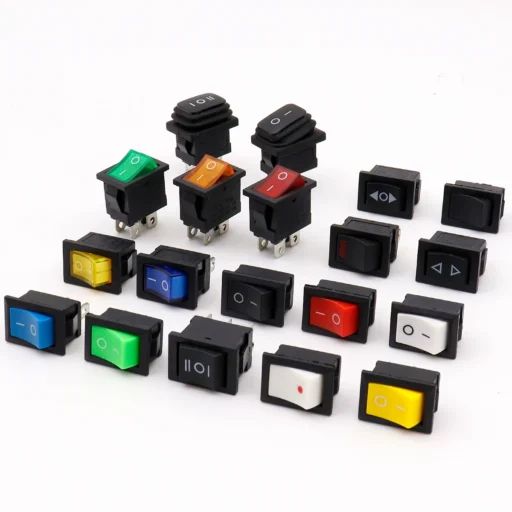
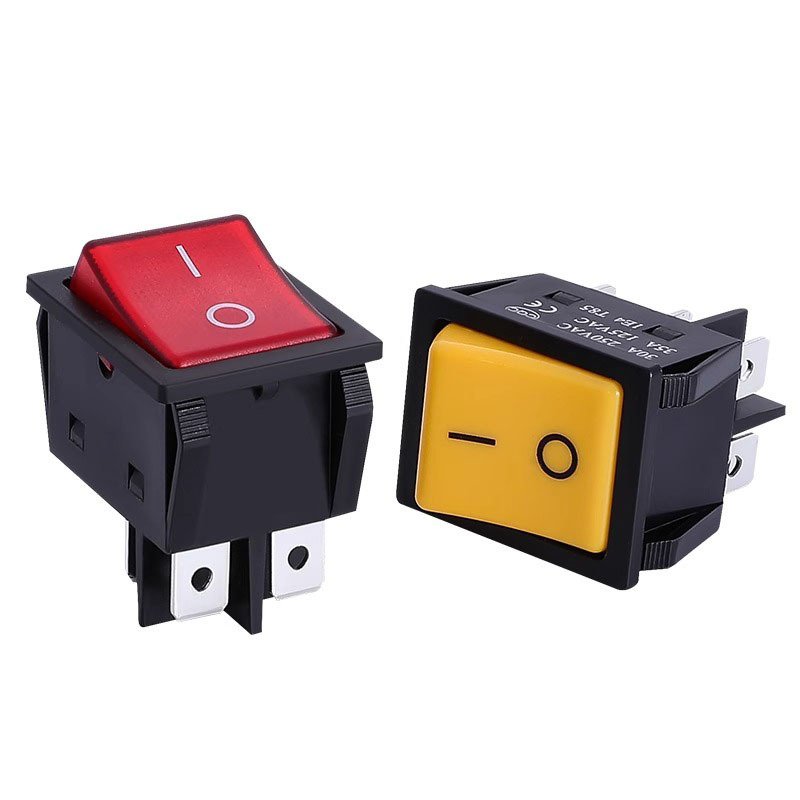
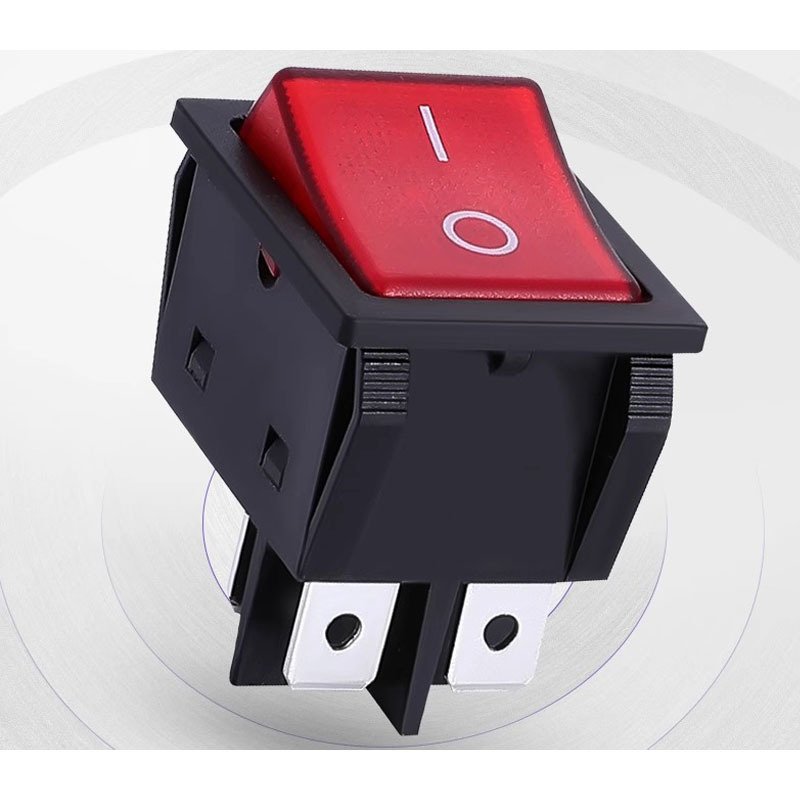
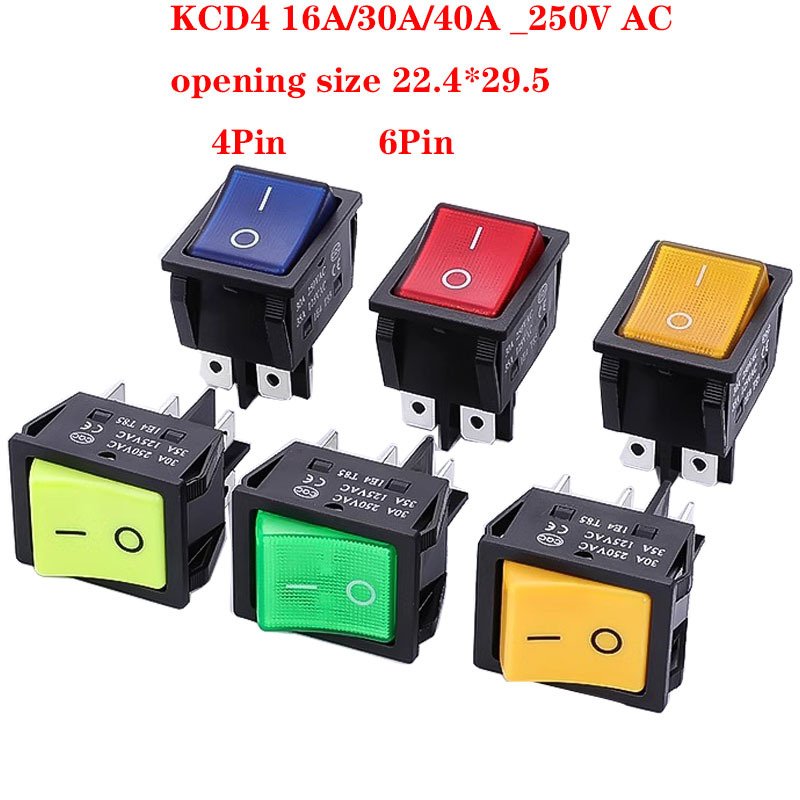
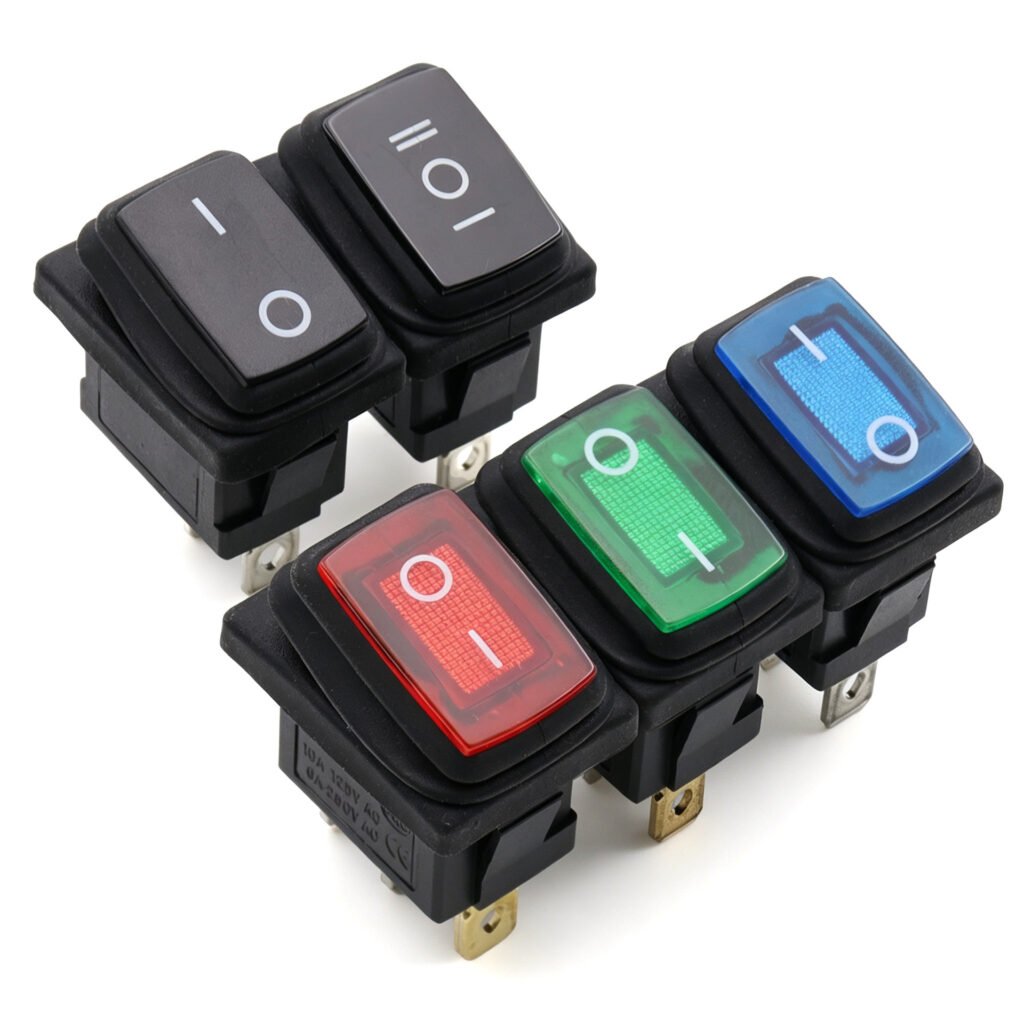
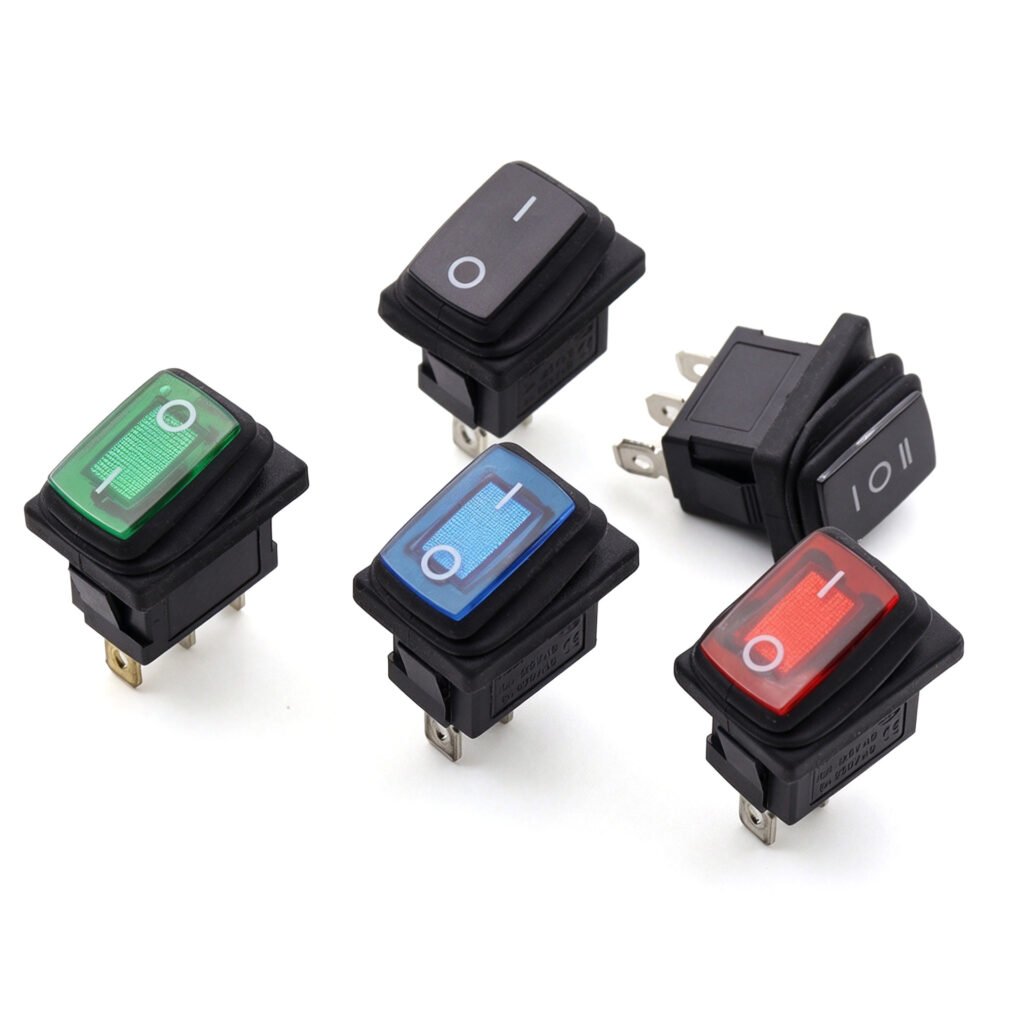
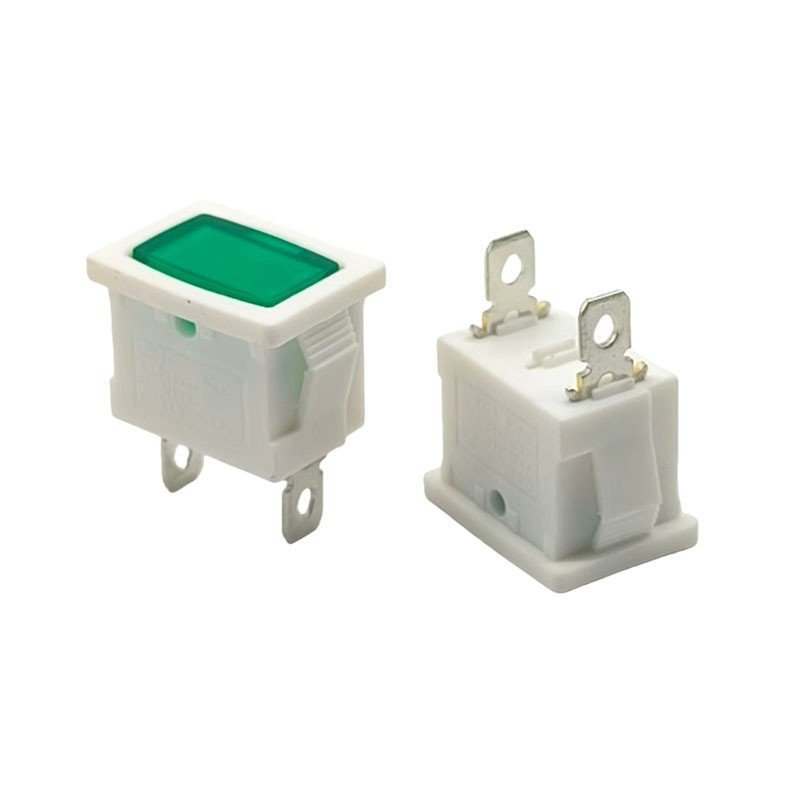
Manufacturers use rocker switches widely in home appliances, automotive systems, marine equipment, and industrial controls. They choose them because they are easy to operate, compact, and reliable. Today, user demand for visual feedback keeps rising. As a result, the illuminated rocker switch has become a mainstream design choice. An illuminated rocker switch shows the on/off state clearly and improves operation in low light. Its indicator light uses two main sources: the neon lamp and the LED. These two differ sharply in power use, lifespan, and applications. This article compares them in depth and helps B2B buyers choose the right solution.
Neon Indicator Lamp Characteristics
Neon lamps are a traditional light source. Therefore, they suit AC circuits directly. Below are their key traits.
Power Consumption
First, a neon lamp needs a high start voltage, usually 90–110V AC. It fits AC circuits without extra parts. However, its power use is higher than an LED, about 0.5W–1W. For example, a rice cooker uses 220V AC power. A neon lamp connects directly, with no current-limiting resistor.
Lifespan
Second, a neon lamp has a short life. It usually lasts 10,000–30,000 hours, far below an LED. Over time, neon lamps dim or flicker. For instance, in 24-hour industrial equipment, a neon lamp may fail within a few years and need regular replacement.
Brightness and Visual Effect
Third, neon light is soft. Its orange-red glow stays clearly visible in dark rooms. However, it is hard to see in bright outdoor light.
Environmental Adaptability
Next, neon lamps are sensitive to temperature. Below 0°C, they may start late or fail to light at all. In addition, the glass tube breaks easily and resists shock poorly.
Suitable Applications
Therefore, neon lamps fit high-voltage AC circuits (110V, 220V), cost-sensitive appliances, and equipment that needs soft light.
LED Indicator Characteristics
LEDs are modern and efficient. As a result, they dominate new designs. Their traits are listed below.
Power Consumption
First, an LED works at only 2–3V DC. A simple current-limiting circuit adapts it to many voltages. Its power use is very low, usually below 0.05W, far less than a neon lamp. For example, portable medical tools and car switches run on batteries. LEDs cut energy use and extend battery life.
Lifespan
Second, an LED lasts 50,000–100,000 hours. It nearly matches the device life and rarely needs replacement. In contrast, in long-running industrial systems, LEDs greatly lower maintenance cost.
Brightness and Visual Effect
Third, LEDs are bright and come in many colors (red, green, blue, white). They stay visible in strong light. Moreover, some LEDs support night-glow or dual-color display, which improves recognition.
Environmental Adaptability
Next, LEDs work steadily from -40°C to +85°C. They resist shock and vibration well. Consequently, they suit outdoor and mobile devices better than neon lamps.
Suitable Applications
Therefore, LEDs fit low-voltage DC circuits (5V, 12V, 24V), energy-saving devices (cars, UPS, sockets), and long-life industrial or medical equipment.
Neon vs LED Comparison Analysis
The table below shows the key differences at a glance.
| Performance | Neon Lamp | LED Indicator |
|---|---|---|
| Power Consumption | High (0.5–1W) | Low (<0.05W) |
| Lifespan | Medium (10k–30k hrs) | High (50k–100k hrs) |
| Voltage Fit | High-voltage AC (110V/220V) | DC/AC with limiter |
| Brightness | Soft, dim in strong light | High, multi-color, bright light OK |
| Environment | Poor cold start, weak shock | -40°C to 85°C, shock-proof |
| Cost | Lower upfront | Slightly higher, better total cost |
| Use Case | Traditional appliances, heaters | Cars, industry, medical |
Design Essentials for Illuminated Rocker Switches
Good design needs more than picking a light source. The following points matter most. For a full selection, browse our rocker switch catalog to match parts with your project.
Circuit Design
For neon, the circuit connects directly to high-voltage AC with no complex current limiting. For LED, you must design a current-limiting resistor or constant-current driver based on input voltage. This keeps the LED stable over time.
Heat Dissipation and Lifespan
LEDs produce little heat. Even so, high-brightness designs still need a heat path. Neon stays cool, but its life depends heavily on voltage stability and the environment.
Housing and Optical Design
Designers commonly use PC transparent housings for illuminated rocker switches because they transmit light well. In addition, light guides or diffuser films improve the even glow of LEDs.
Safety
Neon needs high working voltage, so you must build solid insulation to prevent leakage. LEDs run at low voltage and stay safer, especially for devices users touch directly.
Typical Application Cases
Different fields choose different sources. The main cases are below.
Home Appliances
Rice cookers and water heaters often use neon rocker switches. They are cheap and match AC power directly.
Automotive and Marine
Car and boat switches mostly use LED designs. They support 12V/24V DC, stay bright, and work well in cold weather.
Medical Equipment
Medical devices need reliability and low power. Therefore, they usually choose LEDs for long life and precise indication.
Industrial Control Systems
Control cabinets and UPS switches that run 24/7 should use LEDs. This reduces maintenance cost over time. For matched components, see our rocker switch range built for harsh environments.
Future Development Trends
The illuminated rocker switch keeps evolving. Four trends stand out.
First, multi-color and dual-color displays will grow. RGB LEDs can show state by color, such as red for off and green for on. Second, smart control may join IoT, enabling brightness adjustment and remote status checks. Third, greener materials will spread, such as halogen-free housings. Fourth, weather-proof materials like UV-stable PC or PPO will pair with LEDs for harsh outdoor use.
Conclusion
Neon and LED each have strengths in illuminated rocker switch design. Neon suits traditional AC appliances: it is cheap but short-lived and weak in cold. LEDs offer low power, long life, and high brightness, which fit cars, industry, and medical use. As efficiency and smart features advance, LED illuminated rocker switches will lead the market, while neon stays in cost-sensitive products. B2B buyers should weigh voltage, application, and lifespan to make the best choice.