Blog
Rocker Switches for High-Current Applications: Performance, Reliability and Design

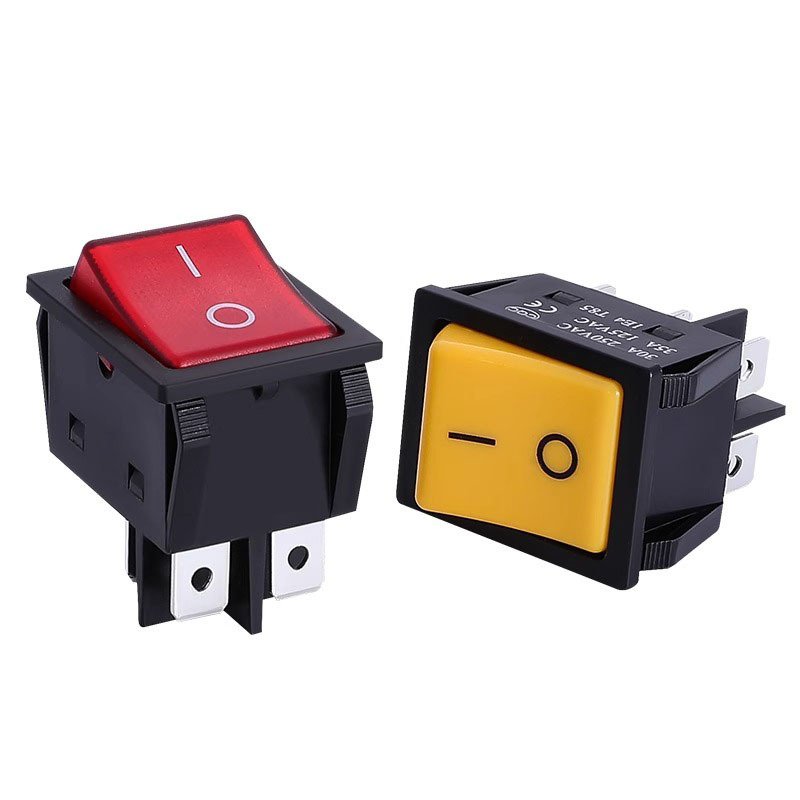
A rocker switch handles high current in main circuits and heavy equipment. This article explains how to specify one for those loads.
Why High-Current Switches Need Special Care
High current stresses every part of a switch. Therefore, builders must choose parts that stay safe under load. In a main circuit it carries the full device current. As a result, small weaknesses become big failures quickly.
We cover three areas below. First, the performance each switch must deliver. Second, the reliability factors that matter. Finally, the special designs and materials that make it work.
Performance Requirements for High-Current Use
Rated current capacity leads the list. The rocker switch must meet the application’s current demand. Therefore, buyers select a rating above the expected load. Never size it too close to the limit.
Low voltage drop is the next need. High current creates voltage drop across the contacts. Consequently, a low-drop design saves energy and keeps the circuit efficient. This also reduces wasted heat.
Low contact resistance matters as well. Resistance turns current into heat inside the switch. Therefore, lower resistance means less heat and a more stable circuit. It also extends the part’s useful life.
High temperature tolerance is essential. Heavy current raises the internal temperature fast. As a result, the rocker switch must keep working when hot. Good thermal design protects the contacts and housing.
Reliability Factors to Consider
Life and durability come first. The switch runs for years under heavy load. Therefore, makers use strong materials and sound structure. In addition, they run strict endurance tests before release.
Stability is the second point. The rocker switch must operate the same way every time. Moreover, its electrical connection must stay firm. This holds true even in heat and under load.
Protection and anti-vibration close the list. Harsh sites shake and stress the part. Consequently, a sealed, shock-resistant build keeps dirt and vibration out. This preserves safe operation.
Special Designs and Material Choices
Copper alloy contacts improve conduction. They lower resistance and fight corrosion at the same time. Furthermore, they wear slowly under repeated switching. This keeps the connection stable at high current.
Heat dissipation design removes excess warmth. Makers add heat sinks to grow the cooling surface. In addition, they add channels or radiators to move heat away. Lower temperature means longer life.
Insulation material selection is critical. The chosen plastic must insulate well and resist heat. Moreover, flame-retardant grades add safety in fault conditions. This prevents leakage and arcing.
A real example helps here. A factory builds heavy industrial machines. It needs a rocker switch for the main power circuit. Therefore, it picks a high rated current and copper alloy contacts. In addition, it adds a heat-sink body and heat-proof insulation.
How Heat Sinks Work in a Rocker Switch
A heat sink grows the surface that touches air. More surface cools the part faster. Therefore, makers bolt the sink to the hot contact area. Thermal pads bridge the two parts. Channels and radiators add even more cooling when space allows.
Choosing the Right Insulation
Thermoplastic and thermoset plastics suit high heat. Both keep insulating under load and temperature. Furthermore, flame-retardant grades stop fires during faults. Pick the grade that matches your environment and standard.
Other Design Upgrades
Copper-silver or copper-nickel alloys conduct even better. They also resist wear and corrosion in tough use. In addition, the body and terminals need a strong layout. This keeps the rocker switch steady under vibration and load.
Frequently Asked Questions
What rated current should a high-current rocker switch have?
Choose a rating above your real load with margin. Therefore, ask your supplier for the inrush current first. Size up from there.
Why are copper alloy contacts better for high current?
They conduct well and resist heat, wear and corrosion. As a result, the connection stays firm under heavy, repeated current.
Do I need a heat sink on every high-current switch?
Not always. However, a sink helps when load and duty cycle are high. In addition, it lengthens service life in hot enclosures.
Which insulation is safest for high-current use?
Use a heat-resistant thermoplastic or thermoset with flame-retardant grade. Therefore, it insulates well and limits fire risk during faults.
Conclusion
A rocker switch for high current needs care in three areas. First, performance: rating, drop, resistance and heat. Second, reliability through strong build and testing. Finally, smart materials and cooling. Work with your supplier to match the part to the job. Review our rocker switch product range or our high-current rocker switch models to start.