Blog
Push Button Switch in EV BMS: Safety and Uses

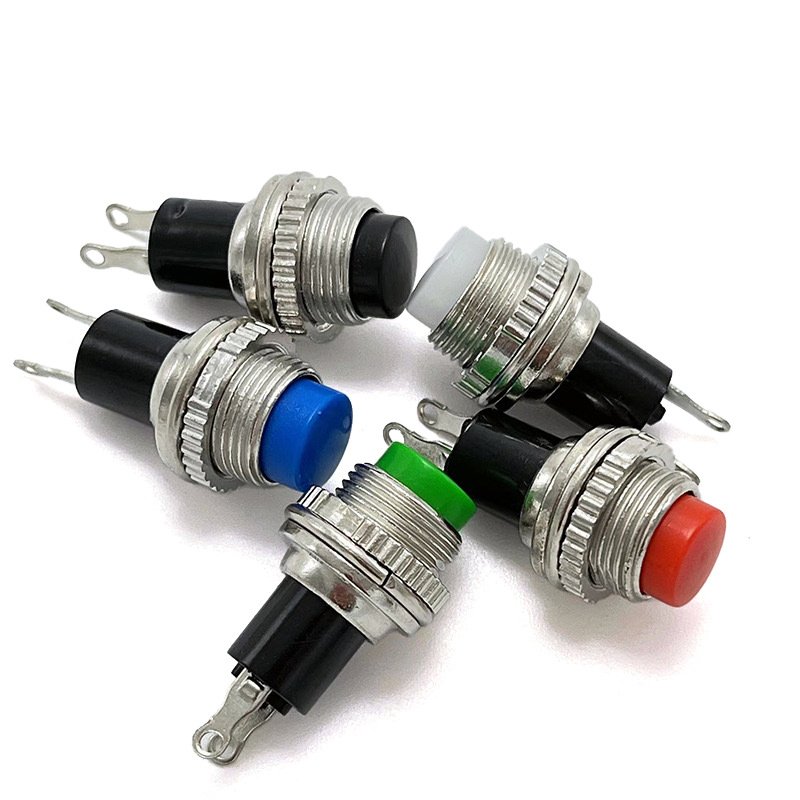
In modern electric vehicles, the battery management system, or BMS, guards battery health, controls charging and discharging, and protects the whole pack. Within this system, the metal push button switch acts as a key human-machine interface. It is widely used for emergency disconnect in maintenance mode, high-low voltage switching, and signal control. This article explores how the push button switch works in an EV BMS, and reviews its safety design and technical challenges.
First, we look at emergency power-off during service. Next, we study safe switching between high and low voltage. Finally, we examine electromagnetic compatibility, or EMC, and how it affects signal stability. Together, these areas show why the device matters for EV safety.
Push Button Switch in Emergency Disconnect (Maintenance Mode)
Why Emergency Disconnect Is Necessary
The high-voltage battery can face short circuits, overload, or thermal runaway. Therefore, maintenance staff need a fast way to cut power. During service mode, the switch disconnects the high-voltage bus at once. As a result, the risk of electric shock drops sharply.
How the Metal Push Button Switch Is Used
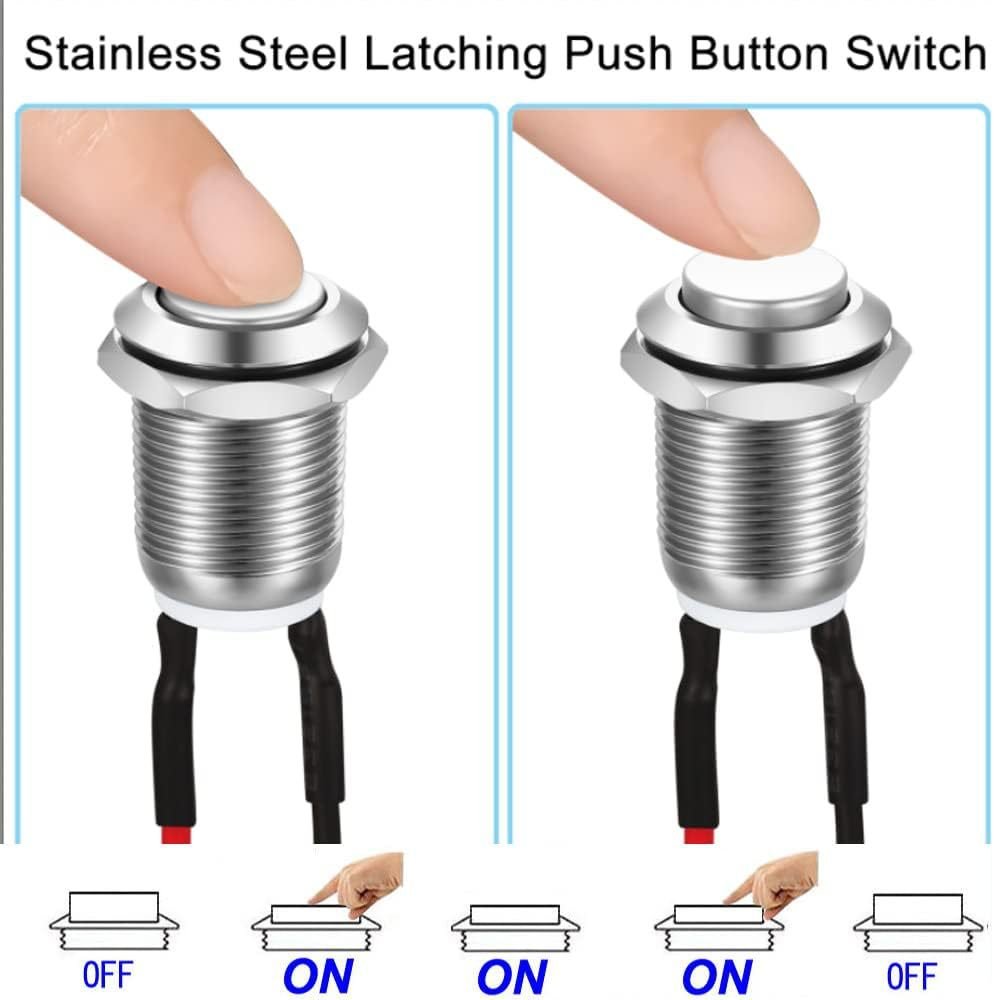
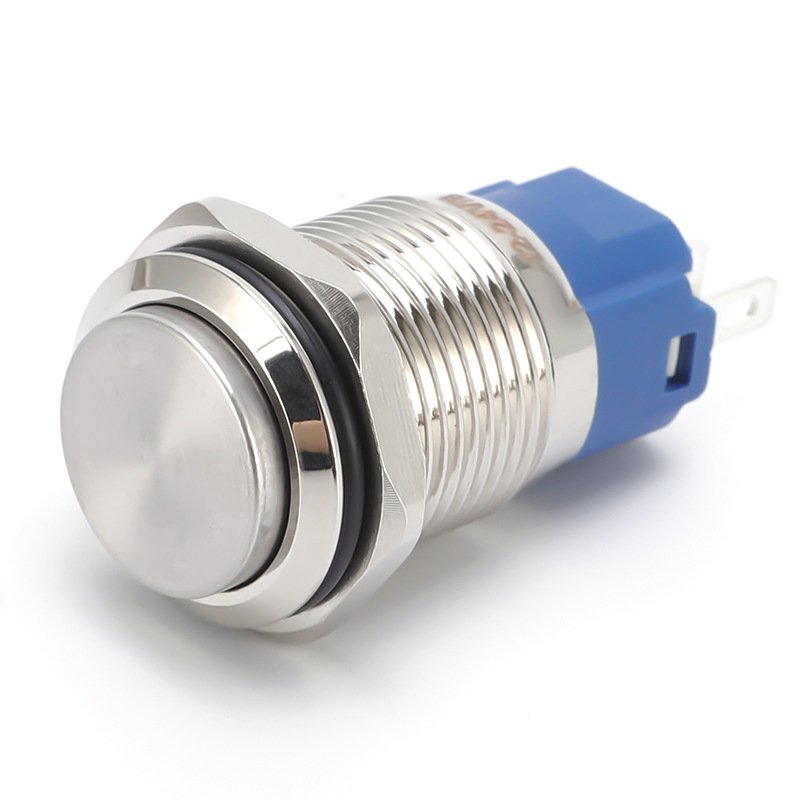
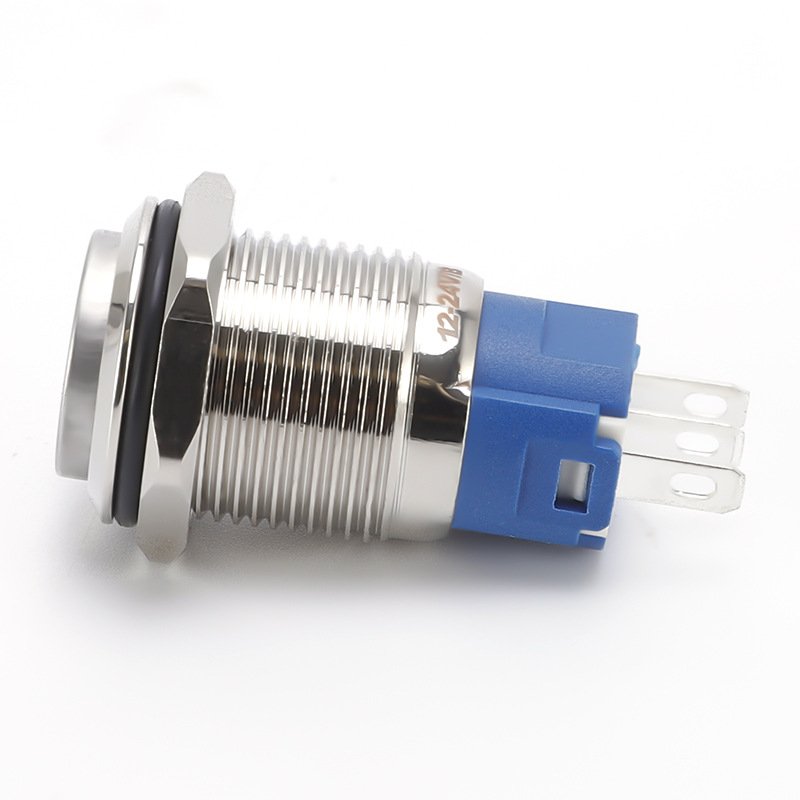
Metal buttons are chosen for their long life and clear tactile feedback. For example, they give a firm click that confirms the action. Moreover, their design follows three clear rules.
First, the actuator uses red or orange coloring. Thus, workers find it quickly in a crowded bay. Second, the button is self-locking. In other words, it stays off after a press and prevents accidental re-energizing. Third, it carries a high ingress rating, such as IP67 or IP69K. Consequently, it survives dust, moisture, and heat in real workshops.
For daily care and fault finding, our Push Button Switch maintenance guide gives useful steps that apply to EV service bays.
Push Button Switch for Safe High-Low Voltage Switching
Why Switching Must Be Safe
An EV splits power into high and low levels. Specifically, the traction pack runs at 400 V or 800 V, while auxiliaries use 12 V or 24 V. During debugging or fault finding, the BMS must move safely between these levels. Otherwise, high voltage could enter the low-voltage circuit and destroy components.
Safety Design of the Switch
To prevent mistakes, the device adds mechanical guards. For instance, a rotate-press combiner forces the operator to turn before pushing. Therefore, a simple bump cannot trigger a switch. In addition, the system uses dual confirmation. Specifically, the ECU checks CAN or LIN conditions before it allows the change. As a result, the command runs only when all checks pass.
Furthermore, the housing uses strong materials. For example, aluminum alloy or stainless steel raises both EMI shielding and mechanical strength. Thus, the button resists impact and noise at the same time.
Push Button Switch and EMC Signal Stability
EMC Challenges in the BMS
The BMS sits next to noisy parts. For example, high-voltage harnesses, inverters, and DC/AC converters emit strong electromagnetic interference. Consequently, the switch signal may become unstable in three ways.
First, signal jitter appears. In other words, interference causes false triggers or missed presses. Second, communication breaks. Specifically, CAN or LIN buses delay or drop the feedback. Third, false actuation occurs. For instance, high-frequency waves may falsely pick up a relay and scramble the control logic.
Anti-EMC Design Solutions
Several measures keep the signal clean. To begin with, shielding materials help. For example, an aluminum or nickel-plated stainless steel shell blocks much of the noise. Moreover, a filter circuit at the signal port, such as an RC network, cuts high-frequency spikes.
In addition, optocoupler isolation separates high and low voltage paths. Therefore, common-mode noise cannot reach the button signal. Similarly, differential transmission on CAN or LIN reduces outside interference. As a result, the command stays reliable even in a harsh bay.
Conclusion: The Future of Push Button Switch in EV BMS
The metal push button switch is vital for EV safety. Specifically, it supports emergency disconnect, safe voltage switching, and stable signals under EMC. As the technology moves forward, the device will grow smarter and more reliable. For example, touch sensing and wireless links may join the design.
To see how it compares with rocker types, read our Push Button Switch comparison article for a clearer view of each form.
Furthermore, with autonomous driving and smart BMS on the rise, its role may change. Instead of a plain mechanical press, it could become a smart electronic control. Thus, it will bring safer and more efficient answers to the EV industry.