Blog
Metal Push-Button Switch Failure Modes and Engineering Fixes

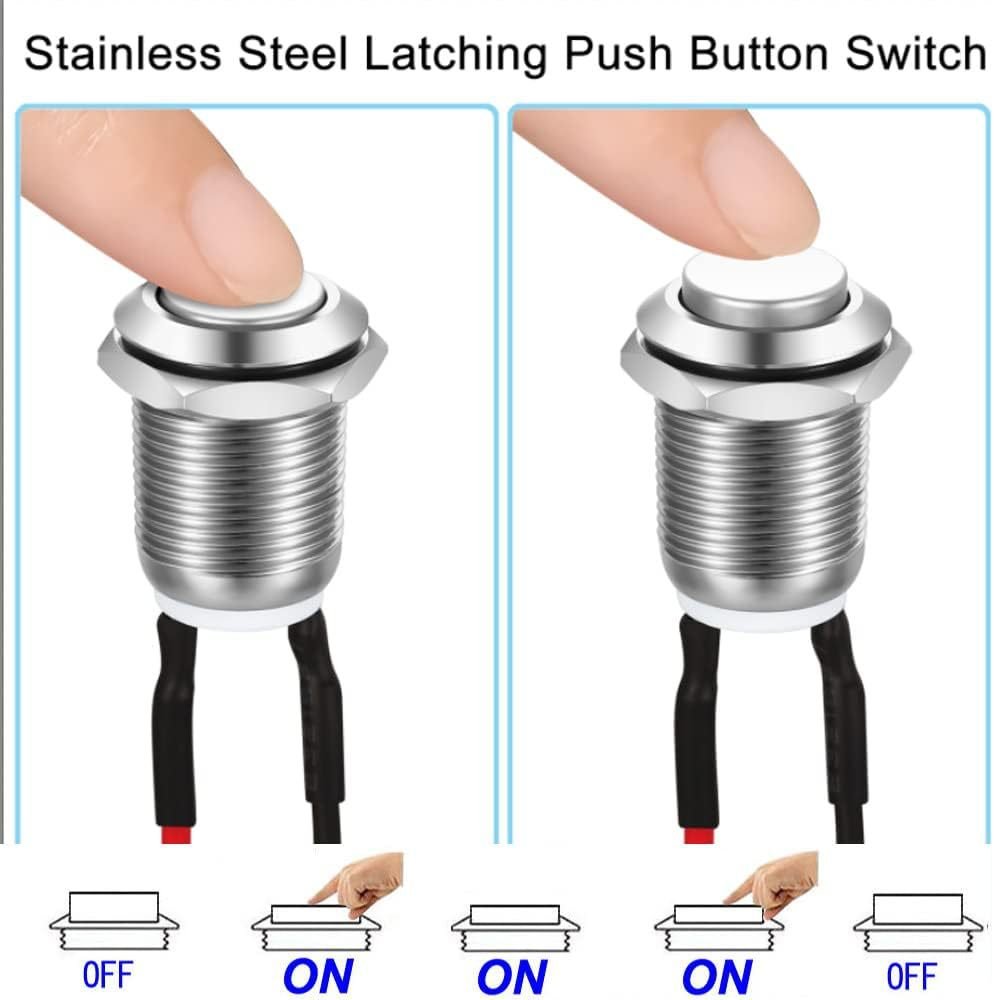
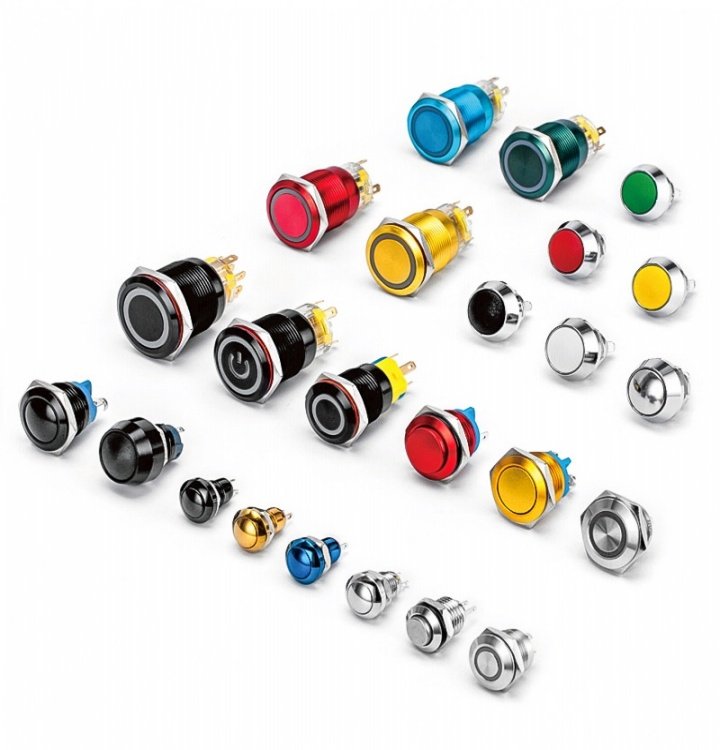
Because of its high mechanical strength, good feel, and attractive appearance, the Metal Push-Button Switch is widely used in industrial automation, security control, medical devices, traffic terminals, and consumer electronics. However, field feedback often concentrates on stability failures, including contact arcing, key sticking, lighting failure, and sealing failure. These problems directly affect equipment continuity and user experience. This article analyzes typical failure modes with real cases, clarifies the causes, and proposes optimization in structure, material, and process. As a result, manufacturers can build more reliable products.
Metal Push-Button Switch Failure Modes and Root Causes
First, consider the symptoms. The switch works at the beginning, then contact resistance rises over time. In a metal push-button switch, this is often the earliest sign of contact erosion. In addition, some units show welding, blackening, or sticking. The causes are clear. High current or inductive loads such as relays and motors create arcs when opening. Moreover, poor contact conductivity or heavy oxidation raises resistance. Insufficient contact pressure also forms micro-arcs. For countermeasures, use silver-plated or gold-plated contacts to improve arc resistance.
For highly inductive loads, add an RC snubber or a varistor. Furthermore, raise contact pressure or adopt a dual-contact design. A sliding contact structure also adds a self-cleaning effect. For example, an access control manufacturer reported that some keys failed after four months. Inspection showed severe contact erosion. The team switched to gold-plated contacts, limited current to 100 mA, and added TVS protection on the control board. As a result, service life improved significantly.
In summary, contact erosion is rarely a material problem alone. It usually combines load type, contact force, and contamination.
Key Sticking or Stuck
The symptoms appear as a key that fails to spring back, or returns slowly. Users may also feel a hard or rough tactile sensation. The causes involve dome fatigue, plunger wear, or heat deformation. In addition, dust and oil can enter the key gap. Poor sliding fit, either too tight or eccentric, makes it worse. For countermeasures, optimize the plunger-to-sleeve sliding clearance at 0.02 to 0.05 mm. Use highly wear-resistant plastics such as POM or PA66+GF, and add a lubrication film. Furthermore, add sealing or a dust cover to block particles. A SUS301H spring dome rated above 1,000,000 cycles also helps. As an example, an outdoor ticket machine suffered frequent sticking. Teardown revealed sand dust trapped in the plunger gap. After adding a silicone gasket and solid lubricant on the plunger, the failure rate dropped by 95%.
LED and Backlight Failure
Symptoms include an LED that stays dark, flickers, or dims. RGB color may also distort. The causes are poor soldering or cold joints. Long-term high-current driving generates heat that degrades the LED. In addition, poor waterproof structure lets water in and causes a short. For countermeasures, choose industrial long-life LEDs rated above 50,000 hours, and limit the working current below 20 mA. Use reflow soldering plus AOI inspection for consistent joints. Moreover, improve heat dissipation with a metal thermal plate or an aluminum substrate. Potting the LED pins or using a sealed light-pipe design also helps. For instance, an elevator panel customer reported that all lights failed after six months. The cause was water ingress and a short that burned the LEDs. After adding epoxy potting and a sealed light-pipe structure, the design passed IP67 testing.
Sealing Failure
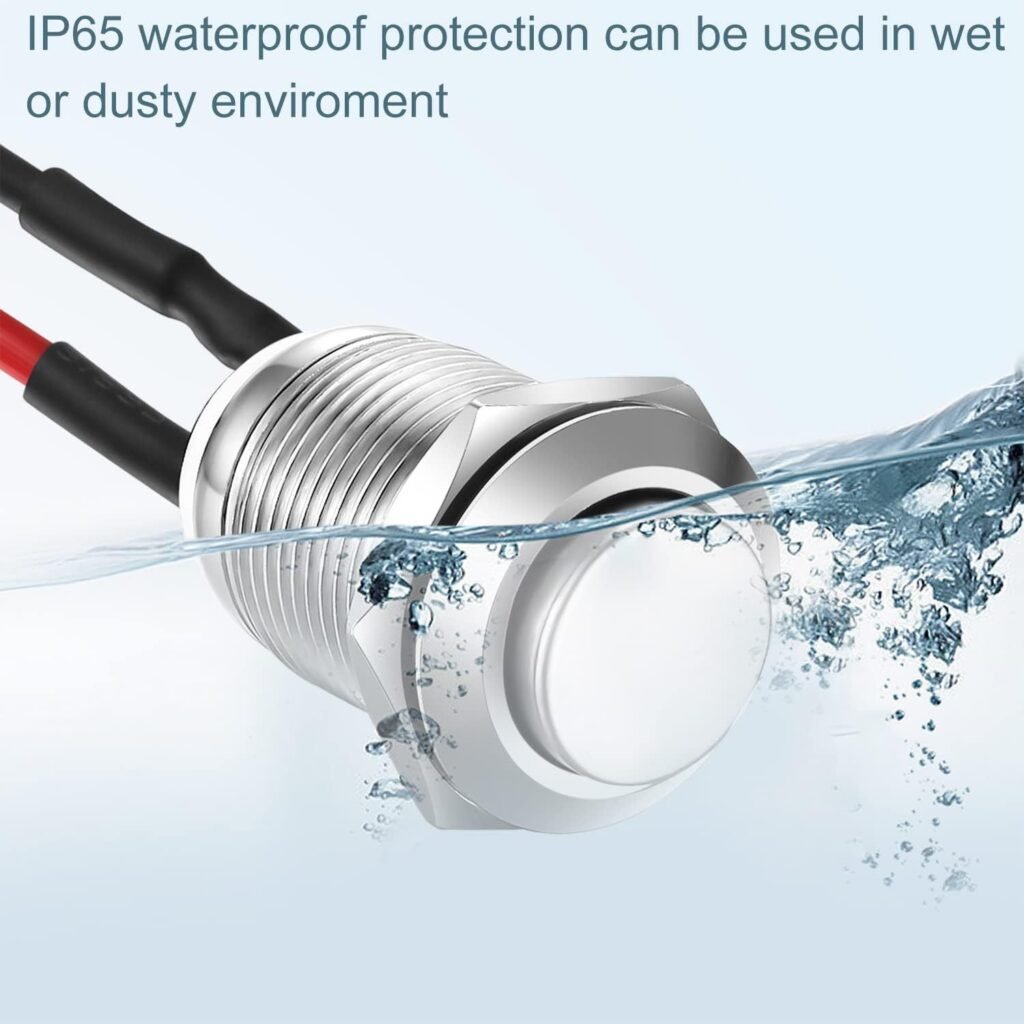
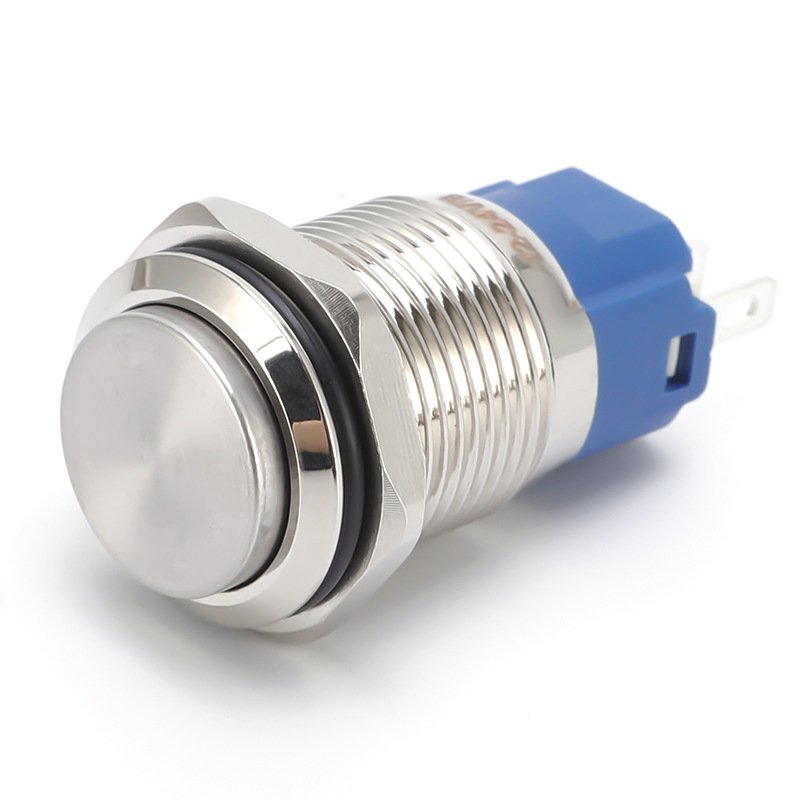
Symptoms show as water or oil ingress, poor contact, or rust. In a metal push-button switch, sealing failure is often the most damaging mode because moisture reaches the contacts. Meanwhile, the gasket may shift or age, so the protection level drops. The causes include an unsuitable O-ring material for wide temperature ranges or oily environments. Poor assembly also leads to insufficient compression. Furthermore, a housing without a stop structure makes compression inconsistent. For countermeasures, choose sealing material by environment. Silicone resists temperature and UV, while FKM resists oil and corrosion. In addition, optimize the housing to keep O-ring compression between 20% and 30%. For high levels, laser welding or adhesive potting can reach IP68.
As an example, an outdoor base station switch corroded badly after a storm. Investigation found insufficient gasket compression and no UV-resistant material. The redesign used a double-seal structure, an FKM gasket, and a mechanical stop groove, and later passed IP68 certification.
Note that sealing and electrical design are closely linked here. Poor compression lets water in, and moisture then accelerates the other failure modes.
Other Potential Failure Modes
Fifth, false triggering and contact bounce come from insufficient contact rebound or a missing guard. Adding a guard border or a hysteresis trigger structure helps. Sixth, shock and drop damage occur when transport impact offsets the plunger, so packaging should resist vibration with foam or EVA inserts inside. Seventh, housing corrosion and discoloration often come from poor alloy or surface treatment. Anodized aluminum or stainless steel with passivation or nickel plating performs better.
Taken together, these seven modes define the reliability baseline of a metal push-button switch. They also interact with each other in practice. For instance, a sealing failure often accelerates contact erosion.
Systematic Optimization Strategy
The table below summarizes each failure mode with its cause type and design recommendation.
| Failure Mode | Cause Type | Design Recommendation |
|---|---|---|
| Contact erosion | Electrical design / contact material | Current limiting, snubber circuit, gold-plated contacts |
| Key sticking | Mechanical structure / foreign matter | Fit optimization, dust sealing, lubrication |
| Lighting failure | Electrical drive / water ingress | Current limiting, sealed light pipe, LED pin potting |
| Sealing failure | Material / compression ratio | Suitable sealing material, mechanical stop design, laser welding |
| False trigger / bounce | Unclear structural feedback | Increase travel, hysteresis design, guard frame |
| Surface corrosion / discoloration | Material / environment suitability | Use stainless steel or anodized aluminum, add surface treatment |
Conclusion: Build Reliability Into the Design Stage
The stability of a Metal Push-Button Switch affects both product quality and customer trust. Identifying failure modes systematically and defining targeted solutions can greatly reduce after-sales risk during the design stage. In addition, responding quickly to field issues and continuously improving structure and process is the key path for B2B switch makers to achieve product upgrades and market differentiation.