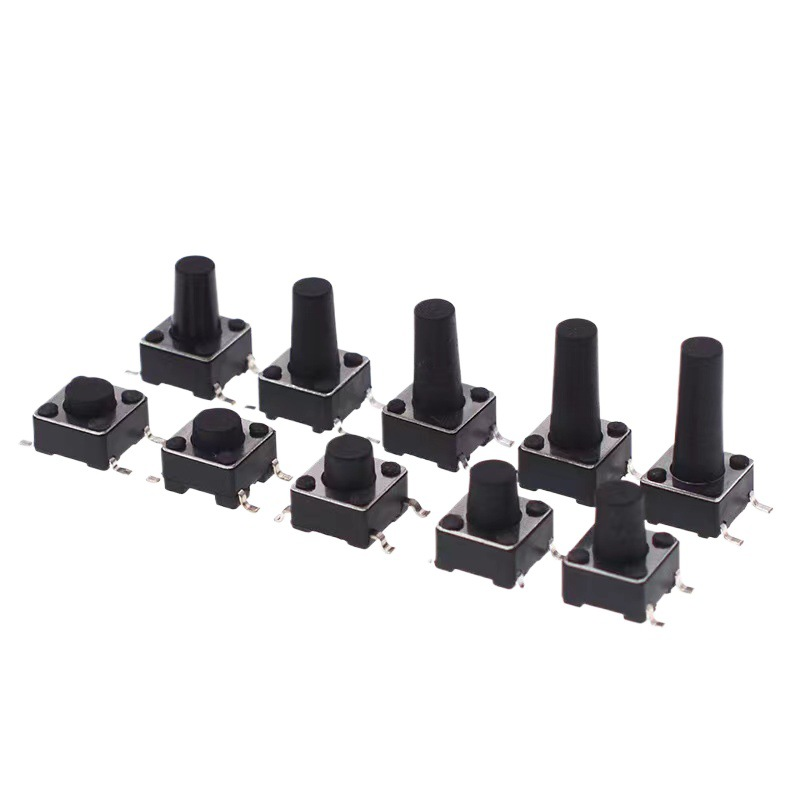
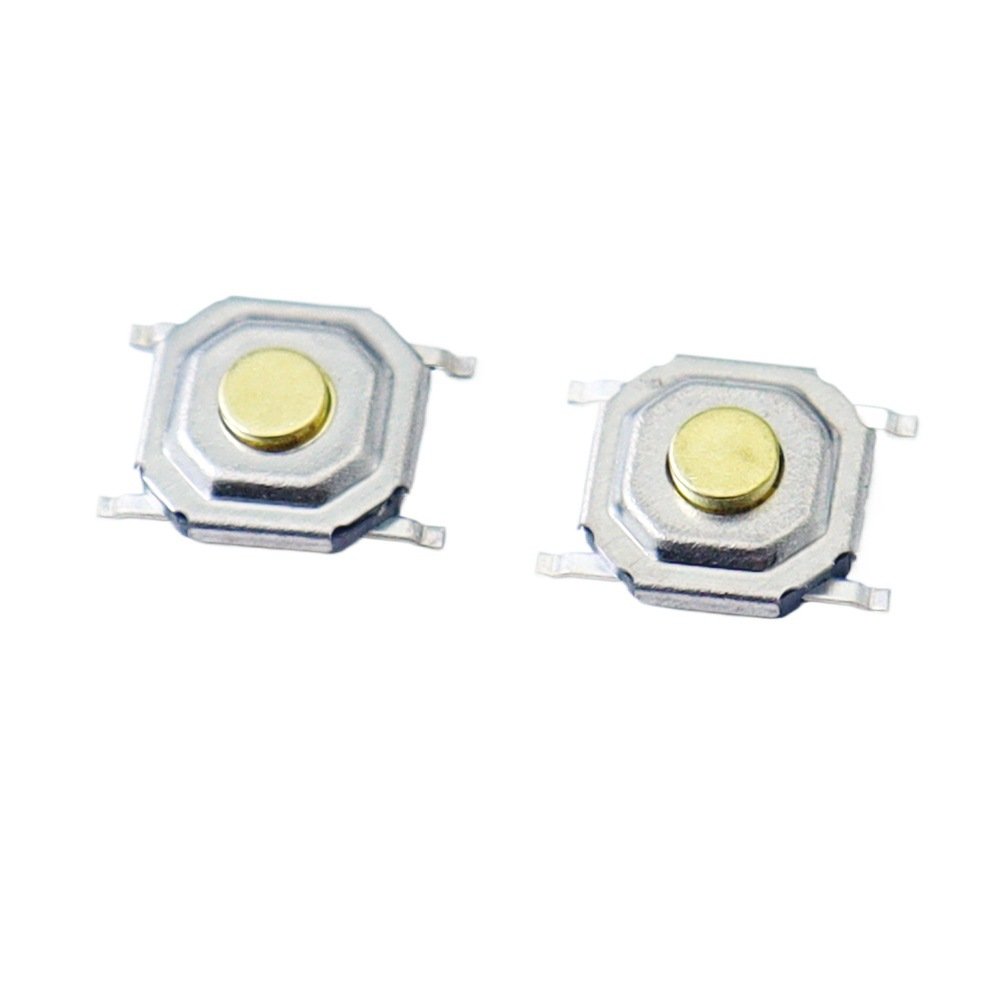
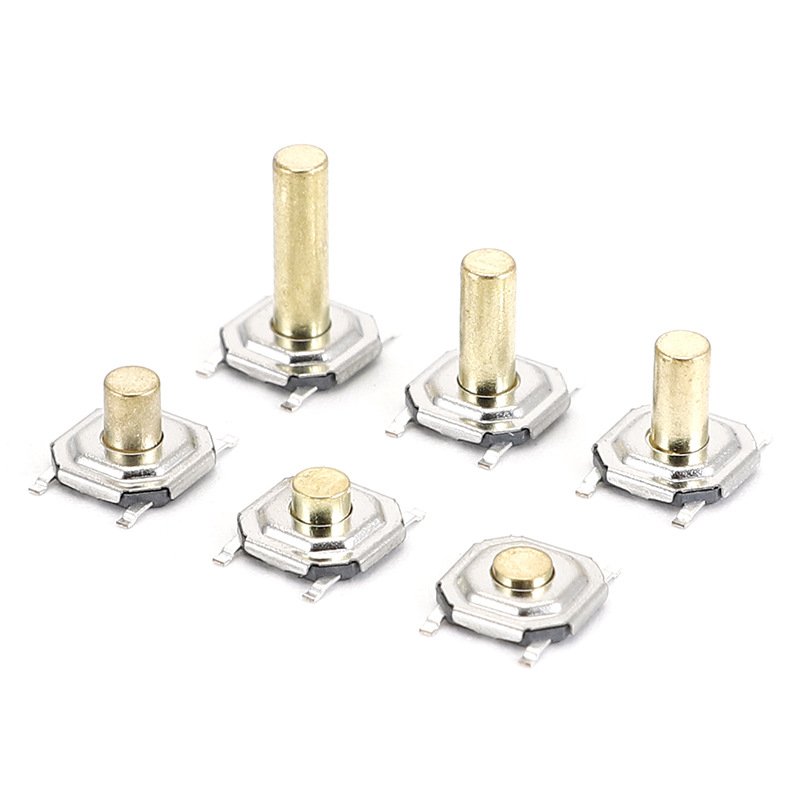
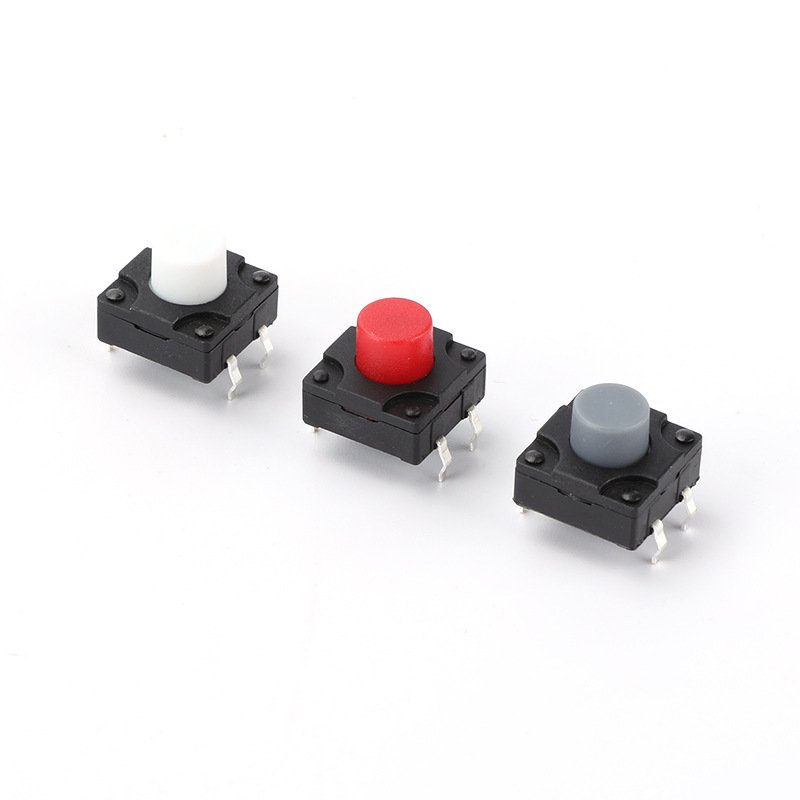
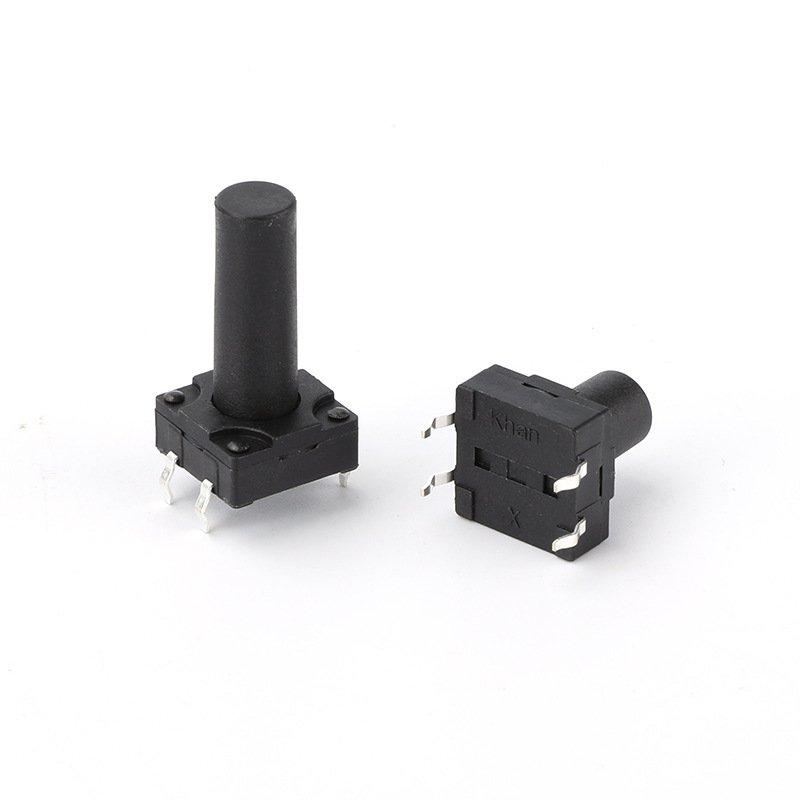
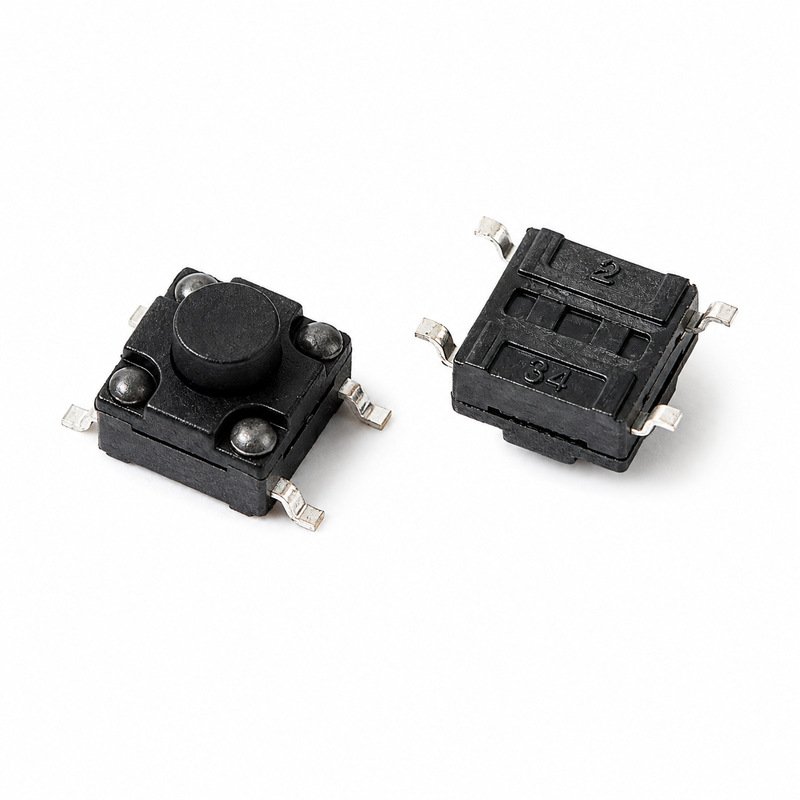
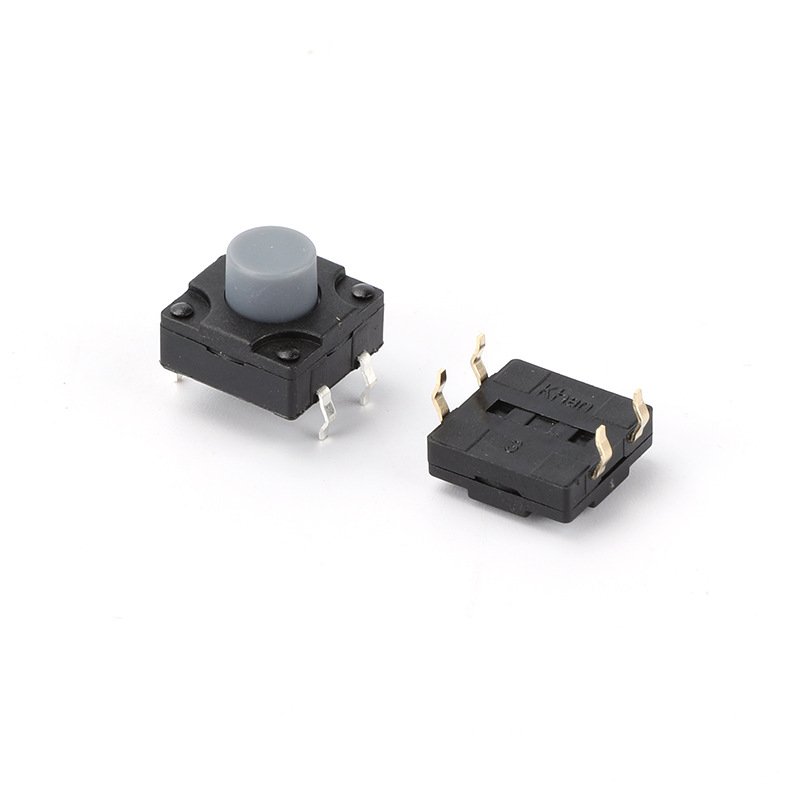
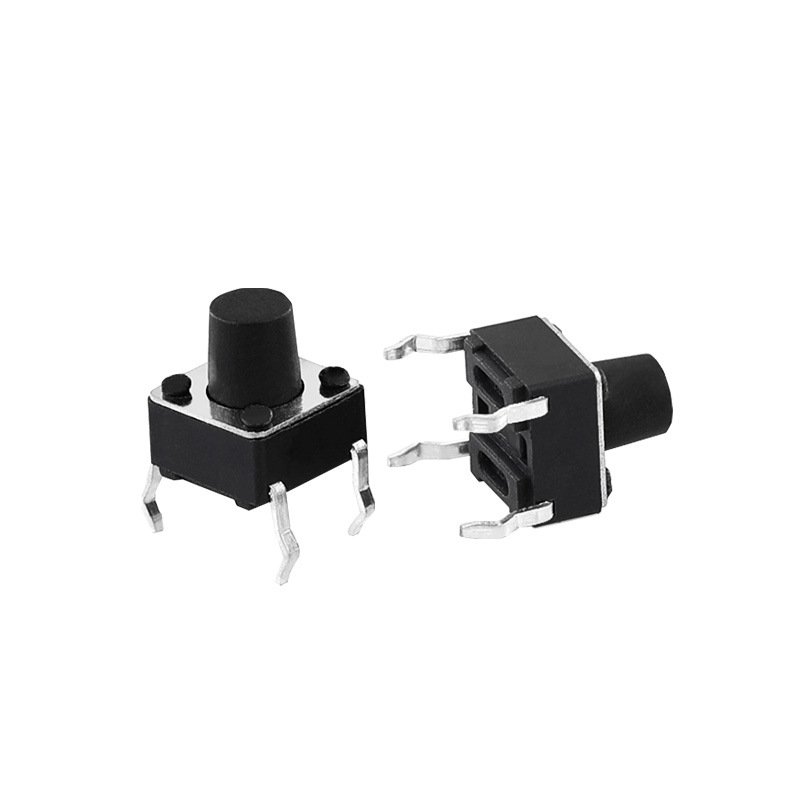
A tact switch is a precision electronic component for consumer electronics and home appliances. It also serves automotive devices and industrial control equipment. To ensure stable performance, long service life, and safe operation, manufacturers must run comprehensive quality testing before mass delivery. A complete tact switch inspection covers actuation force, stroke, solderability, and insulation performance. It also covers withstand voltage, contact resistance, structural strength, and functional durability.
This article introduces all professional tact switch testing methods and industry standards. As a result, buyers and engineers can verify quality, avoid defective products, and keep production stable.
1. Tact Switch Actuation Force Testing
Actuation force determines the pressing feel and user experience of a tact switch. First, place the test sample on a horizontal fixture. Then apply uniform static load vertically to the center of the button surface along the switch operating direction.
In addition, perform the test twice and calculate the average value. So the measurement error must not exceed 15%. The final actuation force must fully comply with the official datasheet specifications. This ensures consistent hand feel in mass production.
2. Tact Switch Withstand Voltage Testing
Withstand voltage testing verifies the switch’s electrical safety and insulation stability under high voltage conditions. Apply 50Hz AC 250V test voltage between adjacent non-connected terminals. Also apply it between terminals and internal metal parts for a continuous 1 minute.
During the entire test process, the switch must show no breakdown, arcing, flashing, or structural damage. Meanwhile, you must control the leakage current below 0.5mA to meet industrial safety standards.
3. Tact Switch Stroke Testing
Switch stroke directly affects pressing feedback accuracy and operational sensitivity. Apply the maximum allowable actuation force vertically to the center of the tact switch button. Then use a vernier caliper to measure the actual pressing stroke.
So the measurement error must be within 15%. All stroke data must match the specification range in the product datasheet. Otherwise, unqualified stroke will cause poor contact or insensitive triggering.
4. Tact Switch Solderability Testing
Solderability testing ensures stable PCB welding performance and firm assembly. Dip the switch pins with standard flux and immerse them vertically into molten solder according to different material standards.
For RoHS-compliant Sn96.5Ag3Cu0.5 solder, the solder temperature is 240℃ to 245℃. In contrast, for non-RoHS Sn63Pb37 solder, you must control the temperature at 235℃±5℃. The immersion time lasts 2 to 3 seconds. Meanwhile, keep the switch body at least 1.5mm away from the solder surface.
After testing, observe the tinning condition with a 3–10 times magnifying glass. The welding area must show bright and smooth tin coverage. You may accept only a few scattered tiny pinhole defects. However, no concentrated non-wetting areas may appear.
5. Tact Switch Insulation Resistance Testing
Insulation resistance reflects the switch’s anti-leakage and anti-interference capability. Apply DC 250V±15V voltage between isolated terminals and between terminals and internal metal structures.
The test error cannot exceed 10%. Therefore, standard qualified tact switches must maintain an insulation resistance higher than 100MΩ. This effectively prevents circuit leakage and short-circuit risks.
6. Tact Switch Solder Heat Resistance Testing
Electronic components must resist high-temperature impact during wave soldering and reflow soldering. So conduct solder heat resistance tests according to environmental protection standards.
For RoHS solder material, set the temperature at 265℃±5℃. In contrast, for lead-containing solder, set the temperature at 260℃±5℃. Then immerse flux-coated pins vertically in molten solder for 5±0.5 seconds. Keep the switch body 1.5mm above the solder liquid level.
After the test, place the sample under normal temperature conditions for 30 minutes of recovery. The tact switch must maintain flexible operation and normal circuit switching. It must also keep an intact pin structure with no obvious deformation or appearance damage.
7. Tact Switch Pin Strength Testing
Pin strength testing verifies structural stability during assembly and vibration. Fix the tact switch in the standard mounting state. Then apply a vertical tensile force of 9.8N along the pin axial direction for 10±1 second.
After the test, the switch pins must not fall off, crack, or deform. Also, the switch function remains normal with smooth on-off operation. This ensures reliability during long-term plugging, welding, and vibration scenarios.
8. Tact Switch Appearance and Dimension Inspection
Also, appearance and dimensional accuracy are the basic standards for qualified tact switches. All structural parts must have fine processing without rust, oil stains, cracks, or visible damage.
The pins feature uniform electroplating with no oxidation, bending, or breakage. In addition, the button surface is smooth, burr-free, and firmly assembled without loosening. Also, printed letters and marks on the switch shell are clear and complete.
All installation dimensions and outline sizes must conform to datasheet requirements with a tolerance range of ±0.2mm. This ensures perfect PCB matching.
9. Tact Switch Functional Operation Testing
Functional testing verifies the accuracy and stability of circuit switching. Supply rated voltage and rated current according to product specifications. Then observe the on-off status through indicator lights or professional testing equipment.
Each pressing action must be smooth and sensitive without jamming or delayed response. Also, the circuit switching must be accurate and stable during repeated cyclic operations.
10. Tact Switch Contact Resistance Testing
Contact resistance is the core electrical index of tact switches. Use a milliohm meter to test the resistance value when the switch is fully closed. For disputed test results, follow standard industry test conditions.
Then apply 20mV open circuit voltage and 100mA current to measure terminal voltage drop. This calculates the accurate contact resistance. Therefore, qualified tact switches require the contact resistance to be ≤0.03Ω. This ensures low loss, sensitive conduction, and stable long-term operation.
Conclusion
Complete tact switch quality inspection includes appearance size, mechanical performance, electrical performance, welding performance, and structural strength testing. So only products that pass all standardized tests can ensure stable feel and sensitive conduction. They also deliver strong environmental adaptability and long service life in mass electronic equipment applications.
We provide high-quality tact switches with full quality testing reports. In addition, we support customized specifications, industrial-grade and automotive-grade models, and small-batch fast delivery. So contact us for professional technical support and quotations.