Blog
Tact Switch Contact Materials and Plating: How They Affect Electrical Life

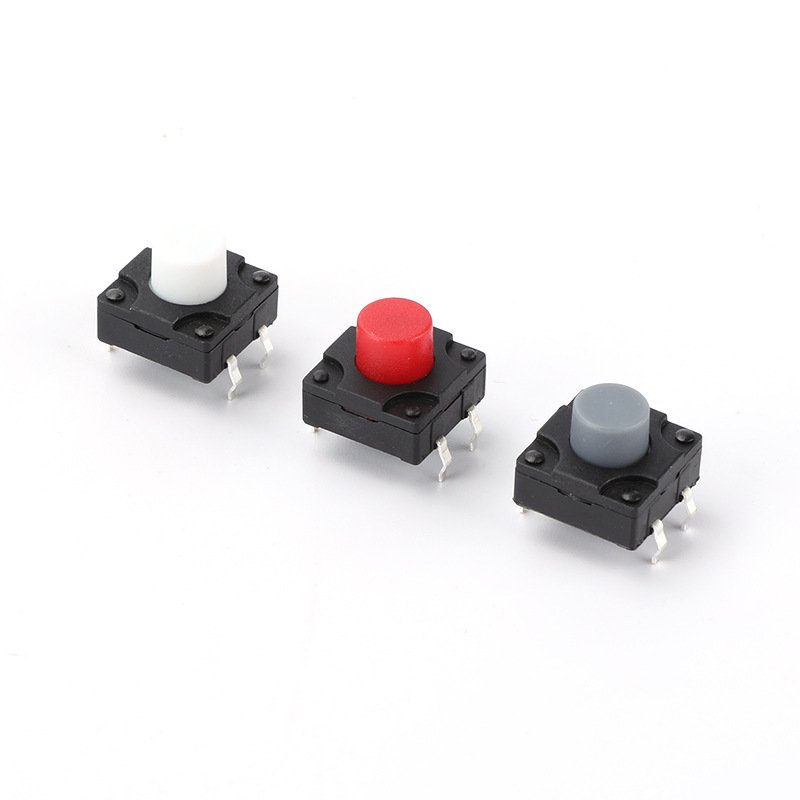
The tactile switch, commonly called a tact switch, is one of the most widely used input components in modern electronics. Its performance and lifespan directly affect the user experience and stability of the whole device. Compared with size or actuation force, however, electrical life is often overlooked. In automotive electronics, precision instruments, and industrial control panels, a single contact failure can stop an entire system.
In fact, electrical life depends heavily on the contact material and its plating process. This guide analyzes silver, gold, and nickel platings. It also reviews typical failure modes and shares practical selection ideas for buyers.
See our Tact Switch contact resistance guide.
What Is the Electrical Life of a Tact Switch?
Two terms need clarification first. Mechanical life counts the operations a switch completes under stated conditions. This figure usually reaches tens of thousands to millions of cycles. Electrical life, in contrast, counts how many cycles the contacts keep stable resistance without burning at rated voltage and current.
In low-current, low-voltage signaling, plating quality matters most. If electrical life is too short, the structure still works. However, rising contact resistance has already made the switch fail in practice.
Common Contact Materials and Plating Layers
Most tactile switch contacts combine a metal dome, typically phosphor bronze or stainless steel, with a plated conductive layer. Because this layer carries the current, it determines conductivity, oxidation resistance, and wear life.
| Material | Plating Thickness | Conductivity | Oxidation Resistance | Cost | Typical Use |
|---|---|---|---|---|---|
| Silver (Ag) | 2–10 μm | ★★★★★ | ★★★ | Medium | Consumer electronics, home appliances |
| Gold (Au) | 0.1–2 μm | ★★★★★ | ★★★★★ | High | High-end communication, medical |
| Nickel (Ni) | 1–5 μm | ★★★★ | ★★★ | Low | Base layer, budget products |
| Ag-Ni / Au-Ni multi-layer | Combined | Optimized | Optimized | Medium-high | Automotive, industrial control |
Silver Plating: Excellent Conductivity with Limits
Silver offers the best conductivity among common metals, so contact resistance stays extremely low. It also solders and processes well, and the layer adheres firmly. However, silver has clear weaknesses. It oxidizes and sulfidizes in humid or sulfur-rich air, forming Ag2S films that raise resistance. Under high humidity and electric fields, silver migration can even grow metal dendrites and cause shorts. In addition, the soft layer wears down under frequent operation. Therefore, silver suits home appliances and consumer electronics with 1–50 mA loads in controlled environments.
Gold Plating: Stability for Critical Signals
Gold barely oxidizes in natural conditions, so its contact resistance remains stable for years. It is the top choice for dry circuits and weak signals, where oxide films would otherwise block conduction. Even a thin layer of 0.1–0.5 μm already provides strong protection. The trade-offs, meanwhile, are cost and hardness. Gold is expensive, and being soft, it wears faster than nickel under heavy loads. Consequently, gold plating fits high-end communication panels, medical buttons, test instruments, and aerospace or military switches.
Nickel Plating: The Protective Base Layer
Nickel usually serves as the underplate. Silver or gold sits on top of it to block diffusion and improve adhesion. Nickel also brings good hardness, wear resistance, and moderate corrosion protection. Used alone, however, it falls short. Its conductivity is lower than silver or gold. Moreover, an oxide film forms in humid air, which raises resistance at low currents. For this reason, pure nickel contacts appear mainly in cost-sensitive products such as toys or non-critical buttons.
Multi-Layer Plating and Advanced Options
Modern designs often stack layers to balance cost and performance. Ni/Ag plating puts silver over a nickel base, which suppresses migration and diffusion. Ni/Au plating keeps nickel underneath for hardness while a thin gold top layer blocks oxidation. For harsh environments such as exterior automotive switches, thick silver plus an anti-sulfur coating extends life further.
Typical Failure Cases
Case one, automotive sulfidization. A car door-lock keypad used single-layer silver. Hot summers and coastal sulfur air caused widespread contact failures within two years. After switching to Ni/Ag with anti-sulfur treatment, reliability improved and complaints dropped by 80%.
Case two, unstable medical signals. A handheld medical device used pure nickel contacts. After long storage, low-current triggering became intermittent. After an upgrade to Ni/Au, resistance stabilized, and life rose from 100,000 to 500,000 cycles.
How to Choose the Right Plating
For your tact switch design, the table below matches common scenarios with proven plating choices.
| Scenario | Recommended Contact Plating |
|---|---|
| Indoor home use at room temperature | Single-layer silver or Ni/Ag |
| High humidity or sulfur-rich environment | Ni/Ag multi-layer, or silver with anti-sulfur coating |
| Micro-current / precision devices | Ni/Au multi-layer with thin gold |
| High-end military / aerospace | Thick gold or gold-palladium alloy |
| Ultra-low-cost products | Single-layer nickel (not advised for weak signals) |
How Manufacturers Verify Electrical Life
Reliable tact switch makers run several tests before shipment. Electrical life cycling switches rated loads repeatedly while monitoring resistance. Sulfurization tests expose silver layers to sulfur-bearing air. Salt-spray tests check corrosion resistance for coastal use. Finally, contact resistance is measured before and after aging to keep batches consistent.
Explore this Tactile Switch SMD-0603 datasheet.
Conclusion
A tactile switch is small, yet its reliability is a systems effort. Contact material and plating remain central to it. Silver delivers conductivity and value, gold adds oxidation resistance for extreme uses, and nickel forms the protective base. Multi-layer stacks have become the mainstream answer for balancing cost and performance. Above all, discuss electrical life, environment, and target standards with your supplier at the design stage. Professional contact engineering is the invisible advantage behind dependable products.