Blog
Illuminated Tact Switch Trends to Watch in 2026
Illuminated Tact Switch Trends Reshaping Electronics in 2026
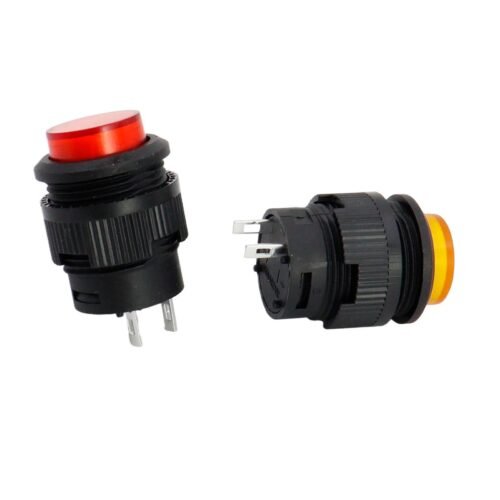
An illuminated tact switch combines a snap-action tactile actuator with a built-in LED indicator, giving users both physical feedback and at-a-glance status light. As devices get smarter and thinner, this tiny component is evolving fast. This article maps the six forces — technology, market, applications, competition, sustainability and open challenges — that are defining where the category goes next.
1. Technology Trends: Smarter, Thinner, Tougher
The most visible shift is integration. Pressure-sensitive conductive films now turn almost any molded surface into a hidden touch zone, while flexible OLED and e-ink layers add dynamic icons that sit idle at near-zero power. Self-healing nano-coatings quietly repair fingerprints and micro-scratches, keeping the legend readable. The remaining hurdle is consistency: scaling these smart-surface films to high volume without drift in sensitivity or color uniformity is the bottleneck every lab is racing to solve.
Energy is the second theme. Piezoelectric elements harvest the actuation energy itself; electromagnetic generators embedded in the travel path power higher-drain designs; and thermal or light scavenging keeps the switch in standby without a battery. On the mechanical side, double-sided glass-fiber substrates with laser welding push total thickness below 0.6 mm, actuation force under 0.15 N, and mechanical life past 100,000 cycles — all while sealing to IP67 and surviving −40 °C to +125 °C.
2. Market Demand and Growth
The global tactile-switch market is steady but regionally lopsided. Asia-Pacific leads with roughly 54% share and the fastest clip at about 7.1% CAGR, driven by consumer and automotive electronics. Europe follows at 25% (3.3% CAGR) on industrial-automation upgrades, and North America at 17% (2.5% CAGR) on smart-home adoption. Within Asia-Pacific, China, Japan and South Korea are the core countries pushing volume. China alone accounted for about a third of the 2024 market worth roughly 53.2 billion yuan, and the category is forecast to reach about 60.3 billion yuan by 2028. A smart illuminated unit typically sells for 2–4 yuan — two to four times a basic part — which is exactly where the margin is moving.
3. Industry Application Expansion
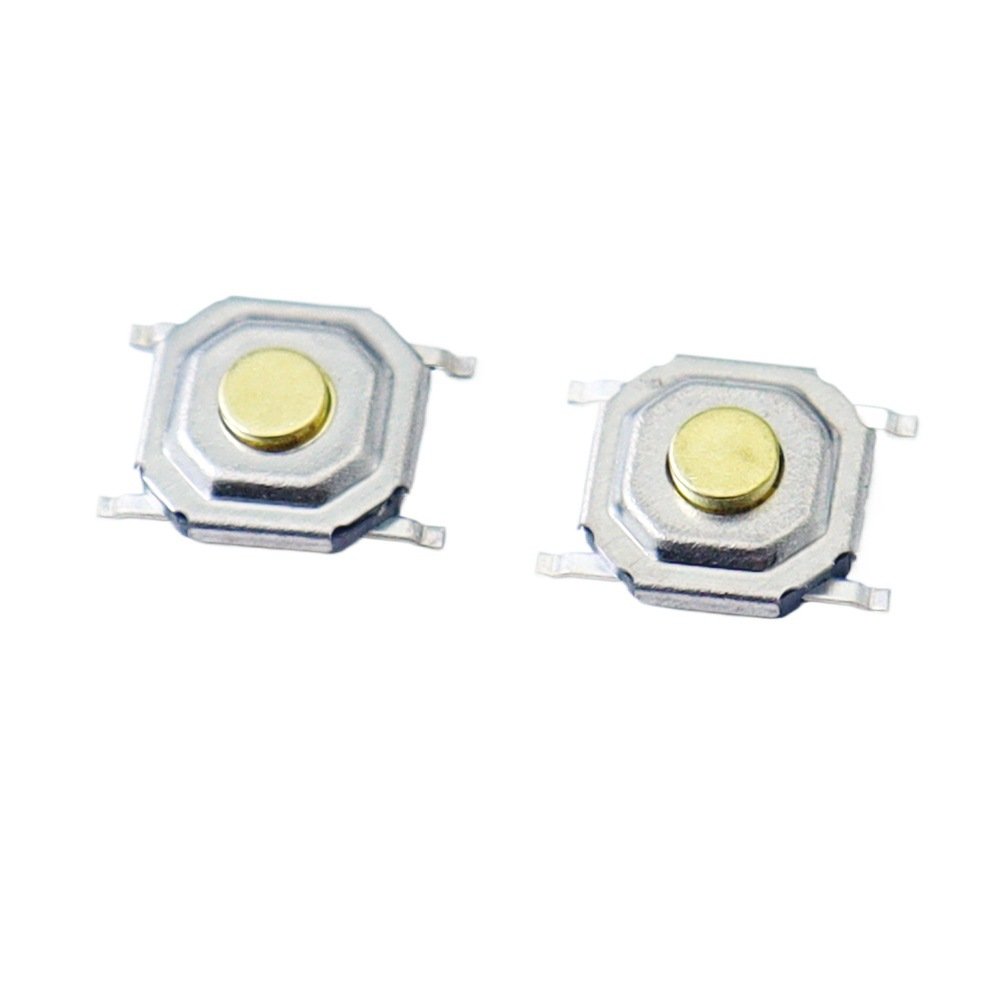
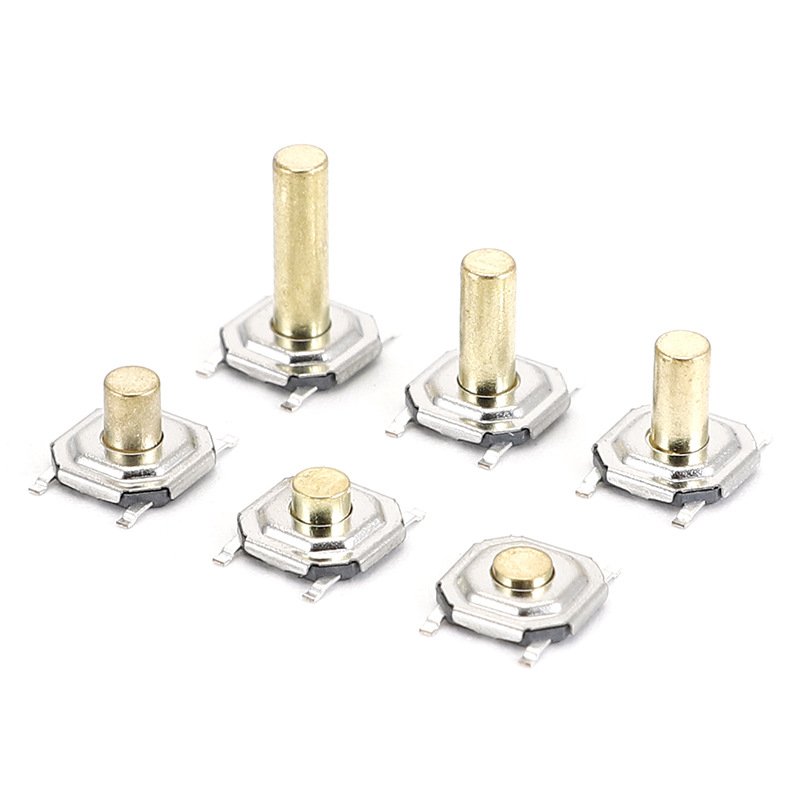
In consumer electronics, ultra-thin 0.8 mm SMD switches land in TWS earbuds and smartwatches, while three-pin front-insert/back-mount parts dominate phone side keys and game controllers. Automotive is the premium frontier: LED-equipped waterproof switches cleared for AEC-Q200 sit in EV battery-management systems, and MCU-integrated versions read 0.1 N to 5 N of force for multi-level triggers. Industrial IoT closes the loop with ZigBee-grouped emergency lighting and self-powered wireless switches that slash wiring in smart factories — and dual-color LED light pipes in medical gear flag status and alarms at a glance. Carmakers are pushing further: interactive lamp systems driven by body-domain controllers now render animated patterns on the vehicle exterior, turning the humble switch into a communication surface rather than a mere input.
4. Competitive Landscape and Innovation
Vendors differentiate on three battlegrounds: sub-millimeter thinness and precise placement in consumer goods, wide −40 °C to +125 °C temperature range with IP69K sealing in autos, and self-power plus wireless mesh in industry. Supply chains are tightening too — immersion gold forms a 0.1 µm metal layer that replaces older etching, and six-axis robots seat parts at ±0.02 mm while running life and environmental test matrices.
5. Eco-Materials and Energy Efficiency
Conductive polymers are replacing some metal contacts for longer, cleaner life, and nano-silver plus nano-zinc-oxide build transparent, sensitive films. Designs comply with IEC 61058-1:2025 on clearance and creepage, drop into low-power CMOS sleep quickly, and embed solar or vibration harvesting. High-clarity PC/PMMA light pipes, 95%+ RoHS-compliant material, and self-healing coatings extend service life and cut replacement waste.
6. Challenges and Recommendations
The hard problems are real: balancing ultra-thin bodies against high mechanical life, lifting energy-harvesting conversion efficiency, and holding mass-production consistency for smart-surface films. The upside is just as clear — EV HMI integration, Industry 4.0 wireless switches, and scene-based smart-home control. Our advice: deepen material R&D through industry-academic partnerships, design for IoT-protocol compatibility from day one, and build a circular-production system that recovers materials at end of life. For procurement teams, the practical move is to qualify suppliers on film consistency and certified environmental testing before locking in volume.
Typical Specifications to Spec Against
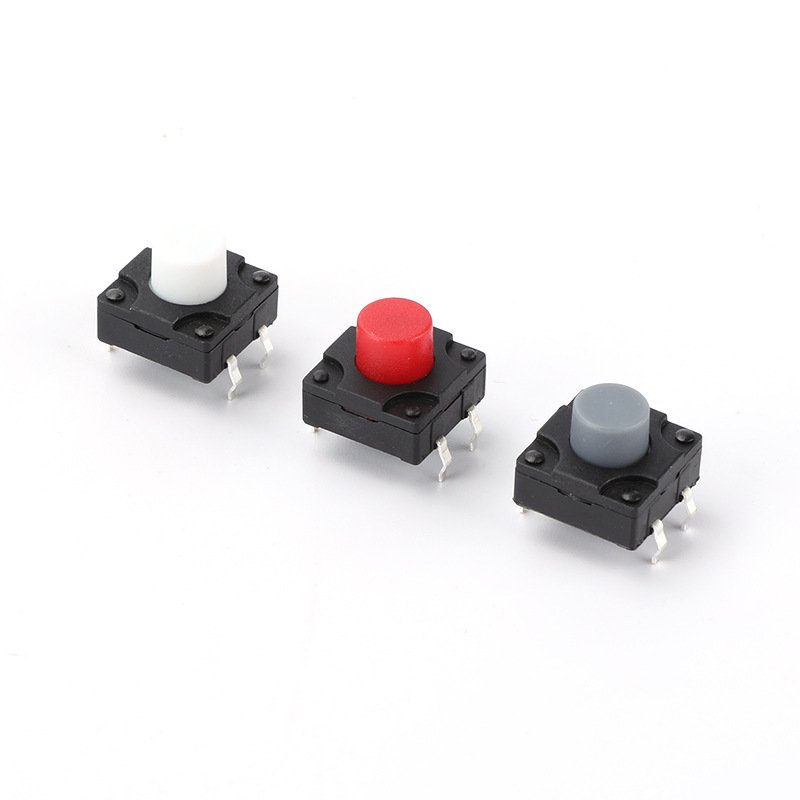
When you shortlist a part, a representative illuminated tact switch today is rated 50 mA at 12 V DC, with a 2.5 mm travel, 180 gf operating force, 500,000-cycle endurance, LED color options spanning red, green, yellow, orange, white and blue, and bag packaging for automated assembly. The color choice is not cosmetic: red signals power or fault, green confirms ready, and amber warns, so match the LED to the message the user must see at a glance. Hold your candidate against those numbers before sampling.
To compare certified, in-stock parts that already meet these specs, you can browse our full illuminated tact switch catalog or explore the LED tact switch product category and shortlist candidates for your next build.